
Hemab Therapeutics prices upsized IPO at $18 per share on Nasdaq

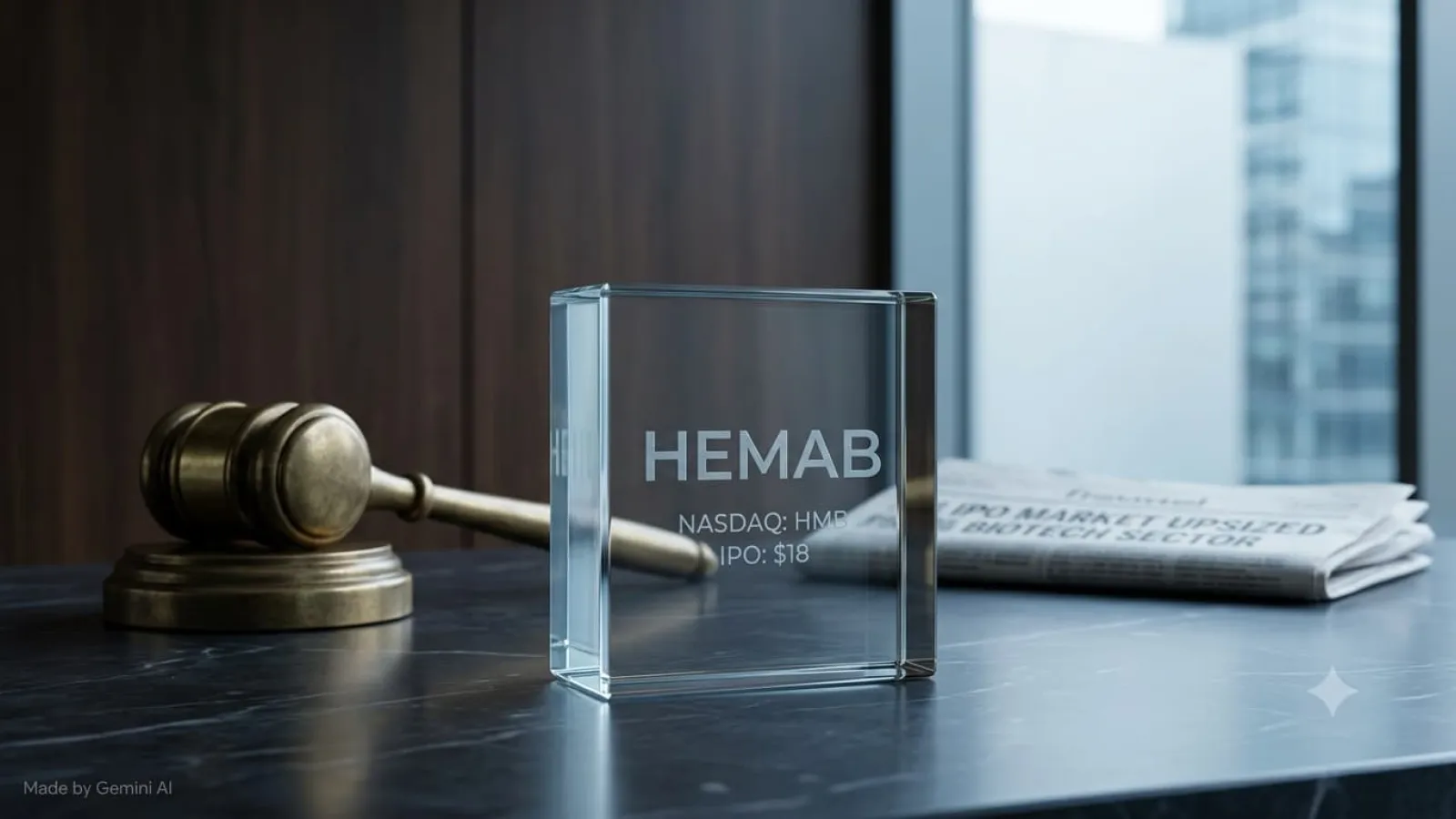
Hemab Therapeutics Holdings has priced its initial public offering at $18.00 per share, selling 16,750,000 shares to raise approximately $301.5 million in gross proceeds before underwriting discounts and other expenses. The Cambridge, Massachusetts and Copenhagen-headquartered company began trading on the Nasdaq Global Select Market on 1 May 2026 under the ticker symbol "COAG", with the offering expected to close on or about 4 May 2026.
The deal was upsized ahead of pricing, a sign of reasonable investor appetite for a specialist play in haematology. Underwriters also hold a 30-day option to purchase up to an additional 2,512,500 shares at the offer price, which would lift total gross proceeds to approximately $346.7 million if exercised in full. Goldman Sachs, Jefferies, and Evercore ISI acted as joint book-running managers, with Wedbush PacGrow as lead manager.
The pipeline
Hemab's clinical portfolio centres on two antibody programmes targeting rare and serious coagulation disorders. Its lead candidate, sutacimig (HMB-001), is a bispecific antibody in clinical development for prophylactic treatment of Glanzmann thrombasthenia — a rare inherited platelet disorder — and Factor VII deficiency. The second programme, HMB-002, is a monovalent antibody targeting Von Willebrand Disease (VWD), the most common inherited bleeding disorder worldwide, for which prophylactic treatment options remain limited.
The company did not disclose in the IPO pricing announcement specific clinical trial phases, enrolment figures, or timeline projections for either programme, so the pipeline's exact development stage requires readers to consult the full prospectus filed with the Securities and Exchange Commission.
Market context
Hemab enters the public markets at a moment of selective but genuine investor interest in rare haematology. The segment has attracted sustained attention since the success of emicizumab (Roche's Hemlibra) in haemophilia A redefined expectations for bispecific antibody approaches to coagulation biology. Glanzmann thrombasthenia and Factor VII deficiency are each ultra-rare, meaning commercial addressable markets are small but pricing power is typically high, and Hemab is positioning itself to serve patients with few existing options.
VWD represents a considerably larger patient population — estimated in the tens of millions globally — but the prophylaxis space is less well served than treatment of acute bleeds. Several academic groups and smaller biotechs are exploring novel mechanisms in this area, and Hemab's HMB-002 would need to demonstrate a meaningful durability or convenience advantage over current factor replacement or desmopressin-based regimens to secure formulary traction.
The $301.5 million raise is a substantial war chest for a clinical-stage company and should, depending on burn rate, provide several years of runway to advance both programmes toward pivotal readouts. The choice of the ticker "COAG" is an unusually direct signal of Hemab's intent to build a coagulation franchise rather than pursue a broader rare-disease platform strategy.
Investors will be watching for clinical updates on sutacimig and HMB-002, including any data packages at haematology conferences such as the American Society of Hematology annual meeting, as the next substantive indicators of pipeline progress following this listing.