
Tacalyx raises €11m to advance TACA-targeting ADC TCX-201 to clinic

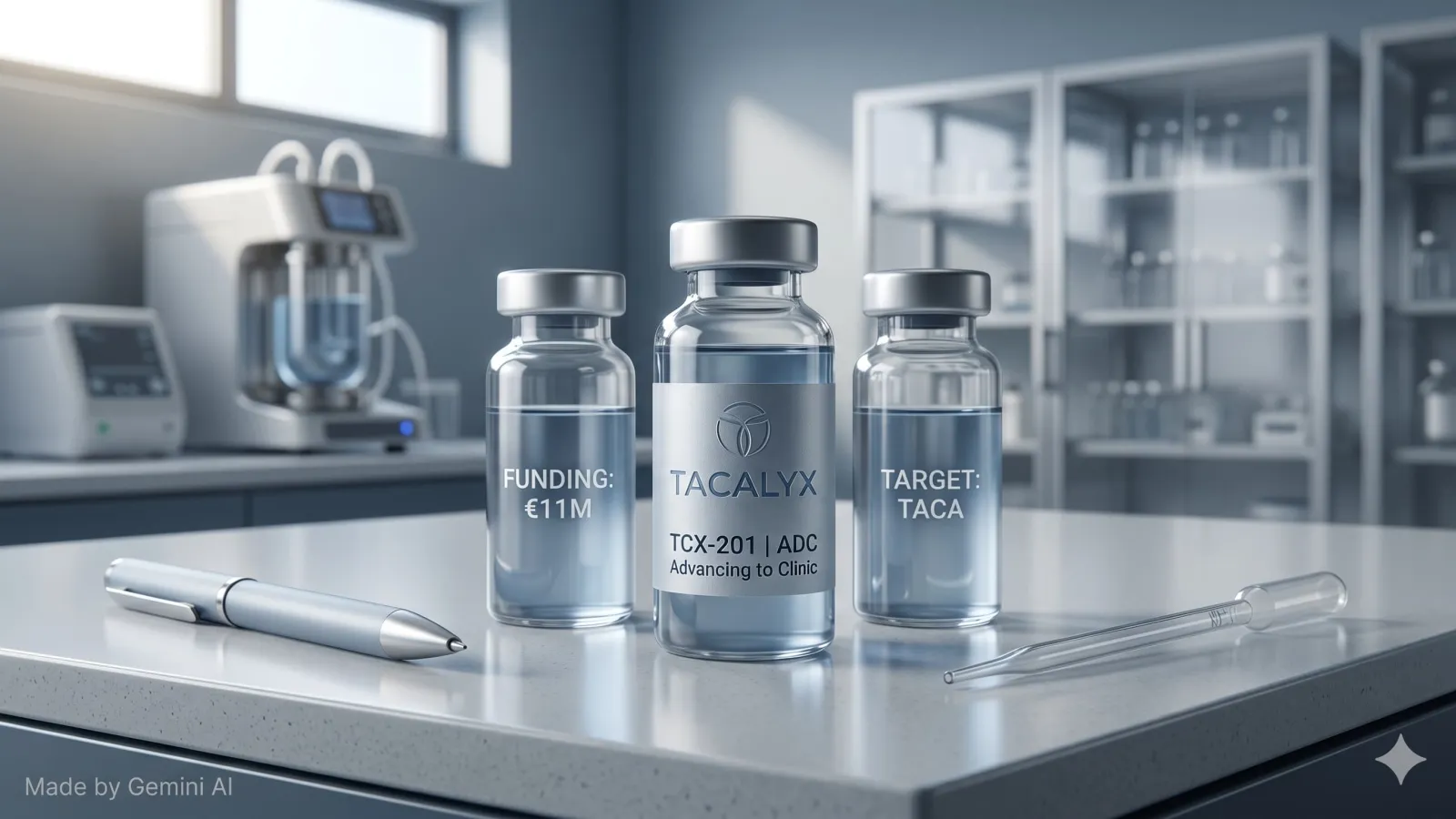
Tacalyx has secured €11 million in the first closing of a seed extension round and named TCX-201 as its lead clinical candidate, with the company targeting submission of a clinical trial application (CTA) in 2027. The Berlin-based biotech, which focuses on tumour-associated carbohydrate antigens (TACAs) as oncology targets, said it intends to open a subsequent closing to bring in additional investors alongside the existing syndicate.
The round was backed by the company's established investor group, including Boehringer Ingelheim Venture Fund, Kurma Partners, High-Tech Gründerfonds, Eurazeo, Creathor Ventures, and Thuja Capital. Proceeds will fund preclinical development of TCX-201 through to CTA readiness, while also supporting the broader pipeline. Tacalyx has indicated it plans to select a second clinical candidate before the end of 2026.
The programme
TCX-201 is an antibody-drug conjugate (ADC) directed against an undisclosed TACA, developed for the treatment of gastrointestinal malignancies and other solid tumours. The company has not yet disclosed the specific antigen target or the ADC payload and linker chemistry, details that will become material when the CTA is filed.
TACAs are aberrant glycan structures over-expressed on tumour cell surfaces during malignant transformation. Tacalyx positions these antigens as particularly valuable targets because they remain expressed in tumours that lack actionable genomic alterations and can persist after standard therapies fail — a characteristic that the company argues differentiates them from protein-based targets such as HER2 or EGFR. Jean Engela, chief executive of Tacalyx, said the company had "built a powerful platform capable of reliably discovering and developing high-affinity antibodies against TACAs, sugar structures specifically found on tumour cells," adding that the candidate selection marked a transition to a clinical-stage organisation.
Klaus Schollmeier, chairman of the board, described the TACA space as having "long been considered undruggable," and said the team's progress demonstrated the platform's ability to unlock that potential.
Market context
The ADC sector is among the most active in oncology drug development, with multiple large-cap deals reflecting the appetite for differentiated payload-linker and targeting strategies. Sacituzumab govitecan, trastuzumab deruxtecan, and a growing list of next-generation ADCs have validated the modality across breast, lung, and bladder cancers, driving fierce competition on both target selection and manufacturing efficiency.
Carbohydrate antigens represent a less-travelled route relative to the protein-antigen field. A small number of academic groups and early-stage companies have explored glycan-directed immunotherapy, but the sector lacks a late-stage approved ADC with this mechanism, meaning Tacalyx faces both the opportunity of a relatively uncrowded space and the risk inherent in novel biology. The company was founded in 2019 as a spin-out from the Max Planck Institute of Colloids and Interfaces in Potsdam, where co-founder Professor Peter Seeberger's group developed core carbohydrate chemistry that underpins the platform.
From a regulatory standpoint, the CTA route — the European equivalent of a US IND — means Tacalyx will likely engage with a European national competent authority for its first-in-human study. The EMA has shown increasing interest in novel oncology targets in recent years, and the agency's adaptive pathway guidance could be relevant if TCX-201 is positioned for a rare or treatment-resistant subpopulation.
With the €11 million first closing in hand and a 2027 CTA target, near-term milestones will centre on preclinical toxicology packages, candidate characterisation data, and confirmation of the second clinical candidate — signals that will determine whether a Series A can be raised at a meaningful step-up.