
Ernexa's ERNA-101 clears tumours completely in ovarian cancer models

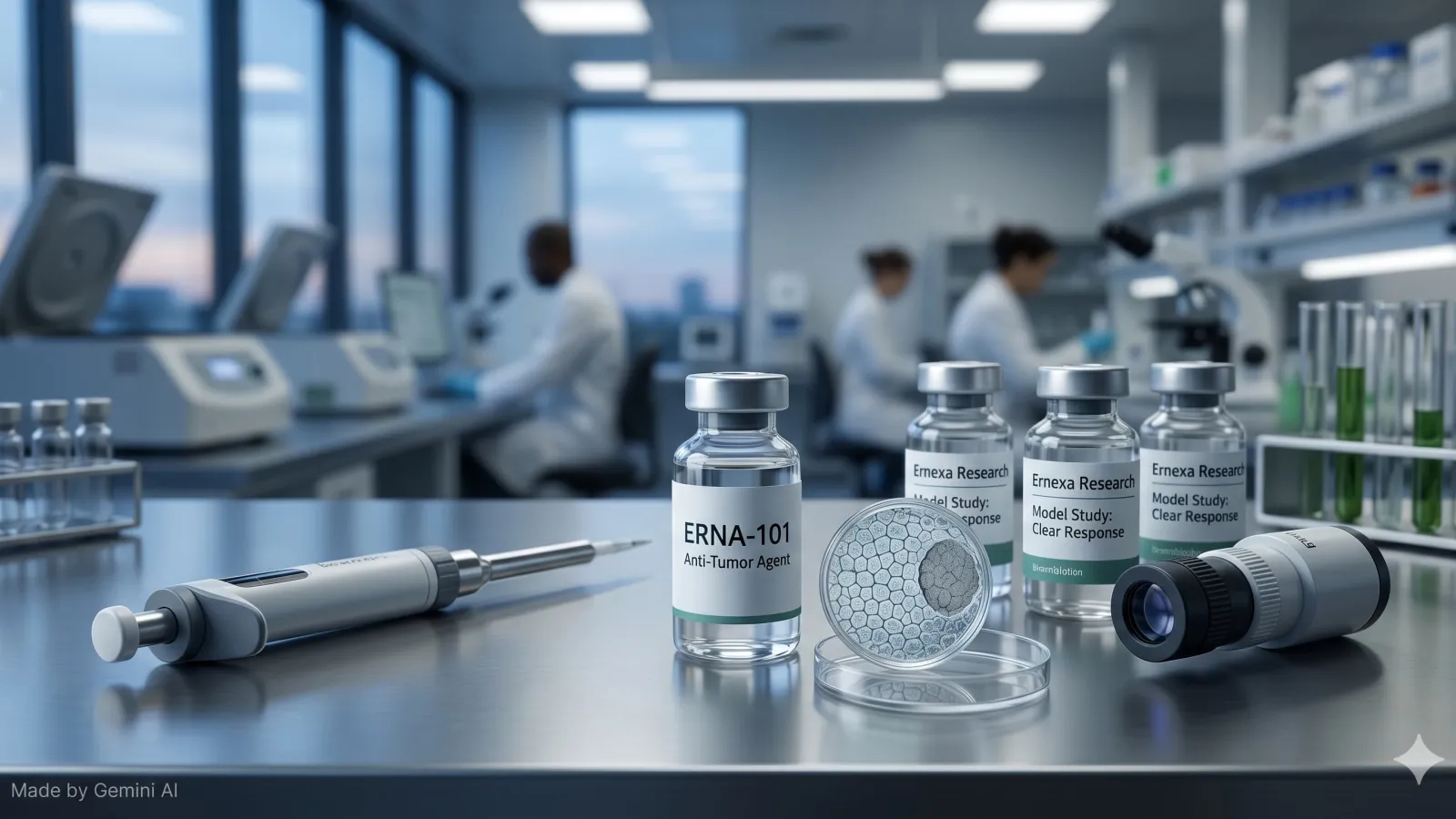
Ernexa Therapeutics has reported preclinical data showing that its lead cell therapy candidate, ERNA-101, in combination with anti-PD-1 therapy, achieved complete tumour elimination and 100% long-term survival in syngeneic mouse models of ovarian cancer — results the Cambridge, Massachusetts-based company says exceeded those of either agent alone.
The data, released on 6 May 2026, are being positioned by the company as evidence that ERNA-101 can overcome the immunosuppressive tumour microenvironment (TME) that has historically blunted checkpoint inhibitor activity in ovarian cancer. Tumour clearance was confirmed by bioluminescence imaging, and survival was maintained through long-term follow-up, though the company did not specify the duration.
The science
ERNA-101 is an allogeneic, off-the-shelf therapy derived from induced pluripotent stem cells (iPSCs) and engineered to differentiate into induced mesenchymal stem cells (iMSCs). The cells are designed to home to tumour tissue and secrete an IL-7/IL-15 fusion cytokine locally, with the aim of maximising immune activation while limiting systemic toxicity. Preclinical read-outs showed increased infiltration and persistence of CD4+ and CD8+ T cells, macrophage reprogramming toward an anti-tumour phenotype, and reduced ascites accumulation — a hallmark of advanced ovarian disease.
Robert Pierce, chief scientific officer at Ernexa, said the findings demonstrate "complete tumour eradication and durable survival, driven by a powerful immune activation mechanism within the tumour itself," and highlighted the potential to extend the approach to other solid tumour types characterised by cold, highly suppressive microenvironments.
Ernexa plans to advance ERNA-101 toward a first-in-human trial in advanced ovarian cancer in collaboration with MD Anderson Cancer Center, with a proof-of-concept study targeting platinum-resistant disease. The company said it intends to broaden the indication scope to other solid tumours following a positive clinical signal.
Market context
High-grade serous ovarian carcinoma remains one of the most difficult solid tumour indications in oncology, with five-year survival rates for advanced-stage disease remaining poor and checkpoint inhibitors delivering only modest benefit to date. The immunosuppressive TME is widely regarded as the primary barrier. Several biotechs — including companies pursuing tumour-infiltrating lymphocyte (TIL) therapies and engineered cytokine platforms — are working to crack this problem, and the iPSC-derived cell therapy space is increasingly crowded, with players such as Fate Therapeutics and Century Therapeutics having pursued adjacent allogeneic approaches.
Ernexa's IL-7/IL-15 fusion cytokine strategy is a differentiated mechanistic angle, but the translation of complete responses in syngeneic mouse models to human clinical benefit has historically been unreliable in immuno-oncology. Investors and clinicians will scrutinise the first-in-human design closely — particularly patient selection, dose escalation strategy, and whether bioluminescence-confirmed clearance in mice can be mapped to meaningful endpoints such as progression-free or overall survival in the clinic.
The company, listed on Nasdaq under the ticker ERNA, carries the execution risks typical of a pre-IND-stage cell therapy developer. The MD Anderson collaboration provides clinical credibility, and the allogeneic, off-the-shelf manufacturing model addresses one of the persistent scalability challenges in the sector. Near-term catalysts to watch include an IND filing date, further mechanistic data at a major oncology congress, and any update on ERNA-201, the company's autoimmune pipeline candidate.