
Glucotrack CBGM hits 6.8% MARD over 240 days in ovine study

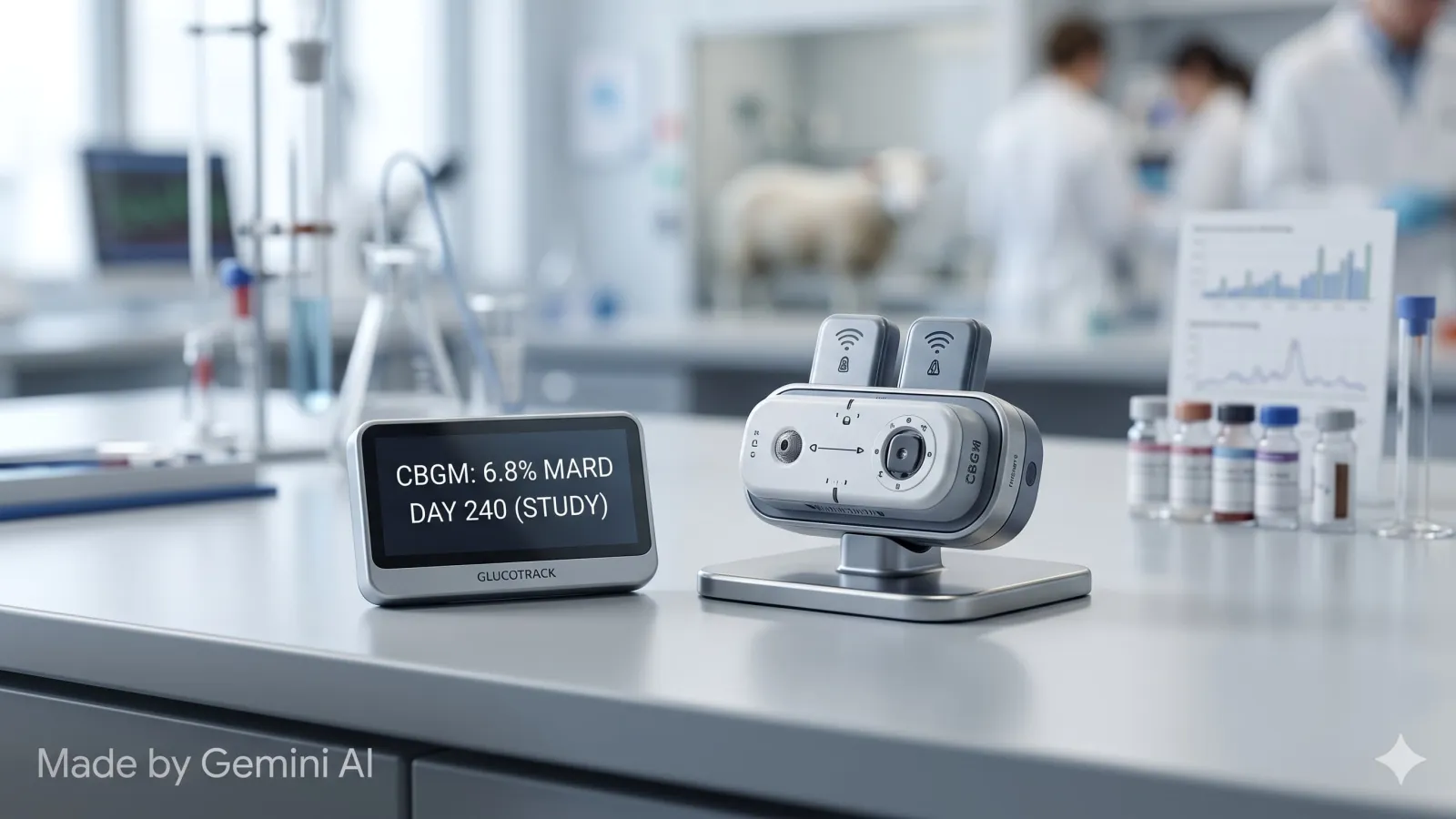
Glucotrack has announced the publication of a peer-reviewed study in the Journal of Diabetes Research demonstrating the long-term accuracy and stability of its fully implantable continuous blood glucose monitoring (CBGM) system in a preclinical ovine model — a milestone the Nasdaq-listed company says strengthens the evidence base ahead of a planned Investigational Device Exemption (IDE) submission to the FDA.
The study, authored by Tapsak et al., assessed 34 devices implanted into 17 adult sheep over periods of up to 240 days. Across 79 intravenous glucose tolerance tests, the system achieved a weighted average Mean Absolute Relative Difference (MARD) of 6.8%, a standard accuracy metric in continuous glucose monitoring in which lower values indicate closer agreement with reference measurements. No device-related adverse safety events were recorded during the study period.
What the data add
The ovine results complement data from Glucotrack's earlier first-in-human clinical study, in which the CBGM returned a MARD of 7.7% alongside a 99% data capture rate and no procedure- or device-related serious adverse events. Together with a separately published in-vitro study on sensor chemistry stability, Glucotrack says it is assembling a peer-reviewed evidence portfolio to support its regulatory submission pathway.
Dr Paul V. Goode, president and chief executive of Glucotrack, said the publication "provides externally validated evidence of the long-term performance of our CBGM technology" and that the 240-day preclinical results "reinforce our confidence in the platform's design" as the company moves towards its IDE filing.
The CBGM is designed as a three-year, fully implantable device with no on-body wearable component and minimal calibration requirements — a differentiated profile relative to the dominant short-wear-cycle subcutaneous sensors on the market today.
Market context
The continuous glucose monitoring sector is currently led by Abbott's FreeStyle Libre and Dexcom's G-series platforms, both of which are transcutaneous, externally worn devices requiring periodic replacement. Demand for longer-duration or fully implantable alternatives has grown alongside the expansion of diabetes management into type 2 populations and the uptake of GLP-1 receptor agonist therapies, which can alter glycaemic variability and increase the clinical value of continuous monitoring.
A small number of companies have pursued fully or semi-implantable CGM approaches. Senseonics, which markets the Eversense system in the United States and Europe, offers sensor longevity of up to 365 days in its current generation — the closest commercial comparator in terms of implantable design philosophy, though it still requires an external transmitter. Glucotrack's target of three-year sensor longevity, if borne out in human trials, would represent a meaningful step beyond existing approved implantable options.
The IDE submission, which Glucotrack has not dated precisely, will be the next significant regulatory milestone. A cleared IDE would permit the company to begin a US pivotal trial, the design and size of which will largely determine its commercialisation timeline. Investors will be watching for the submission date and any FDA feedback on study design as the most consequential near-term catalysts.