
NeuroSalt supplement targets neuropathy with botanical formula

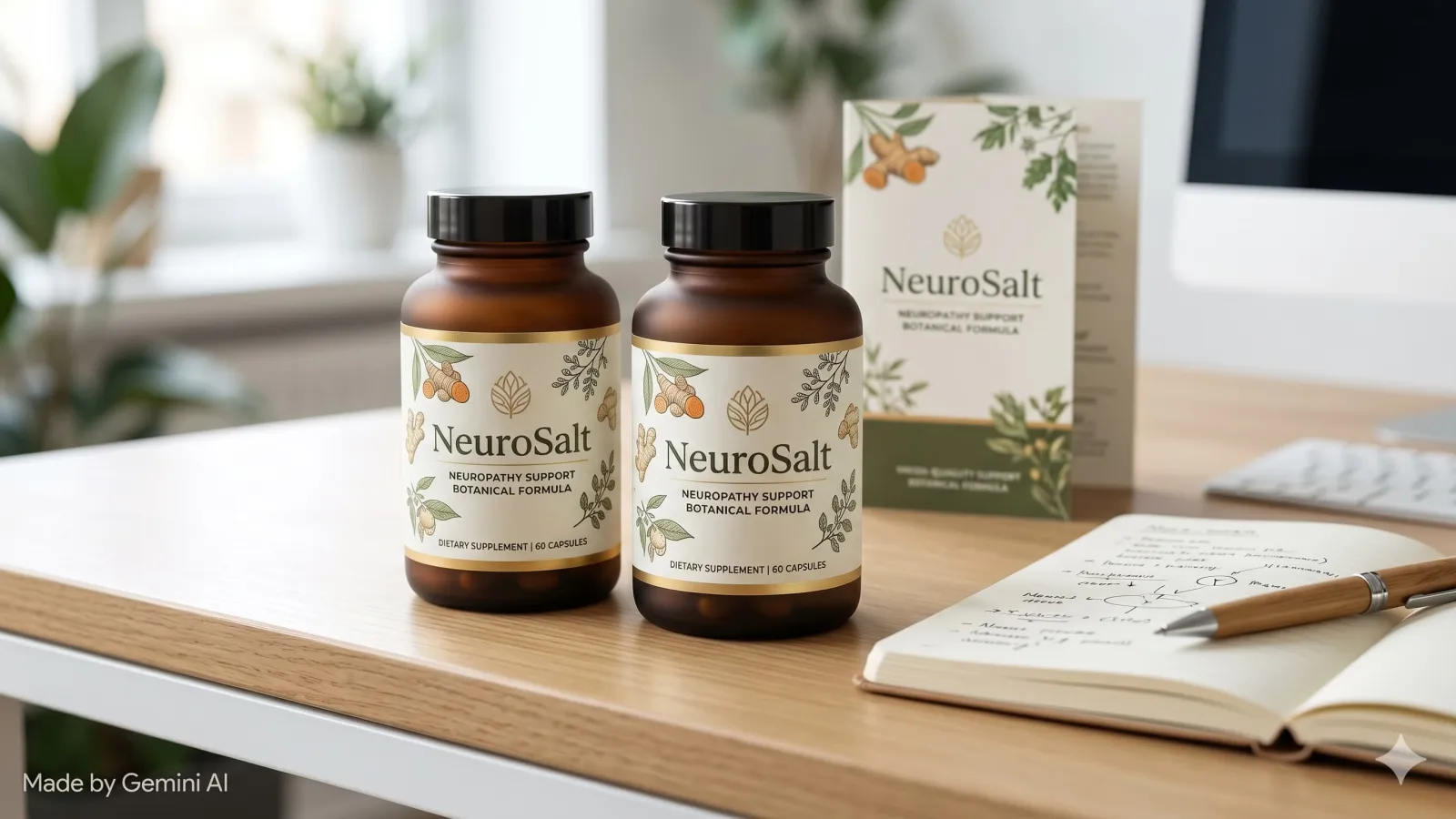
A dietary supplement called NeuroSalt, sold exclusively through its own website, is positioning itself within the growing consumer market for natural alternatives to prescription neuropathy medications. The product targets peripheral neuropathy — a condition the manufacturer says affects an estimated 20 million Americans — with a five-ingredient botanical formula that the company claims addresses nerve pain, inflammation, oxidative stress, and sleep disruption simultaneously.
The release, distributed via GlobeNewswire, reads more as a product review than a conventional press announcement. It carries a disclaimer stating the author "may receive affiliate compensation" from purchases made through links in the text, a detail material to any editorial assessment of its independence.
The formula and the claims
NeuroSalt's five active ingredients are Passionflower (Passiflora incarnata), Marshmallow Root (Althaea officinalis), Corydalis (Corydalis yanhusuo), Prickly Pear Extract (Opuntia ficus-indica), and California Poppy Seed (Eschscholzia californica). The manufacturer says the product is produced in a US-based, FDA-registered, GMP-certified facility and does not require a prescription.
Of the five botanicals, Corydalis carries the most substantive pharmacological literature. Its active compounds — tetrahydropalmatine (THP) and dehydrocorybulbine (DHCB) — have been studied for analgesic properties and receptor interactions involving dopamine, serotonin, and GABA pathways. Passionflower similarly has peer-reviewed support for its anxiolytic and GABA-modulating properties. The remaining three ingredients have documented antioxidant and anti-inflammatory activities in isolation, though the release does not cite clinical evidence for the combined formula as a product.
The manufacturer stops short of disease-treatment language, consistent with FDA dietary-supplement regulations, which prohibit structure-function claims that cross into therapeutic territory. The product page, according to the release, uses cautious phrasing throughout — a noted positive relative to many supplement-sector peers that routinely make outright cure claims.
Market context and editorial concerns
The botanical neuropathy supplement category has expanded substantially in recent years, driven by patient dissatisfaction with the side-effect profiles of first-line prescription agents including gabapentin, pregabalin, and duloxetine. This dissatisfaction is well-documented in clinical literature, and it has created a commercially attractive gap that a number of supplement brands are attempting to fill — NeuroSalt among them.
The supplement is priced between $36 and $79 per bottle depending on bundle size, and is sold through ClickBank, a widely used affiliate-marketing platform. The release's own disclaimer acknowledges affiliate compensation, which raises questions about the objectivity of the analysis presented and the independence of the distribution channel through which it reached the wire.
Crucially, there is no clinical trial evidence cited for the NeuroSalt formulation itself. Individual ingredient studies are not equivalent to evidence for a proprietary combination product, and peripheral neuropathy has multiple distinct aetiologies — diabetic, chemotherapy-induced, autoimmune, and idiopathic — that respond differently to pharmacological and nutritional interventions. The release acknowledges this variability but does so briefly and without quantification.
For trade readers, the more pertinent question is whether this release belongs in editorial coverage at all. The source is a commercially framed product analysis with disclosed affiliate interests, no named clinical investigators, no trial data, and no regulatory milestone. It describes a consumer supplement product available for direct purchase and makes no news announcement of the kind that typically warrants editorial treatment — no funding round, no regulatory submission, no clinical readout, and no named partnership.
The peripheral neuropathy supplement space is likely to attract increasing regulatory scrutiny from the FDA and FTC as the market grows; editors covering this space should watch for enforcement actions as a more newsworthy angle.