
Verrica Pharmaceuticals to present VP-315 abscopal BCC data at SID 2026

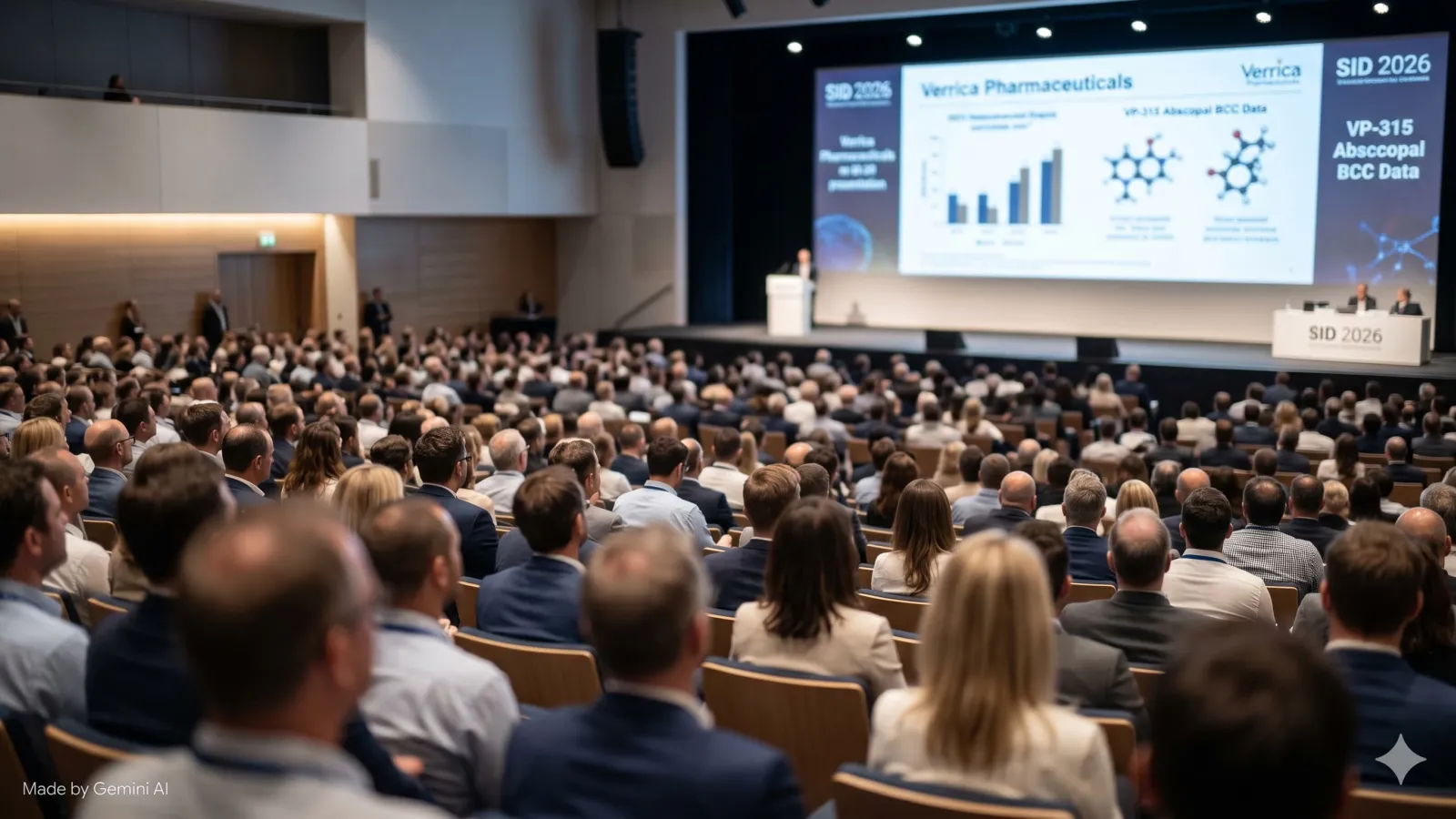
Verrica Pharmaceuticals will present Phase 2 clinical data for its oncolytic peptide VP-315 (ruxotemitide) at the Society for Investigative Dermatology Annual Meeting in Chicago on 15 May 2026, with results pointing to a potential abscopal effect in basal cell carcinoma — a phenomenon in which localised treatment triggers an immune response that shrinks tumours elsewhere in the body.
The West Chester, Pennsylvania-based company reported that 14 untreated, non-target lesions (NTLs) across nine study subjects showed an average 67% reduction in size following intratumoral injection of VP-315 into separate treated lesions. Complete histological clearance was observed in three of those 14 NTLs (21%), with size reductions ranging from 25% to 100% depending on histological subtype. Critically, tumour shrinkage was observed in lesions both proximal and contralateral to treated sites, and no serious adverse events in non-treated lesions were reported.
The science behind the signal
VP-315 is administered directly into a tumour to induce immunogenic cell death, releasing tumour antigens that prime T-cell responses. The company is positioning the candidate as a potential first-in-class oncolytic chemotherapeutic peptide immunotherapy. The abscopal effect — long observed as an occasional by-product of radiotherapy — has become a sought-after endpoint in the immuno-oncology field, as it implies systemic immune engagement rather than purely localised tumour kill.
Jayson Rieger, President and Chief Executive of Verrica, said the peripheral anticancer activity observed "well beyond the injection site suggests that VP-315 could be exerting an abscopal effect," adding that such activity "may indicate a broader immune activation within the tumour microenvironment of non-target lesions." Chief Medical Officer Noah Rosenberg, who will present the poster (number LB1190), noted that across the broader Phase 2 study, overall tumour size was reduced on average by 86% in treated lesions, and that VP-315 could reduce the scale and complexity of subsequent surgical procedures even when excision remains necessary.
Market context and competitive landscape
Basal cell carcinoma is the most common cancer in the United States, with approximately 3.6 million diagnoses annually. Standard of care remains surgical excision, which carries risks of scarring, bleeding and infection. For patients with multiple or recurrent lesions — roughly one-third of BCC patients are estimated to develop additional primary tumours over their lifetime — an immunologically active, non-surgical option would address a clear gap in current management.
The broader non-melanoma skin cancer space has attracted growing interest in intratumoral immunotherapy approaches. Hedgehog pathway inhibitors such as vismodegib are approved for advanced BCC but carry significant tolerability challenges and are not routinely used in localised, multifocal disease. VP-315's mechanism is distinct, and if the abscopal signal is confirmed in larger, controlled studies, it could offer a differentiated profile for patients who are poor surgical candidates or who face repeated procedures.
Verrica holds an exclusive worldwide licence from Lytix Biopharma to develop and commercialise VP-315 across several dermatologic oncology indications, including non-metastatic melanoma and Merkel cell carcinoma, though the company intends to focus initially on basal cell and squamous cell carcinomas. The Phase 2 dataset being presented at SID is an open-label study; the next critical milestone will be whether the abscopal signal can be replicated and quantified in a powered pivotal trial. Investors will be watching for an update on trial design and regulatory engagement timelines in the months following the conference presentation.