
Simple Charm positions AI beauty devices as a biotech-grade play

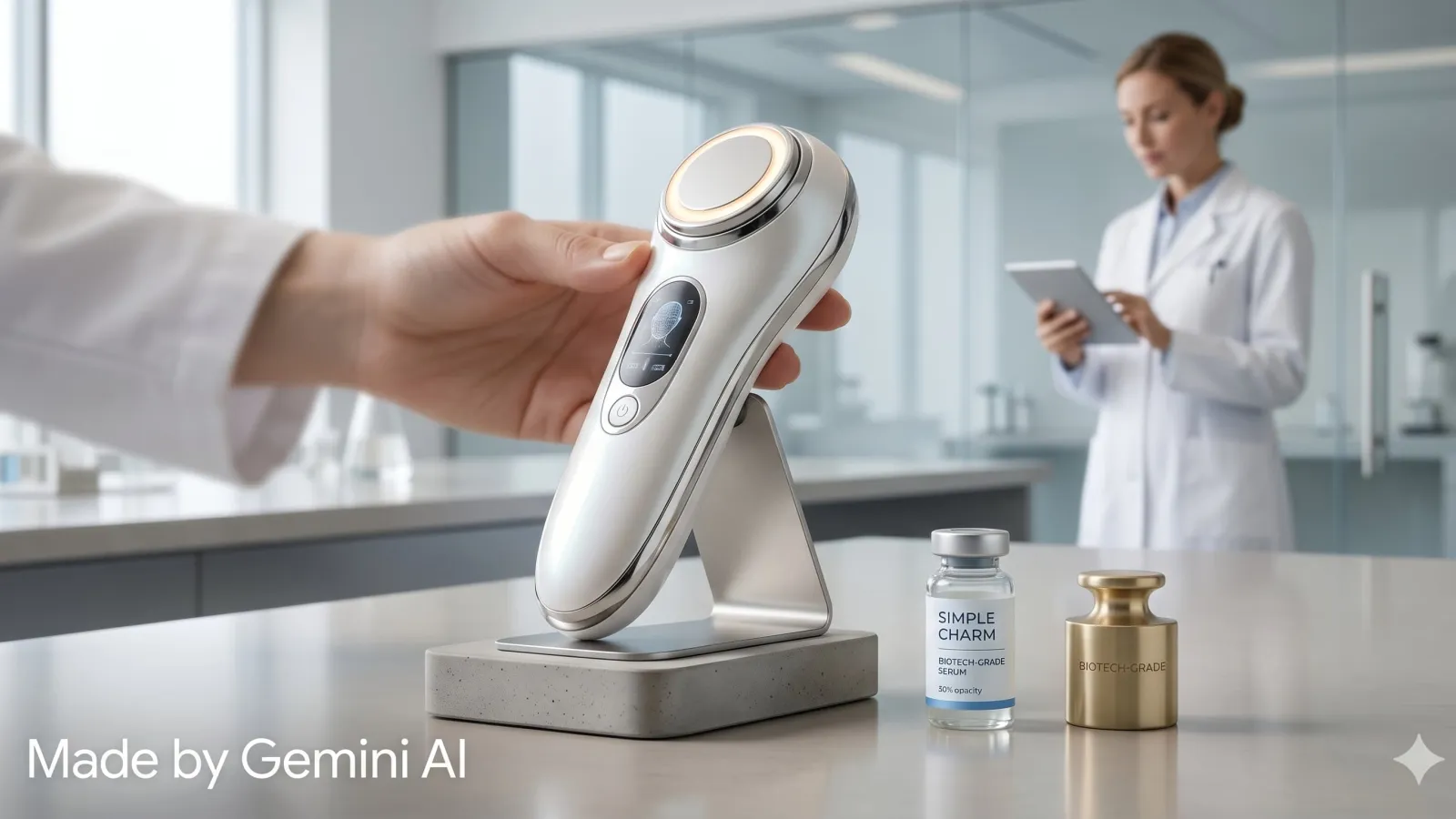
Simple Charm, a beauty-technology brand backed by Shenzhen-listed intelligent-control manufacturer Topband, has issued a broad positioning statement claiming leadership in AI-driven home beauty devices. The release, dated 10 December 2025, makes several technology and certification claims but provides no clinical trial data, product pricing, market-share figures, or named regulatory approvals to substantiate them.
The company says its devices combine ultrasonic lifting technology with what it describes as "soft pulse technology" and an AI-powered facial-recognition layer that automatically adjusts energy output by facial zone. The stated goal is to bring salon-grade precision into consumer home-use hardware — a pitch that has become common across the Chinese domestic beauty-device market over the past three years.
Corporate backing and certification claims
Simple Charm draws its credibility primarily from its parent, Topband Co., Ltd., which the release describes as China's first publicly listed intelligent-control company, with annual revenues exceeding 10 billion RMB and a research team of more than 2,000 engineers holding over 3,000 patent applications. The brand says its laboratories hold accreditation from five unnamed international testing bodies as well as China's CNAS national laboratory scheme, and that it maintains a research collaboration with Stanford University's Translational Medicine Centre — though no details of published joint research, named investigators, or specific output from that collaboration are provided.
A mention of a social-media endorsement from an influencer identified only as "NC Nicole" is the release's sole example of consumer-facing market activity, offering no performance metrics, sales volumes, or independent reviews.
Market context and competitive landscape
The home-use beauty-device category — encompassing radio-frequency, LED phototherapy, microcurrent, and ultrasonic platforms — has seen significant investment from both established consumer-electronics brands and specialist biotechnology-adjacent firms. Established players such as Tripollar, FOREO, and NuFace compete on clinical evidence and dermatologist endorsement; newer Chinese entrants, including Jovs and Amiro, have competed aggressively on price and influencer distribution.
Regulatory scrutiny of the category is tightening. In Europe, the reclassification of certain home-use energy devices under the Medical Device Regulation (MDR) has raised the evidence threshold required to make efficacy claims. In the United States, the FDA distinguishes between cosmetic devices and those making therapeutic claims; the latter require 510(k) clearance or equivalent. Simple Charm's release does not specify which markets it is targeting nor which regulatory frameworks apply to its products, a meaningful omission for readers assessing commercial risk.
Without independently verifiable clinical data — such as a peer-reviewed study on tissue response to the ultrasonic parameters used, or a disclosed 510(k) or CE-mark status — the "professional-grade precision" claim cannot be assessed on its merits. The collaboration with Stanford's Translational Medicine Centre is intriguing, but its scope and output remain opaque.
Editorial assessment
This release reads primarily as a brand-positioning exercise ahead of what may be an international market expansion. For biotech-adjacent investors and device-sector professionals, the absence of quantitative performance data, named regulatory clearances, or disclosed clinical protocols leaves the substantive claims unverifiable. Readers should treat the announcement as indicative of the company's strategic intent rather than evidence of demonstrated clinical efficacy.