
CorTec BCI implant enables stroke patient to control computer by thought

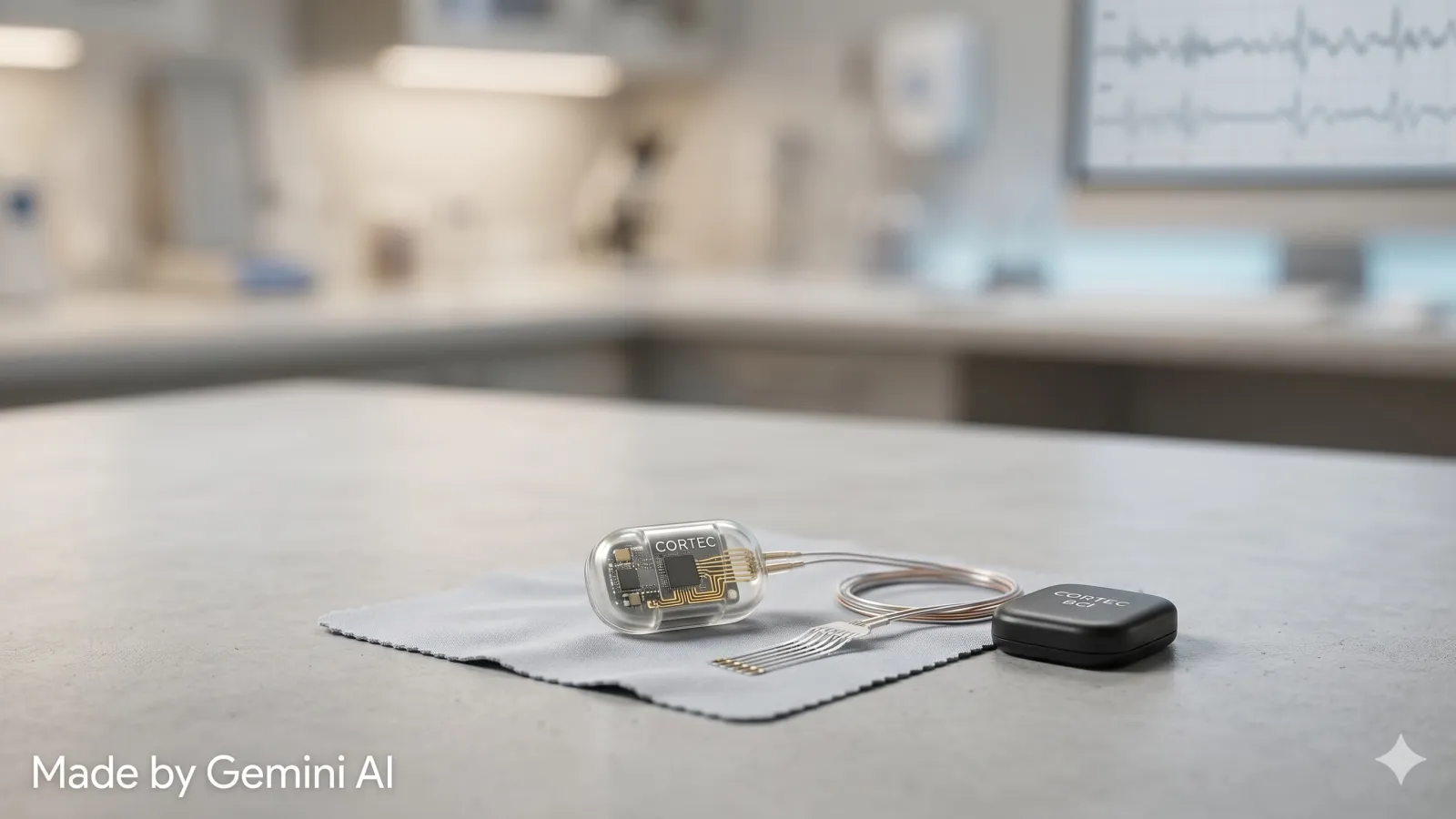
CorTec GmbH has reported that the first participant in a University of Washington early feasibility study has used the company's Brain Interchange™ brain-computer interface (BCI) implant to control a computer through thought alone — including playing the video game Pong — roughly two hours after being introduced to the concept.
The same fully implanted, wireless device had previously been used to deliver therapeutic cortical stimulation as part of the participant's post-stroke motor rehabilitation programme, and no hardware modification was required to achieve the BCI demonstration.
The participant, who is nine months post-implantation and has completed the rehabilitation phase of the ongoing study (ClinicalTrials.gov: NCT06506279), thinks of moving his arm without physical movement. The Brain Interchange™ implant records cortical activity via AirRay® surface electrodes and transmits signals wirelessly to an external computer, where algorithms decode them in real time. CorTec says the company is unaware of any other fully implanted, wireless BCI platform that has demonstrated both therapeutic neuroplasticity induction and thought-based computer control in the same patient using identical hardware.
The clinical and regulatory context
Brain Interchange™ holds an FDA Breakthrough Device Designation for therapeutic motor rehabilitation after chronic ischaemic stroke, and CorTec was admitted to the FDA's Total Product Life Cycle Advisory Programme (TAP) in April 2026. The company is at pains to note, however, that the BCI computer-control demonstration sits outside the current scope of that designation; the device remains investigational and is not approved for commercial use in any indication.
The study is co-led by Dr Jeffrey G. Ojemann and Dr Steven C. Cramer at the University of Washington and UCLA respectively, and is funded by the National Institute of Neurological Disorders and Stroke. Prof. Jeffrey Herron, Associate Professor of Neurological Surgery at the University of Washington School of Medicine, said the signals decoded from the implant were "clear and consistent" and suggested the same capability could ultimately extend to "a wide range of neurological conditions."
CorTec chief executive Frank Desiere framed the result as validation of a platform strategy rather than a product pivot: "The same implant that helped the first participant regain motor function after stroke now also enables him to control a computer through thought alone."
Market landscape and competitive positioning
The implantable BCI space has attracted intense attention following Neuralink's early human studies and Synchron's ongoing stentrode programme, both of which target computer-control applications in paralysed patients. CorTec's differentiation claim — a single implant capable of both closed-loop therapeutic stimulation and BCI communication, without penetrating brain tissue — is clinically meaningful if the durability and signal fidelity hold across larger cohorts and longer follow-up periods. The company has published over 500 days of continuous stable operation data in Nature Scientific Data (2025), which provides some supporting evidence, though the current feasibility study involves a very small number of participants.
Beyond stroke, CorTec has outlined three further clinical pillars on the same platform: epilepsy management (ongoing, Mayo Clinic), BCI for paralysis and severe communication impairment, and a planned depression study with University Hospital Freiburg. Each of these indications carries its own regulatory pathway and competitive set. The BCI-for-paralysis segment in particular is crowded, with several academic and commercial groups advancing cortical and spinal interface systems. CorTec's surface-electrode, non-penetrating approach may offer a long-term safety advantage, but multi-year comparative data across platforms will be needed before clinicians can draw firm conclusions.
Alongside its proprietary platform, CorTec operates a contract development and manufacturing business for implantable components, which the company says provides revenue while its BCI programme matures through clinical evaluation. Investors and prospective partners will be watching for further participant enrolment data and a named regulatory timeline for a pivotal study as the next substantive milestones.