
BriaCell wins FDA clearance for Bria-BRES+ breast cancer IND

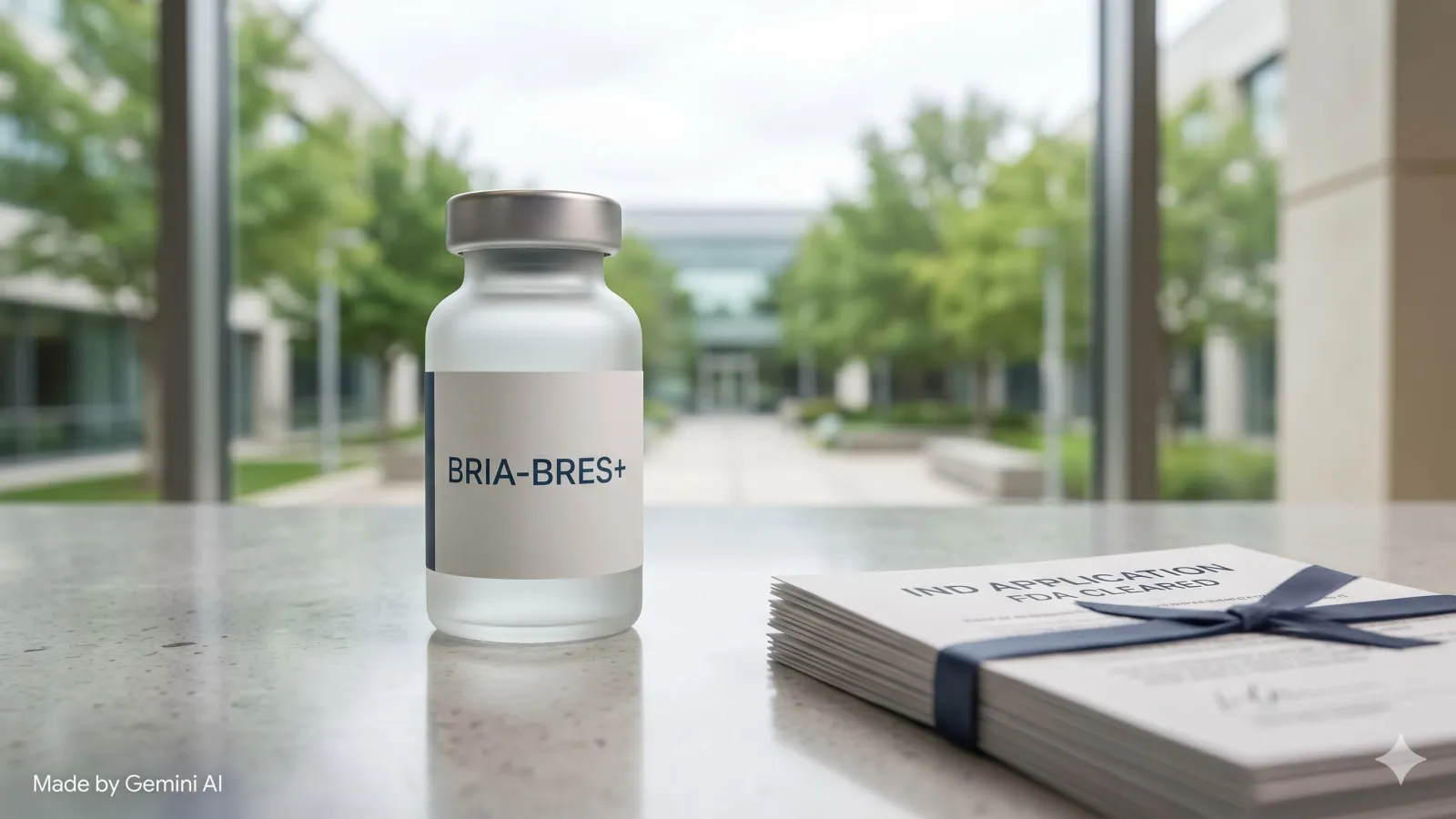
BriaCell Therapeutics has received FDA clearance of an Investigational New Drug application for Bria-BRES+, its next-generation personalised, off-the-shelf cell-based immunotherapy for metastatic breast cancer. The dual-listed company (Nasdaq: BCTX; TSX: BCT) said clinical supplies are already prepared and that it intends to open a Phase 1/2a study in the coming months.
Bria-BRES+ is designed as an evolution of the company's earlier Bria-OTS programme. According to preclinical data presented at the American Association for Cancer Research (AACR) annual meeting, the candidate activates multiple arms of the immune system simultaneously — including naïve T-cells, dendritic cells, and natural killer cells. BriaCell argues that this multi-pronged mechanism may reduce the risk of immune escape, a recognised limitation of single-pathway immunotherapy approaches in solid tumours.
Platform context
The IND clearance builds on encouraging, albeit early, clinical signals from Bria-OTS. The company has reported that the first patient dosed in that programme — a 78-year-old woman with advanced metastatic breast cancer and multiple prior treatment failures — achieved complete resolution of a lung metastasis following four doses of Bria-OTS monotherapy. That response, initially observed at two months, was confirmed at four, six, and eleven months. The patient completed twelve months on study and remains in survival follow-up.
BriaCell's president and chief executive William V. Williams said the "unique design of Bria-BRES+ offers the potential for a favourable safety profile and meaningful therapeutic benefit" in the indication. The company positions both programmes as targeting patients who have exhausted effective treatment options — a population where unmet need remains high despite advances in CDK4/6 inhibitors, antibody-drug conjugates, and checkpoint blockade.
Market and competitive landscape
Metastatic breast cancer is a crowded and rapidly evolving therapeutic space. Approved agents such as sacituzumab govitecan and trastuzumab deruxtecan have raised the bar for late-line efficacy, while a number of cell therapy and personalised immunotherapy developers — including both large-cap oncology groups and university spin-outs — are pursuing tumour-antigen-targeted approaches. Off-the-shelf cell immunotherapies occupy a strategically important sub-niche: they avoid the manufacturing complexity and cost associated with autologous CAR-T programmes, which have so far seen limited traction in solid tumours.
For BriaCell, the Phase 1/2a study will primarily need to establish a safety and tolerability profile before efficacy signals can be assessed with confidence. The single complete response observed in the Bria-OTS cohort, while clinically striking, involves one patient and does not constitute efficacy evidence at a trial level. Investors and analysts will be watching for enrolment timelines, dose-escalation data, and any indication of whether Bria-BRES+'s additional immune-activating components translate the AACR preclinical findings into a clinical differentiation story.
The FDA IND clearance is a procedural milestone rather than a regulatory endorsement of efficacy or safety, a distinction that press releases in this category frequently obscure. BriaCell's next material catalyst will be first-patient-dosed confirmation and, thereafter, early Phase 1 safety data.