
PRF Technologies wins FDA IND clearance for OcuRing-K cataract trial

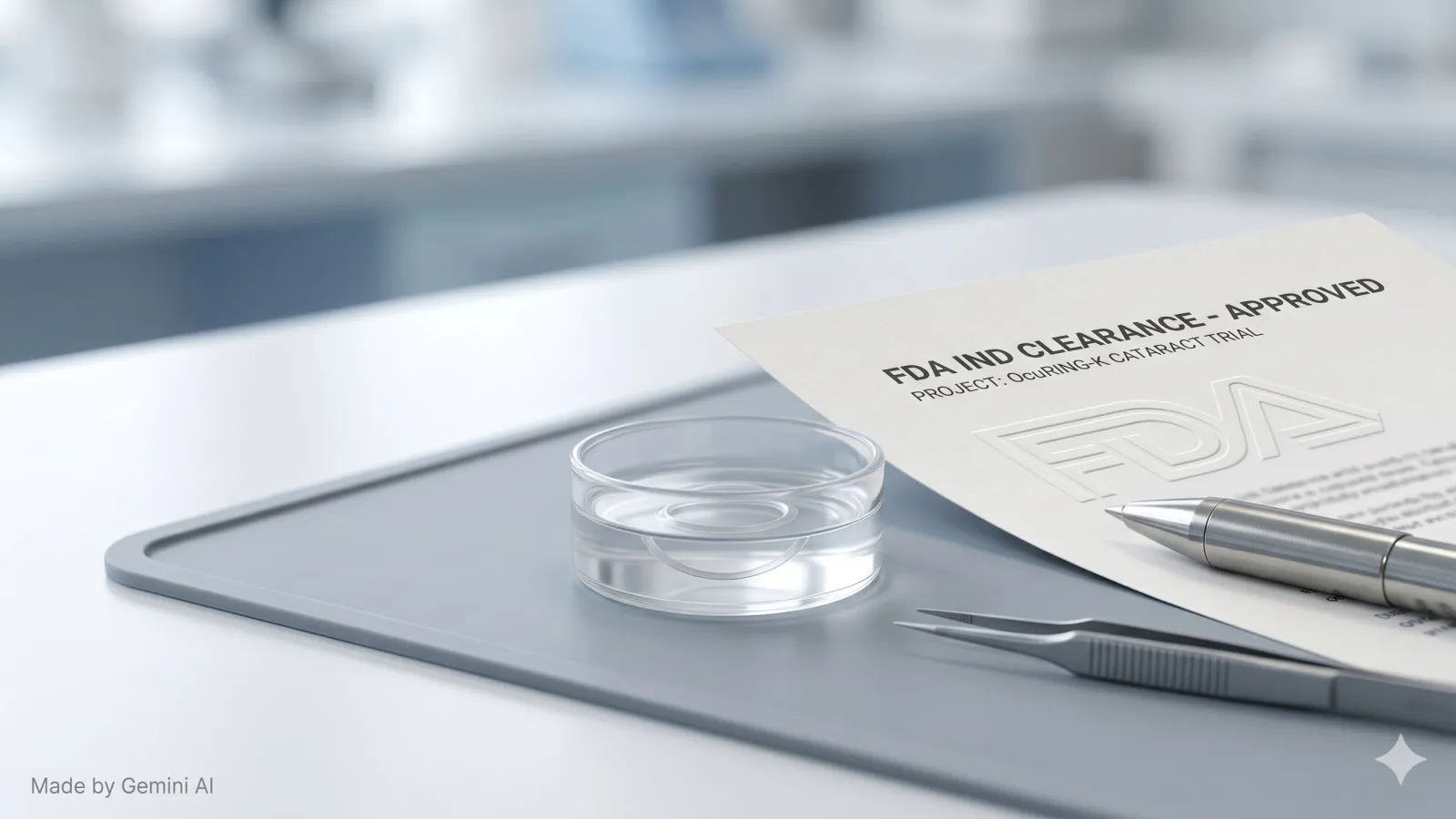
PRF Technologies has secured FDA clearance of its investigational new drug application for OcuRing-K, a bio-erodible intraocular ring designed to deliver ketorolac at the surgical site during cataract procedures. The NASDAQ-listed company, which operates through its majority-owned subsidiary LayerBio, said clearance enables it to progress into Phase II clinical development in the United States.
OcuRing-K is positioned as a drop-less alternative to the topical NSAID and steroid regimens that currently dominate post-cataract recovery. The device is applied intraoperatively and is intended to provide sustained, localised drug release, potentially removing the need for patients to adhere to multi-week eye-drop schedules after surgery. Patient compliance with topical regimens following cataract surgery is a well-documented clinical problem, and the company is making adherence improvement a central plank of its commercial argument.
The trial
PRF said it intends to initiate a multi-centre Phase II study in the second half of 2026 following completion of start-up activities. The trial will assess endpoints covering pain reduction, inflammation control, and safety. The company has not disclosed how many centres will participate, the target enrolment figure, or the planned study duration.
Ehud Geller, executive chairman of PRF Technologies, said OcuRing-K addresses "a clear unmet need in cataract surgery by offering a drop-less, inside-the-eye, sustained-release approach designed to improve treatment consistency and simplify post-operative care."
Market and competitive context
Cataract surgery is among the highest-volume elective procedures globally, with tens of millions performed each year, making even modest improvements to the post-operative standard of care commercially meaningful. The drop-less and dropless-adjacent segment has attracted a number of companies over the past decade, with intracameral steroid depots and sustained-release ocular inserts already in various stages of regulatory review and commercial launch in the United States and Europe. Competitors including Ocular Therapeutix and others have advanced drug-delivery implants targeting post-surgical inflammation, meaning PRF and LayerBio will need to differentiate OcuRing-K on safety, duration of effect, and physician adoption rather than novelty alone.
From a regulatory standpoint, the FDA's acceptance of the IND is a procedural clearance rather than an endorsement of efficacy; Phase II data — particularly the safety profile in a large, elderly patient population typical of cataract surgery — will be the first meaningful clinical test of the platform. The MHRA in the United Kingdom and the EMA in Europe have both signalled interest in sustained-release ophthalmic delivery formats in recent guidance updates, which could broaden the eventual regulatory pathway for LayerBio's pipeline beyond the US market.
PRF's company profile is also worth noting for readers. Beyond ophthalmology, the firm operates a DeepSolar AI energy-optimisation platform, an unusual combination that may affect how institutional biotech investors price the stock. The company has flagged going-concern risks and ongoing capital requirements in its public filings — factors that could influence its ability to fund Phase II through to completion without additional financing.