
Quoin Pharma lines up four QRX009 rapamycin studies for 2026

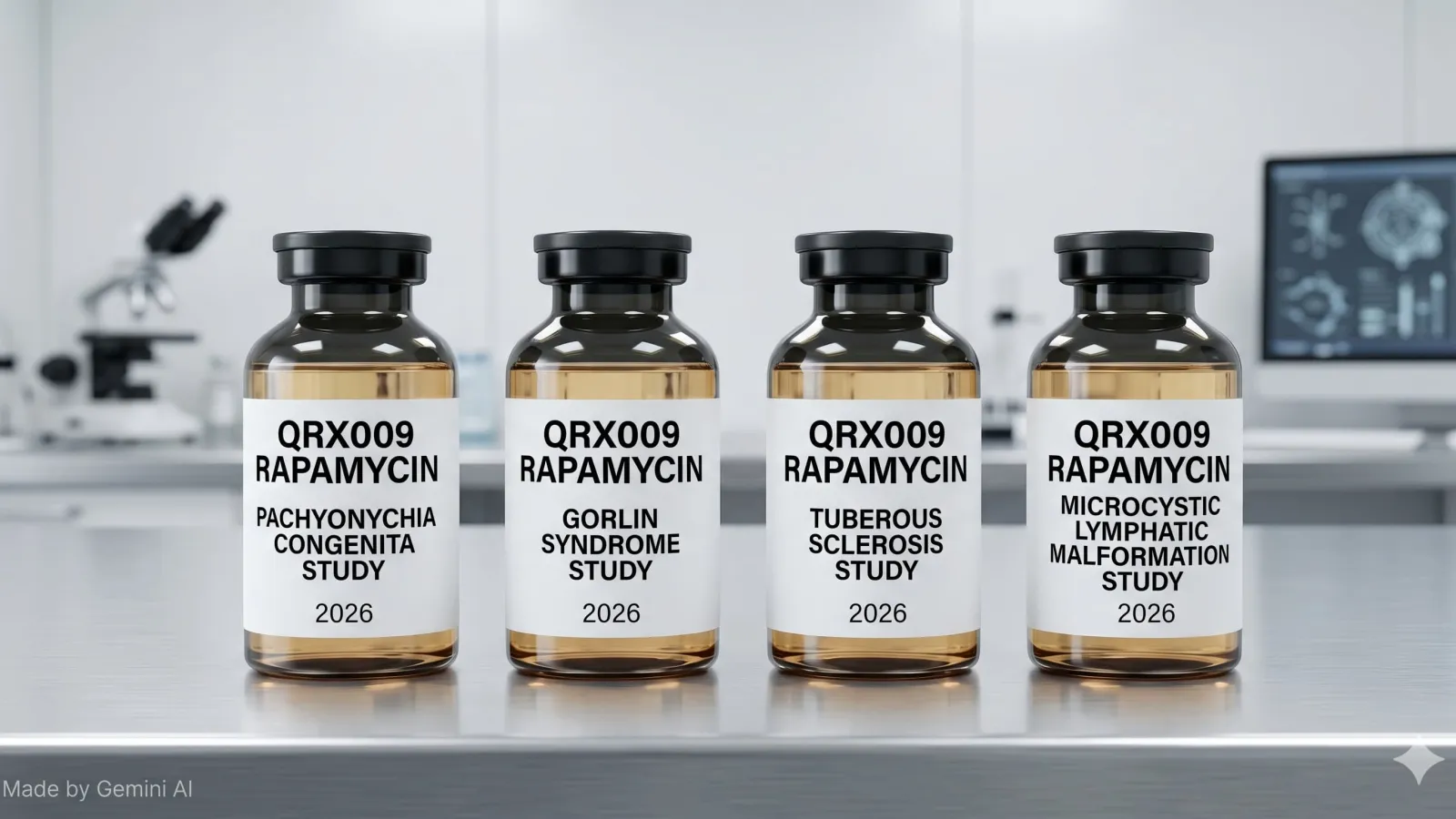
Quoin Pharmaceuticals has outlined a multi-pronged clinical expansion for QRX009, its proprietary topical rapamycin lotion, targeting up to four separate rare-disease indications before the end of 2026. The NASDAQ-listed company said it will initiate investigator-led studies in Pachyonychia Congenita (PC), Gorlin Syndrome (GS), and Tuberous Sclerosis Complex (TSC), while separately targeting a Q3 2026 Investigational New Drug (IND) submission to the FDA for a fourth, as yet undisclosed, indication.
The PC study will be led by Professor Edel O'Toole of Queen Mary University of London, described by the company as a globally recognised clinician in PC research with prior clinical trial experience in the disease. PC is a rare inherited keratinisation disorder characterised by painful plantar keratoderma and nail thickening, for which no approved therapy currently exists. Quoin said it expects to initiate the PC study in the third quarter of this year.
Pipeline breadth and delivery platform
QRX009's active ingredient, rapamycin — also known as sirolimus — is an mTOR inhibitor with an established systemic safety profile, but its application in topical dermatology remains largely investigational. Quoin says its proprietary lotion and dermal patch delivery systems have achieved target loading concentrations of 4% and 5%, which the company positions as a technical differentiator enabling effective dermal penetration.
Chief executive Michael Myers said the company views the QRX009 expansion as complementary to its ongoing late-stage programme in Netherton Syndrome (NS) using the related platform candidate QRX003. Quoin is also targeting a separate IND for Peeling Skin Syndrome using QRX009 in Q2 2026. If all timelines hold, the company could have as many as four QRX009 indications in active clinical testing simultaneously by year end — an unusually broad multi-indication push for a company of Quoin's size.
Market context and competitive landscape
Topical mTOR inhibition has attracted growing interest in rare dermatological conditions, particularly following the approval of topical sirolimus formulations in specific vascular anomalies such as facial angiofibromas associated with TSC. Nobilis Health and a number of academic-led consortia have explored rapamycin in adjacent skin indications, though no directly competing topical product has secured broad rare-skin-disease approvals across the indications Quoin is targeting.
The orphan disease space in dermatology is increasingly active, with patient advocacy organisations — including The PC Project and the Gorlin Syndrome Alliance, both of which Quoin says it has established relationships with — playing a meaningful role in shaping trial design and recruitment. Advocacy group engagement has become an important signal for investors assessing rare-disease biotechs, as it can materially affect enrolment timelines and regulatory dialogue.
Quoin's strategy of using investigator-led studies ahead of company-sponsored trials is notable: such studies can generate proof-of-concept data at lower cost, though they offer less control over protocol design and timing. The company's ability to convert investigator findings into pivotal trial assets will be a key question for analysts as the data begin to emerge.
Investors will be watching the Q2 Peeling Skin Syndrome IND filing and the Q3 PC study initiation as the first meaningful milestones against the timelines set out in this update.