
Syncromune presents SYNC-T Phase 1 data at ECIO 2026

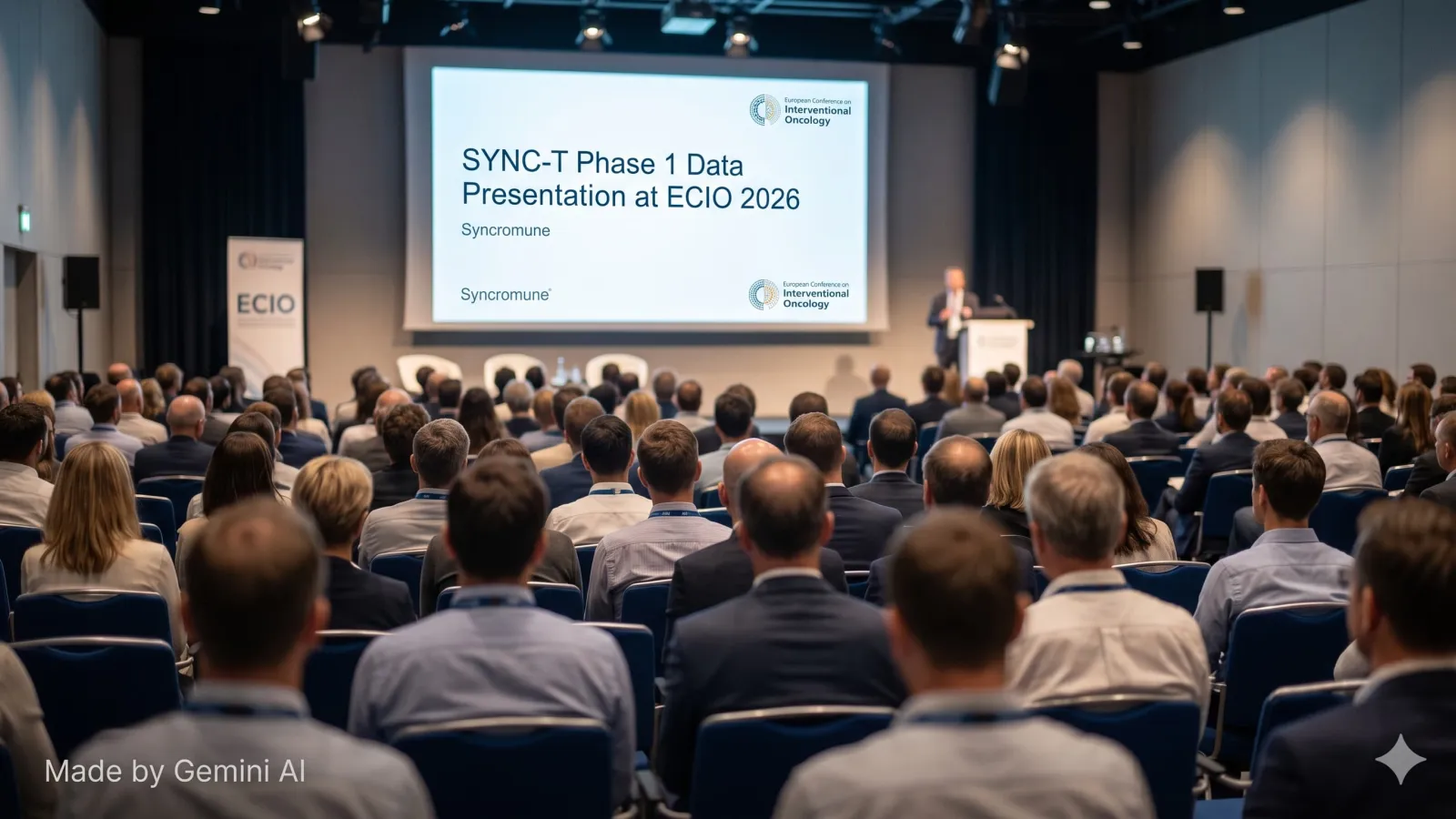
Syncromune has presented preliminary Phase 1 results from its SYNC-T combination immunotherapy platform at the 2026 European Conference on Interventional Oncology (ECIO) in Basel, Switzerland. The data, drawn from a single-arm study of 15 patients with metastatic prostate cancer, reported an overall response rate of 87%, with complete responses in 53% of patients — figures the company says support continued investment in the platform.
The oral presentation was delivered by Stephen Kee, EVP of Clinical Medical and Business Operations (EMEA), and focused on the use of SYNC-T Therapy SV-102 in metastatic castration-resistant prostate cancer (mCRPC). Median time to response was 2.9 months and median duration of response was 12.1 months; median overall survival had not been reached at 17.2 months of follow-up. Among the 13 patients who had bone metastases at baseline, imaging confirmed complete resolution in seven (54%).
How the platform works
SYNC-T combines partial cryolysis with intratumoral drug delivery through a single percutaneous needle device, placed under image guidance into a target tumour. The freeze-thaw cycle disrupts tumour cell membranes and releases patient-specific antigens into the tumour microenvironment. SV-102, a multi-target biologic, is then infused immediately through the same device into the lysed zone, where it co-localises with those antigens. The system is designed to channel antigen-SV-102 complexes into regional lymphatics, where they interact with immune cells to promote T cell activation and, potentially, an abscopal effect — regression of lesions beyond the directly treated tumour.
Safety data reviewed at ECIO showed 41 treatment-emergent adverse events across 13 patients; 95% were Grade 1 or 2. The most common events were haematuria and fever. There were two Grade 2 immune-related adverse events and two Grade 3 events; no Grade 4 or 5 events were recorded. Executive Chairman Charles Link described the tolerability profile as supportive of the platform's broader potential across metastatic solid tumours.
Market context and competitive landscape
The intratumoral immunotherapy space has attracted considerable attention over the past decade, with programmes from companies pursuing toll-like receptor agonists, STING pathway activators, and oncolytic viruses, among others. The specific combination of cryoablation with intratumoral immunomodulation is a less crowded niche, though interventional oncology centres in the US and Europe have been experimenting with ablation-plus-immunotherapy combinations in academic settings for several years.
mCRPC itself remains a challenging indication with an established treatment hierarchy — enzalutamide, abiraterone, docetaxel, cabazitaxel and PARP inhibitors all feature — meaning any new entrant must demonstrate meaningful clinical differentiation. The Phase 1 response-rate figures are striking, but the sample size of 15 patients and the single-arm design mean they carry limited inferential weight without randomised comparison data.
Syncromune is now enrolling patients in its Phase 2 LEGION-100 trial (NCT06533644) across multiple US sites, which should provide a larger and more structurally rigorous dataset. Investors and clinicians will be watching for interim readouts from LEGION-100 as the primary signal of whether the Phase 1 results hold at scale. The company is privately held, so capital runway and partnering strategy remain undisclosed.