
AMT Medical SAFE-CAB II trial data published in JTCVS

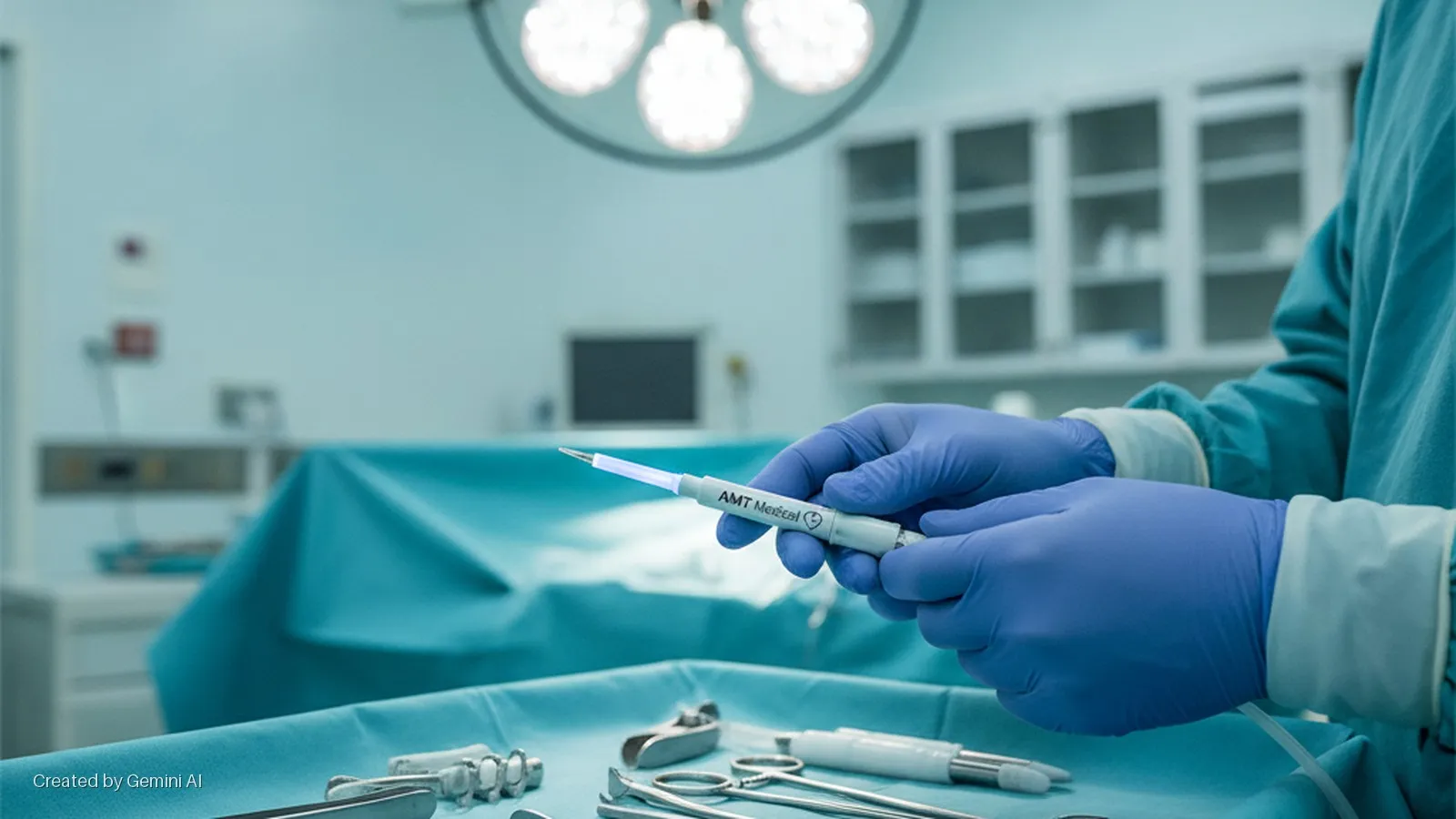
AMT Medical B.V. has announced the publication of one-year results from its SAFE-CAB II prospective clinical trial in The Journal of Thoracic and Cardiovascular Surgery (JTCVS), the flagship journal of the American Association for Thoracic Surgery. The Dutch medical technology company says the data represent the first peer-reviewed, prospective clinical evidence for its ELANA Anastomotic System, a sutureless, laser-assisted device designed to replace the hand-sewn bypass connection that has been central to coronary artery bypass grafting (CABG) since the 1960s.
The trial enrolled 71 patients undergoing elective CABG at St Antonius Hospital in Nieuwegein, the Netherlands, between June 2023 and September 2024, with co-enrolment at Deutsches Herzzentrum der Charité in Berlin. Patients had a mean age of 71 years and received an average of 3.5 bypass connections per procedure. The ELANA system was used specifically for the anastomosis between the left internal thoracic artery and the left anterior descending coronary artery, generally considered the most clinically important graft in the operation.
What the data show
The trial's primary endpoint, device-related major adverse cardiac events at one year, occurred in 2.9% of patients, meeting the pre-specified non-inferiority threshold against a historical surgical benchmark (p = 0.0033). Six-month patency across the full cohort was 92.5%, rising to 97.5% in the subgroup treated with the latest-generation laser catheter. AMT Medical says these rates are consistent with the upper range reported for conventional hand-sewn bypasses. Angiographic data were independently reviewed by Cardialysis, a Rotterdam-based academic core laboratory, and the trial was monitored by HEMEX AG under oversight from an independent Data Safety Monitoring Board. No device-related safety concerns were identified by that board.
Bart van Putte, principal investigator and cardiothoracic surgeon at St Antonius Hospital and Amsterdam UMC, said: "For the first time, a rigorous prospective trial shows that the most challenging step of a bypass operation can be performed without sutures on a beating heart, and without ever interrupting blood flow to the patient's coronary artery."
Regulatory path and market context
With peer-reviewed publication secured, AMT Medical is preparing CE marking submissions for open and minimally invasive direct CABG indications under the EU Medical Devices Regulation, and is readying an Investigational Device Exemption submission with the US FDA for an Early Feasibility Study in collaboration with US academic cardiac surgery centres. A next generation of trials in minimally invasive and robotic settings, including a planned multivessel study, is also planned.
The company has raised over EUR 40 million to date, including a USD 25 million Series B in 2025 led by Bender Analytical Holding, with participation from Invest-NL, the European Innovation Council Fund and Oost NL. Earlier this year it appointed Geert van Gansewinkel as chief executive; he joins from GATT Technologies, where he steered a device through CE marking, FDA PMA approval and acquisition by Johnson and Johnson.
The broader competitive context is notable. Roughly one million CABG procedures are performed globally each year, yet robotic and minimally invasive approaches remain a small fraction of total volume, in part because reliable sutureless anastomosis technology has been absent. Several academic groups and smaller device companies have explored sutureless connectors over the years, but none has yet reached widespread commercial adoption in the coronary setting. If AMT Medical can sustain its patency and safety profile across larger, multicentre studies, the ELANA platform could provide the enabling technology that accelerates a structural shift toward less invasive bypass surgery. Investors and surgeons will look for the two-year SAFE-CAB II follow-up data and the outcome of IDE discussions with the FDA as the next substantive milestones.