
Philips wins two ITEA 2026 awards for AI-enabled healthcare projects

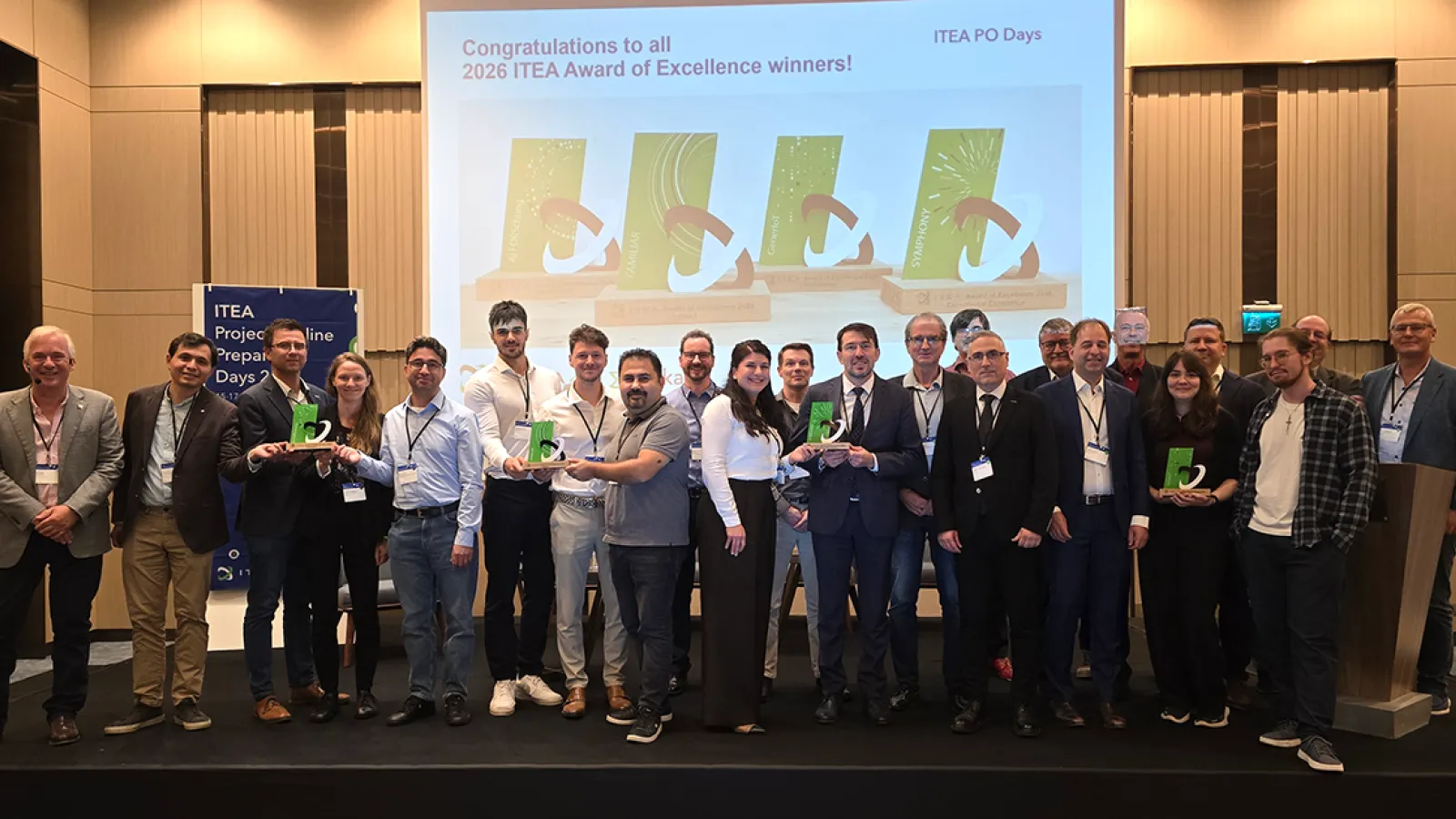
Royal Philips has won two ITEA Awards of Excellence 2026, recognising a pair of public-private research collaborations the Dutch health technology group led on AI-enabled clinical workflows and fibre-optic sensing data management. The awards were presented at the ITEA PO Days 2026 in Istanbul on 16 September.
SYMPHONY received the top "Exceptional Excellence" designation, while AI FORSchung was honoured in the Innovation category. Both projects were conducted under the Eureka ITEA cluster and funded by national authorities including the Netherlands Enterprise Agency.
SYMPHONY: open standards meet clinical pathways
SYMPHONY set out to build a vendor-neutral reference architecture that connects healthcare data, clinical applications and AI-supported decision tools across institutions. Clinical partners included Leiden University Medical Center, Amsterdam University Medical Center and Karolinska University Hospital, and the project demonstrated connected workflows across four indication areas: prostate cancer, aortic aneurysm, atrial fibrillation and multiple sclerosis.
One concrete output is now a commercial product. Philips developed automated segmentation and measurement of vascular structures in medical images within the programme; that functionality has received both FDA clearance and CE marking and is incorporated into AV Vascular, part of the Philips AV Cardiovascular Suite.
Sanjay Gandhi, Head of Medical Affairs and Clinical Partnerships at Philips, said: "Healthcare AI creates the greatest value when it can work with the information and clinical workflows that care teams already depend on."
Jouke Dijkstra, Associate Professor of Vascular and Molecular Imaging at LUMC, described the collaboration as demonstrating how "vendor-neutral, standards-based integration of clinical data, imaging and applications can support real clinical workflows" and create a reusable foundation for AI algorithm deployment across institutions.
AI FORSchung: compressing sensing data across sectors
The AI FORSchung project addressed a different but increasingly pressing problem: the volume of position data generated by Fiber Optic RealShape technology, which is used to guide medical devices during image-guided procedures. Researchers demonstrated that FORS position data could be compressed more than 20-fold while maintaining performance within the evaluated datasets.
Ahmet Ekin, Senior Designer at Philips, noted that the methods developed have relevance well beyond healthcare, covering monitoring of pipelines, bridges and tunnels, where continuous fibre-optic sensing similarly generates substantial data loads.
Market context and competitive positioning
The two awards land as health technology vendors face intensifying pressure to demonstrate that AI investments translate into deployable, interoperable clinical tools rather than siloed proof-of-concept systems. Philips is competing in this space with GE HealthCare, Siemens Healthineers and a growing cohort of AI-native software companies targeting radiology, cardiology and surgical navigation.
The emphasis in SYMPHONY on open, vendor-neutral standards is notable. Proprietary AI ecosystems have drawn regulatory and procurement scrutiny in several European markets, and the NHS and comparable European payers are increasingly requiring interoperability credentials before committing to AI-enabled imaging and workflow software. SYMPHONY's approach positions Philips to argue that its AI tools can slot into existing hospital infrastructure rather than requiring platform lock-in.
The fibre-optic compression work, while less immediately commercial in healthcare, broadens Philips' IP position in sensing data management, an area where demand is growing across critical infrastructure as well as medical applications. Cross-sector applicability may also strengthen the case for continued public funding under future Eureka or Horizon programmes.