
Wandercraft launches Eve self-balancing exoskeleton for home use

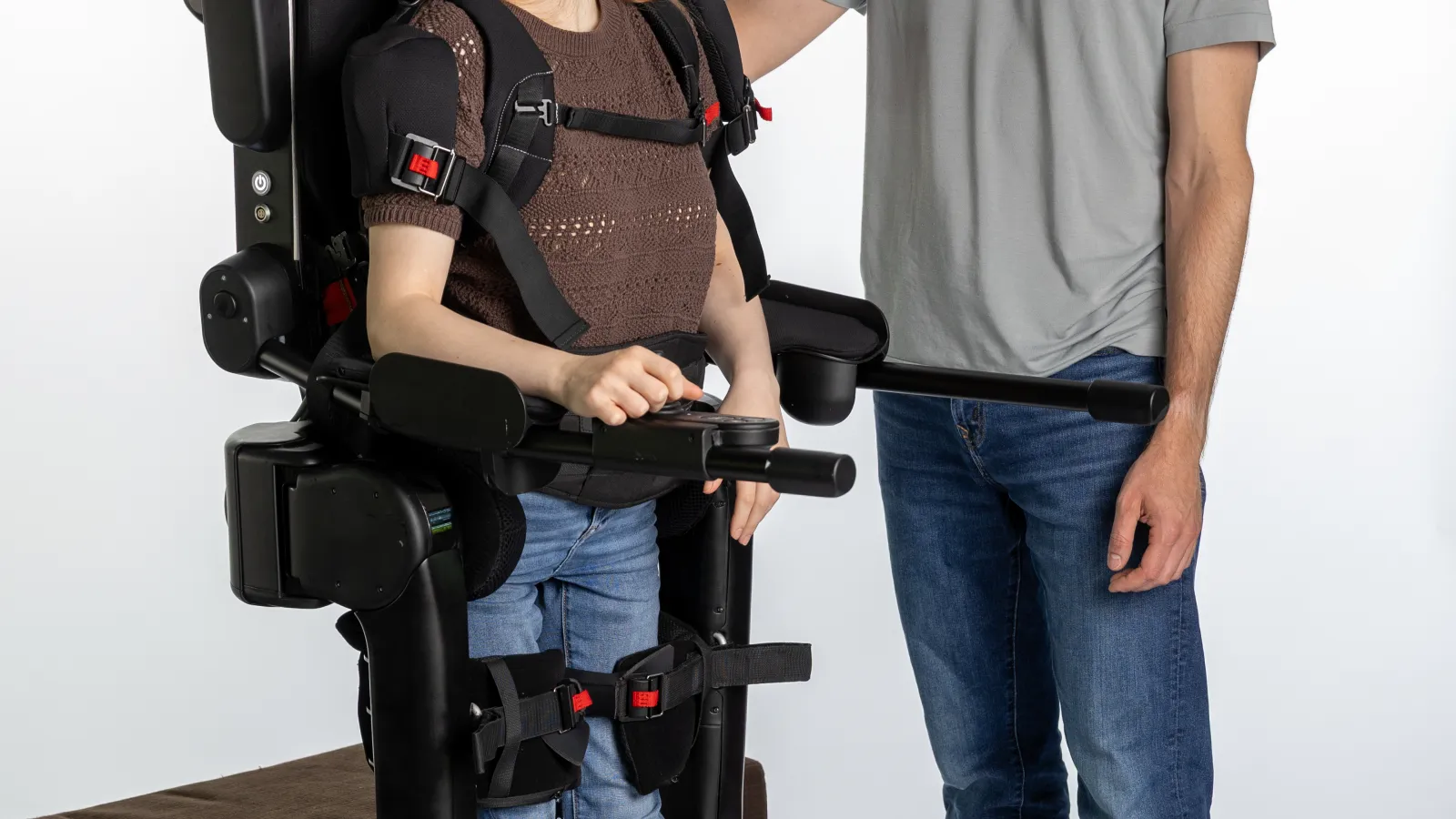
Wandercraft has begun US commercial sales of Eve, an FDA-cleared personal exoskeleton that enables hands-free upright mobility for adults living with spinal cord injuries. The device uses self-balancing technology the company describes as powered by physical AI, removing the need for crutches or a walking frame and leaving the user's hands free for everyday tasks such as carrying objects, preparing food, and opening doors.
Eve is positioned as a complement to a wheelchair rather than a replacement, intended for moments when a user chooses to stand or walk. Eligibility covers adults with spinal cord injuries at any neurological level who can operate the device's handheld controller and have no listed contraindications, a broader population than previously cleared exoskeletons that carried restrictions based on injury level.
Clinical evidence and distribution
The commercial launch follows the publication of peer-reviewed research in the Journal of Visualized Experiments, drawing on studies conducted at Kessler Foundation and the James J. Peters VA Medical Center. Among the first 16 participants who completed the training protocol, all met the study's performance targets on the Timed Up and Go and the 6-Minute Walk Test, and all achieved the doffing goal. The researchers reported no serious adverse events among that cohort.
Separately, results from Wandercraft's pivotal study, presented at the Academy of Spinal Cord Injury Professionals Annual Meeting on 8 September, showed that Eve supported safe, hands-free assisted walking with a low adverse-event rate, alongside high scores for perceived safety, user satisfaction, and ease of training.
"What is important about this work is that we evaluated more than whether someone could stand or walk in an exoskeleton," said Gail Forrest, PhD, director of the Tim and Caroline Reynolds Center for Spinal Stimulation at Kessler Foundation. "We examined whether people with high-level spinal cord injuries and their companions could learn to use a self-balancing exoskeleton and perform functional tasks relevant to personal use."
National Seating and Mobility will act as Wandercraft's exclusive complex rehabilitation technology distribution partner, supporting evaluation, fitting, and delivery through more than 180 locations. Good Shepherd Rehabilitation in Pennsylvania's Lehigh Valley will serve as an exclusive regional partner, and USVetServ will distribute Eve and the company's clinical-grade Atalante X device to the US Department of Veterans Affairs.
Reimbursement and market context
Wandercraft says personal exoskeletons are covered by Medicare under HCPCS billing code K1007 as custom-fitted orthoses, subject to individual requirements, and by the Department of Veterans Affairs and workers' compensation programmes. A dedicated access team is working to expand private insurance coverage.
The personal exoskeleton market has grown steadily since the FDA first cleared walking-assist devices for rehabilitation use earlier in the decade. Competitors including Ekso Bionics and ReWalk Robotics have established positions in clinical and rehabilitation settings, and both have pursued cleared home-use indications with varying commercial traction. Wandercraft's differentiation rests on the self-balancing capability and the breadth of the spinal injury population it is cleared to serve. Whether that translates into meaningful reimbursement uptake will depend heavily on payer coverage decisions beyond Medicare, which remains limited in scope for this device category.
Wandercraft, which also commercialises the Atalante X rehabilitation exoskeleton across more than 150 centres globally and an industrial humanoid platform, is holding a launch event in New York this evening with the United Spinal Association.