
Priovant wins FDA approval for brepocitinib in dermatomyositis

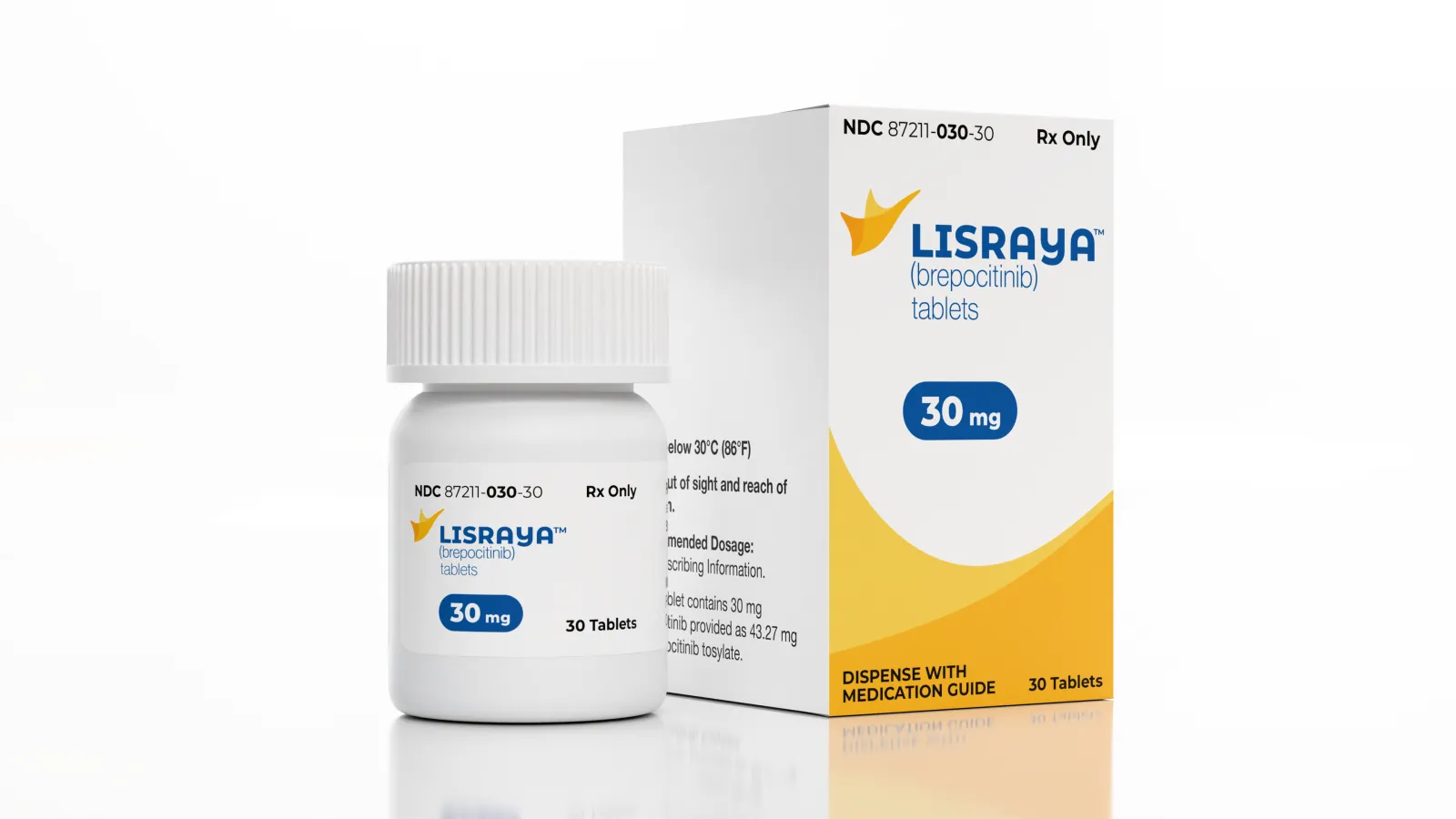
Priovant Therapeutics has received US Food and Drug Administration approval for LISRAYA (brepocitinib) 30 mg, a once-daily oral TYK2/JAK1 inhibitor for the treatment of adults with dermatomyositis (DM). The Durham, North Carolina-based company said the product is available through a specialty pharmacy network with immediate effect, making it the first targeted therapy ever approved in the indication.
Dermatomyositis is a rare systemic autoimmune disease characterised by progressive muscle weakness and painful, pruritic skin lesions. Management has historically depended on chronic high-dose corticosteroids, non-specific immunomodulators, and intravenous immunoglobulin, none of which are designed to address the underlying disease biology. The condition significantly impairs physical function and quality of life, and carries a high burden of steroid-related toxicity accumulated over years of treatment.
The VALOR trial
Approval rests on results from the Phase 3 VALOR study, which the company describes as the largest clinical trial ever conducted in dermatomyositis. The primary endpoint, the myositis Total Improvement Score, a composite measure capturing disease activity across multiple domains, was met with benefits evident from Week 4 and sustained through 52 weeks.
On a composite responder analysis, 55% of patients treated with brepocitinib achieved at least moderate improvement on the Total Improvement Score alongside minimal or no steroid use by the end of the study, compared with 30% on placebo. Among patients who entered the trial on at least 7.5 mg per day of oral corticosteroids (prednisone-equivalent), 62% tapered to no more than 2.5 mg per day by Week 52, versus 38% on placebo; 45% discontinued corticosteroids entirely, compared with 29% on placebo. Patients also reported more than four times as much improvement in their global disease-activity rating relative to placebo.
Primary results from VALOR were published in the New England Journal of Medicine in March 2026, with skin-specific secondary endpoints published in JAMA Dermatology in August 2026. The FDA had previously granted brepocitinib both Priority Review and Orphan Drug Designation.
Ruth Ann Vleugels, professor of dermatology at Harvard Medical School and founding director of the Autoimmune Skin Disease Center at Mass General Brigham, said the approval represented a genuine shift for patients: "For the first time, I am thrilled to be able to offer my patients a targeted, once-daily oral medicine that delivers meaningful benefit across muscle, skin, and overall disease activity while simultaneously reducing reliance on systemic corticosteroids."
Market context and regulatory read-across
The JAK and TYK2 inhibitor class has faced heightened regulatory scrutiny since the FDA mandated a class-wide boxed warning in 2021 covering serious infections, malignancy, major adverse cardiovascular events, and thrombosis. LISRAYA carries this boxed warning. The safety profile observed in VALOR reflects adverse reactions typical of the class, including upper respiratory tract infection, headache, fatigue, and urinary tract infection, and the label restricts use in patients with severe hepatic or renal impairment.
Despite class-level headwinds, the approval adds to a growing body of evidence that selective TYK2 inhibition can deliver a differentiated benefit-risk profile in autoimmune indications. Bristol Myers Squibb's deucravacitinib, a selective TYK2 inhibitor approved in plaque psoriasis, has demonstrated the commercial viability of the mechanism; brepocitinib's dual TYK2/JAK1 profile positions it somewhat differently, and the clinical community will be watching how the two approaches compare as real-world data accumulates.
Priovant, a subsidiary of Roivant Sciences, said it is continuing to evaluate brepocitinib in Phase 3 programmes in non-infectious uveitis and cutaneous sarcoidosis, and in a Phase 2b/3 programme in lichen planopilaris. Those readouts, if positive, could meaningfully expand the addressable patient population for the molecule and provide further evidence for the platform in rare autoimmune disease.