
Intelligent Bio Solutions hits 98% accuracy ahead of 510(k) filing

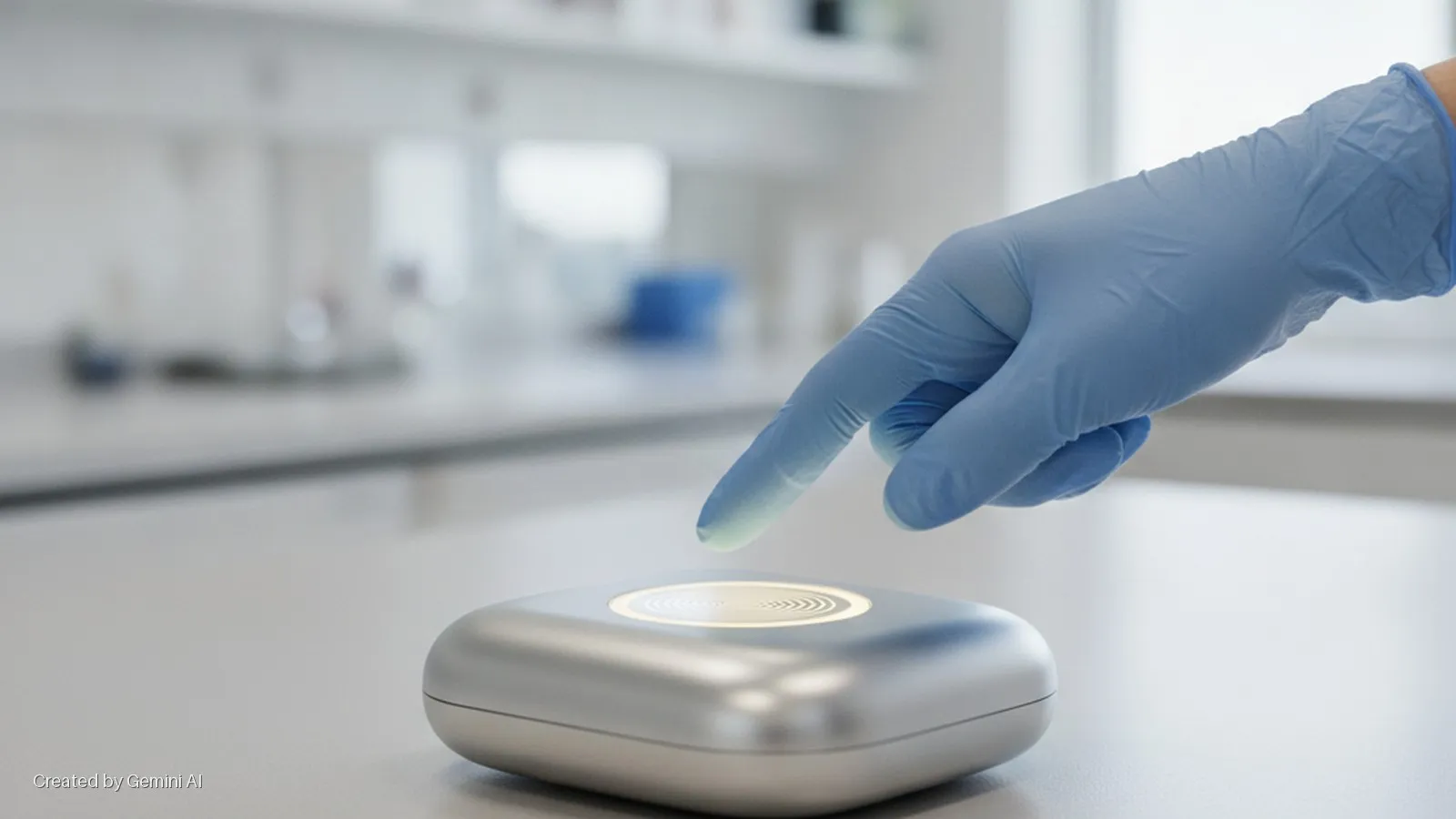
Intelligent Bio Solutions (Nasdaq: INBS) has published results from a multi-site method comparison study for its Intelligent Fingerprinting Drug Screening System, reporting overall accuracy of 98.2% for detection of the opiate codeine. The company said the data complete its FDA 510(k) clinical study package and that the regulatory submission remains on track for September 2026.
The study was conducted across three independent US clinical sites under pre-employment and workplace screening conditions, making it the most extensive clinical evaluation the company has run to date. Pooled results across all three sites showed 70 true positives, 144 true negatives, four false negatives, and zero false positives, yielding sensitivity of 94.6%, specificity of 100%, and overall accuracy of 98.2%. Performance was measured against liquid chromatography-tandem mass spectrometry (LC-MS/MS) as the reference standard.
Improvement on prior data
The figures represent a meaningful step up from the company's previous method comparison study, announced in November 2024, which reported approximately 94% accuracy and 82% sensitivity. Specificity was already 100% in that earlier study and remains so. The closing of the sensitivity gap from 82% to above 94% was explicitly cited by management as a precondition for regulatory filing.
Harry Simeonidis, president and chief executive, said the company "needed to close the gap on sensitivity" and that the latest results represent the outcome it had been working toward. "With this study complete, we now have everything we need for our 510(k) submission, which remains on track for submittal in calendar 2026," he said.
A 510(k) clearance would allow INBS to enter the US market. The company already sells the system to commercial customers outside the United States, primarily in construction, mining, transport, logistics, and drug treatment sectors.
Market context and regulatory read-across
Non-invasive workplace drug screening is a growing sub-segment within point-of-care diagnostics, driven by employer demand for rapid, hygienic, and legally defensible testing, particularly in safety-critical industries. The incumbent technologies, predominantly urine and oral-fluid immunoassay strips, are well established and carry extensive regulatory precedent in the US market.
The 510(k) pathway requires INBS to demonstrate substantial equivalence to a predicate device. The company has not publicly named the predicate it intends to cite, and the FDA's review timeline for 510(k) submissions in the diagnostics space typically runs three to twelve months from acceptance, meaning clearance would likely fall in 2027 at the earliest. Investors should note that 510(k) acceptance and clearance are distinct steps; the company's current announcement confirms only that the submission package is ready.
Broader regulatory scrutiny of workplace drug testing is also relevant context. The US Department of Transportation has in recent years proposed guidance on oral-fluid testing as an alternative to urine testing, which could create an opening for novel collection matrices such as fingerprint sweat. Whether INBS can position its technology within that evolving framework will be a factor in its eventual commercial traction beyond initial clearance.