
PhAST Corp. wins FDA clearance for rapid blood culture AST panel

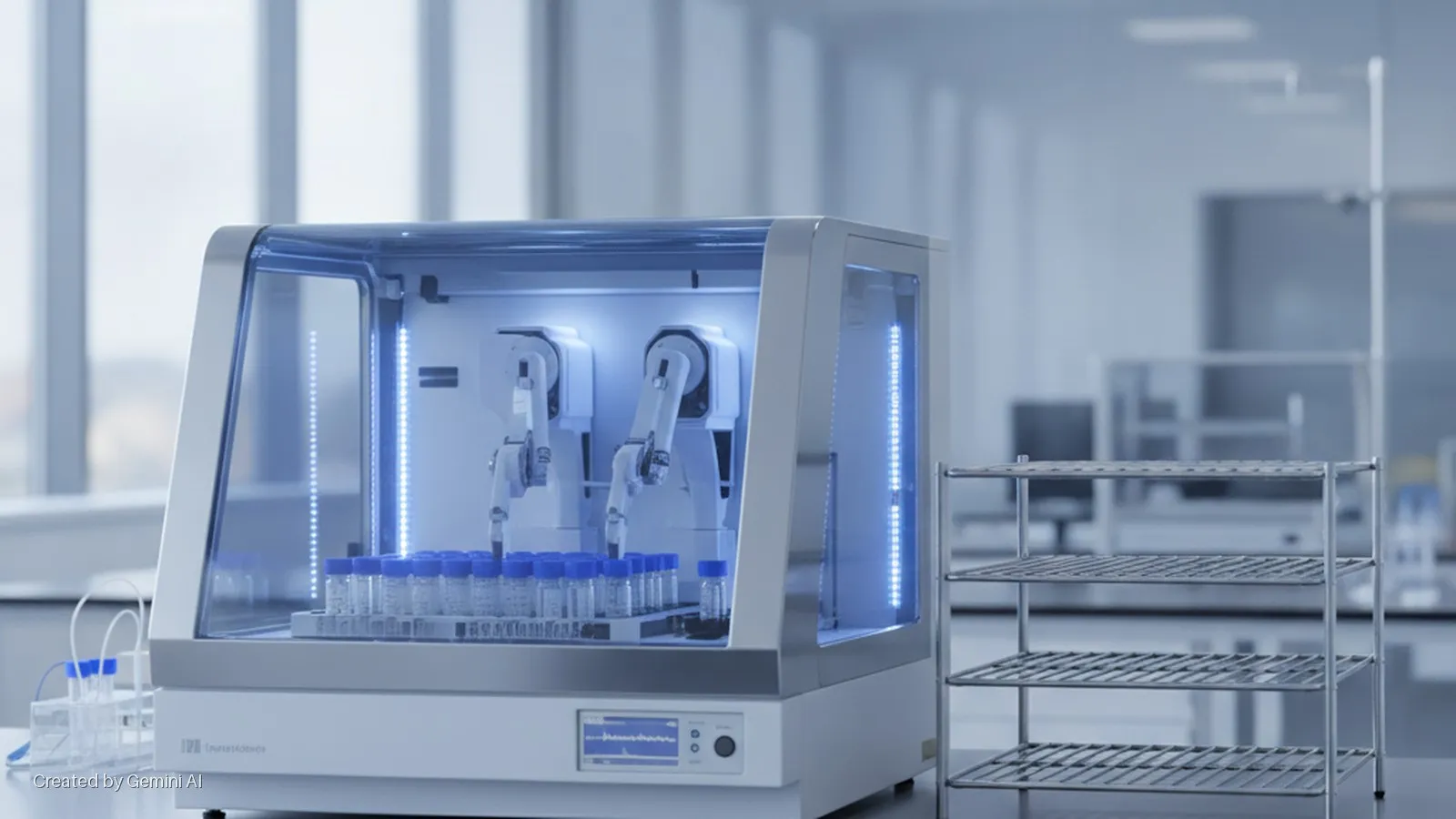
PhAST Corp. has received 510(k) clearance from the US Food and Drug Administration for its PhAST instrument and Blood Culture Gram-negative Panel, the Cambridge, Massachusetts company confirmed on 23 September 2026. The clearance, formally granted in June 2026, covers a phenotypic in vitro diagnostic assay that determines antimicrobial susceptibility directly from positive blood cultures, without the subculture step that conventional workflows require.
The panel covers 15 antimicrobials and is indicated for monomicrobial samples containing Acinetobacter spp., Enterobacterales, or Pseudomonas aeruginosa. It reports categorical interpretations of Susceptible, Intermediate, or Resistant. Time from sample loading to result is 99 minutes (plus or minus 6 minutes) for Enterobacterales and Acinetobacter spp., and 141 minutes for P. aeruginosa.
How it works
Rather than inferring resistance from genetic markers, the PhAST platform uses single-cell, time-lapse video microscopy and computer vision to observe how individual bacterial cells respond to each antimicrobial in real time. Co-founder and Chief Scientific Officer Roman Stocker said the approach "reveals population susceptibility in minutes rather than days" by quantifying the full distribution of individual cell responses, not just aggregate growth signals.
The clinical study supporting the clearance ran across four sites, three of them US clinical laboratories. Overall categorical agreement with reference methods was 97.3%, with a major error rate of 0.9% and a very major error rate of 0.2%. The panel is classified as Moderate Complexity under the Clinical Laboratory Improvement Amendments framework, and sample preparation requires under one minute of hands-on time. Each instrument processes four samples concurrently, supporting throughput of up to 12 samples per eight-hour shift. PhAST also holds an FDA Breakthrough Device Designation, granted in October 2025.
Market context and competitive landscape
The clinical urgency is well established. The US Centers for Disease Control and Prevention estimates that at least 1.7 million American adults develop sepsis annually, with at least 350,000 dying during hospitalisation or discharged to hospice. A 2021 Global Burden of Disease analysis published in The Lancet attributed approximately 1.14 million deaths worldwide directly to bacterial antimicrobial resistance. Patients with bloodstream infections are typically kept on empiric broad-spectrum antibiotics for 24 to 48 hours while conventional susceptibility results accumulate, a window that contributes to resistance selection pressure and poorer individual outcomes. Chief executive John Sauls framed the commercial and clinical case plainly: "The shift that gets the positive blood culture should be the shift that acts on it."
The rapid-AST segment has attracted significant attention from both diagnostics incumbents and specialist startups in recent years. Accelerate Diagnostics launched its Pheno system, which also works directly from positive blood cultures, several years ago; bioMerieux's VITEK and BD's Phoenix platforms dominate conventional AST but operate on longer turnaround cycles. PhAST's phenotypic, imaging-based approach differentiates it from molecular rapid-diagnostic tests, which can identify resistance genes but may miss phenotypic resistance not captured by known genetic markers. Whether the 100-minute turnaround translates into measurable clinical and antimicrobial stewardship improvements in real-world hospital settings will be a critical question for adoption, and prospective outcomes data will likely be required by larger health systems evaluating the platform alongside existing workflows.
PhAST was founded in 2017 and maintains offices in Zurich and Seoul in addition to its Cambridge headquarters. The company says it is developing the platform for additional sample types and diagnostic outputs beyond blood culture, which will determine the longer-term addressable market. US clinical laboratories can contact the company directly to begin instrument evaluations.