
Kessler Foundation and UPnRIDE partner on upright mobility study

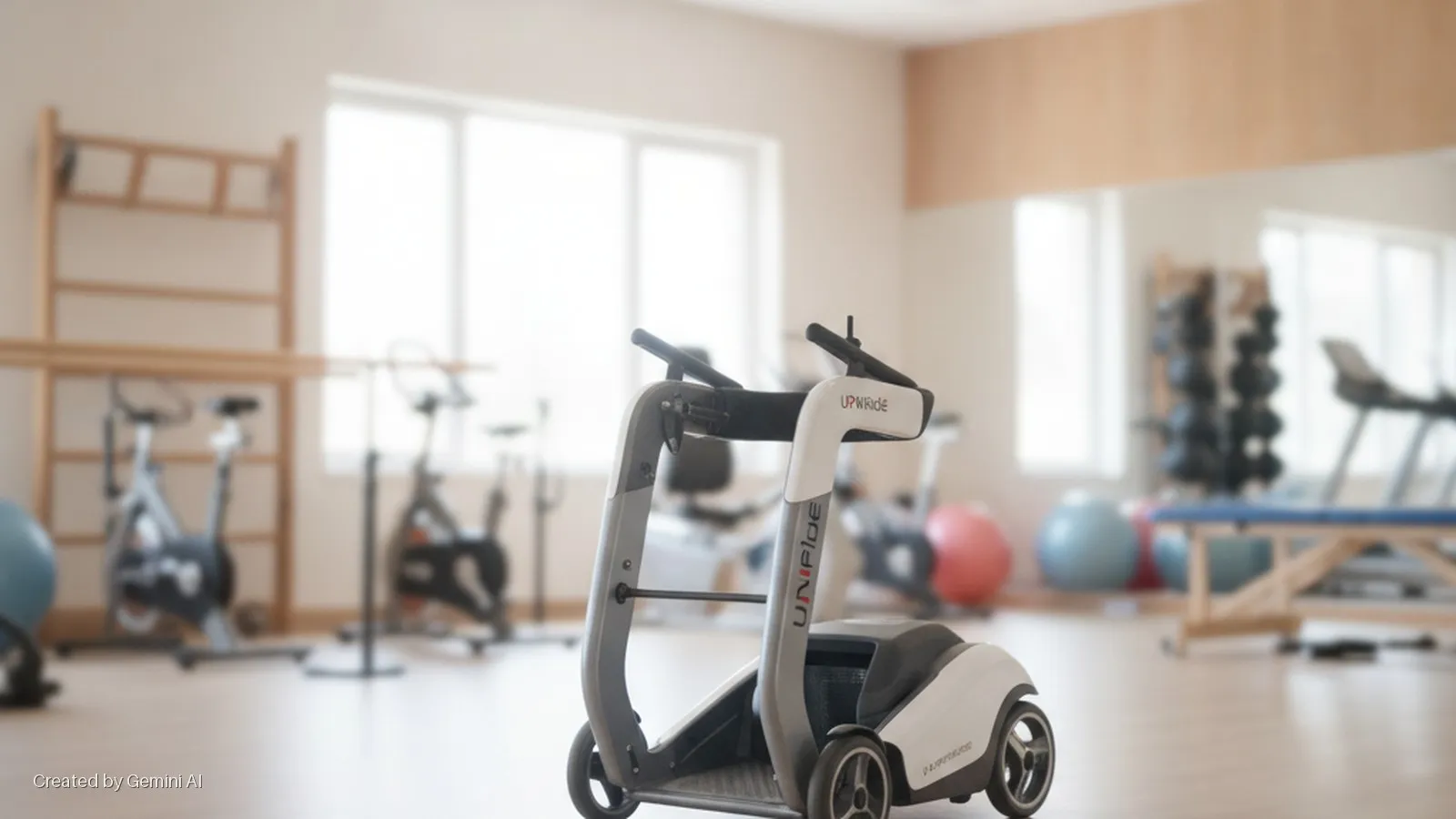
Kessler Foundation and its affiliated Kessler Institute for Rehabilitation have launched a research collaboration with UPnRIDE, the Israeli-founded upright mobility company, to examine how its self-balancing standing platform performs in real-world conditions among patients with significant mobility limitations.
The study will assess utilisation, usability, functional outcomes, and user experience of the UPnRIDE device among Kessler's patient population. UPnRIDE received FDA clearance prior to the collaboration and has accumulated a body of early real-world evidence, but the partnership with Kessler represents its most structured clinical research effort to date in the United States.
The device and the research question
UPnRIDE allows users to move independently while standing, both indoors and outdoors, positioning itself as a category beyond the traditional powered wheelchair. The company says early users have reported daily standing, increased confidence, and application in workplace and community settings. The Kessler study aims to move beyond anecdote, generating systematic data on what the technology enables in everyday life.
Karen Nolan, associate director in the Centre for Mobility and Rehabilitation Engineering and director of the Acquired Brain Injury Mobility Laboratory at Kessler Foundation, said the collaboration offered an opportunity to examine "not only how the technology functions, but what it can make possible for the people who use it."
Orthopedic surgeon Hagay Amir, a former director of Loewenstein Rehabilitation Hospital, described the platform's health rationale: standing mobility is associated with improved blood circulation, better respiratory function, and reduced risk of pneumonia and urinary tract infections, alongside psychosocial benefits including confidence and community participation.
Market context and competitive landscape
The upright and exoskeletal mobility space has attracted growing interest from both medtech developers and rehabilitation researchers over the past decade. UPnRIDE's founder, Amit Goffer, previously invented the ReWalk exoskeleton, which obtained FDA clearance in 2014 and became one of the first commercially available powered exoskeletons for spinal cord injury. That background gives the company credibility in a sector where regulatory and clinical validation remains a significant barrier to adoption.
The broader powered mobility market is evolving rapidly, with several companies pursuing standing wheelchairs, hybrid exoskeletons, and soft-robotic assistive devices targeting neurological and musculoskeletal indications. Payers, including Medicare in the United States, have been slow to extend coverage to newer upright mobility platforms, which remains a structural constraint on commercial uptake regardless of clinical performance. Kessler's involvement is likely to strengthen UPnRIDE's evidence package, which could prove relevant in future reimbursement discussions.
Kessler Foundation, a New Jersey-based nonprofit founded in 1985 and supported by federal grants and private philanthropy, is considered one of the leading rehabilitation research institutions in the United States, with programmes spanning traumatic brain injury, spinal cord injury, stroke, and multiple sclerosis. Its endorsement carries weight in rehabilitation medicine circles, and the collaboration is timed as UPnRIDE seeks to expand its commercial footprint across the US market.
The companies did not disclose the number of patients enrolled, planned study duration, primary endpoints, or intended publication timeline. Those details will be material to how the research is received by the wider rehabilitation and payer community once results emerge.