
Amber Implants expands EXPAND study of VCFix to eight European centres

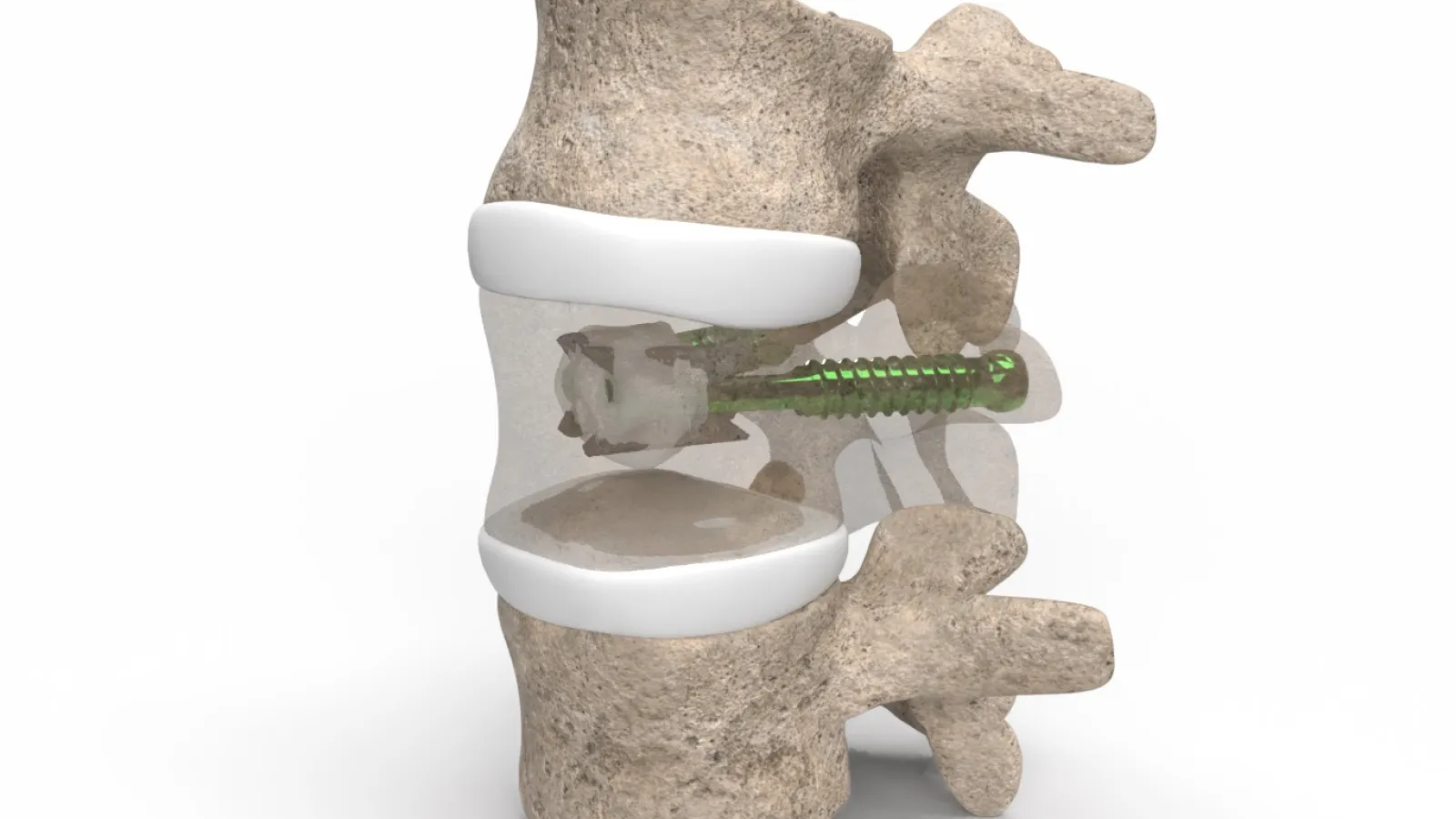
Amber Implants has announced the expansion of its pivotal EXPAND clinical study evaluating the VCFix Spinal System in patients with vertebral compression fractures, scaling from two initial sites to eight centres across Germany and France following encouraging early enrolment data.
The Hague-based company said the first 15 patients have been successfully enrolled at the founding sites, with additional participation expected as the study continues to recruit across Europe. EXPAND is a prospective, multicentre trial assessing safety, performance and clinical outcomes associated with vertebral reconstruction using VCFix in a standalone configuration, with or without bone cement.
The technology and the trial
VCFix is designed to move beyond conventional vertebral augmentation, which typically focuses on void-filling, to deliver what Amber describes as three-column spinal stability. The standalone evaluation in EXPAND is notable because it tests the device without supplementary fixation hardware, a design choice that, if validated, could simplify procedural workflows and broaden the patient population that might benefit.
The EXPAND study builds on the company's completed first-in-human programme, which Amber says demonstrated sustained pain reduction, improved spinal stability and durable functional recovery. Full data from that earlier programme have not been published in peer-reviewed form, so independent validation of those claims remains outstanding.
Co-founder and Chief Technology Officer Mo Ahmadi said the multicentre design was central to building credible evidence: "By generating clinical evidence across multiple centres, we aim to further demonstrate how the new technology of VCFix may benefit appropriately selected patients while helping physicians address important unmet needs in vertebral fracture care."
Market context and competitive landscape
Vertebral compression fractures represent a substantial and growing global burden. A 2025 study published in the Journal of Orthopaedic Surgery and Research estimated 5.4 million people were living with the condition worldwide in 2021, with approximately 7.5 million new cases arising annually. The condition disproportionately affects older populations and is closely linked to osteoporosis, and projections suggest the prevalence will increase as populations age across Europe and North America.
The current standard of care sits on a spectrum from conservative management through to vertebroplasty and balloon kyphoplasty, both of which have an established evidence base but are criticised by some clinicians for providing limited structural restoration. More invasive posterior fixation systems offer greater stability but carry higher procedural burden and complications risk. Amber is positioning VCFix in the gap between these options, a space that several other medtech developers have targeted in recent years with mixed commercial outcomes. The strength of Amber's clinical evidence package will therefore be a central question for both physician adoption and any future reimbursement negotiations with European payers.
Amber said it is simultaneously advancing regulatory and commercialisation activities in both Europe and the United States, though no CE mark or FDA clearance timeline was disclosed in the announcement. The company's complementary Spinoza fixation system, intended for more complex cases, remains under development.
Investors and spine surgery specialists will be watching for interim efficacy and safety readouts from the expanded EXPAND cohort, along with any indication of when Amber expects to approach European or US regulators with a formal submission package.