
Vascudyne bioengineered coronary graft sustains 18-month patency

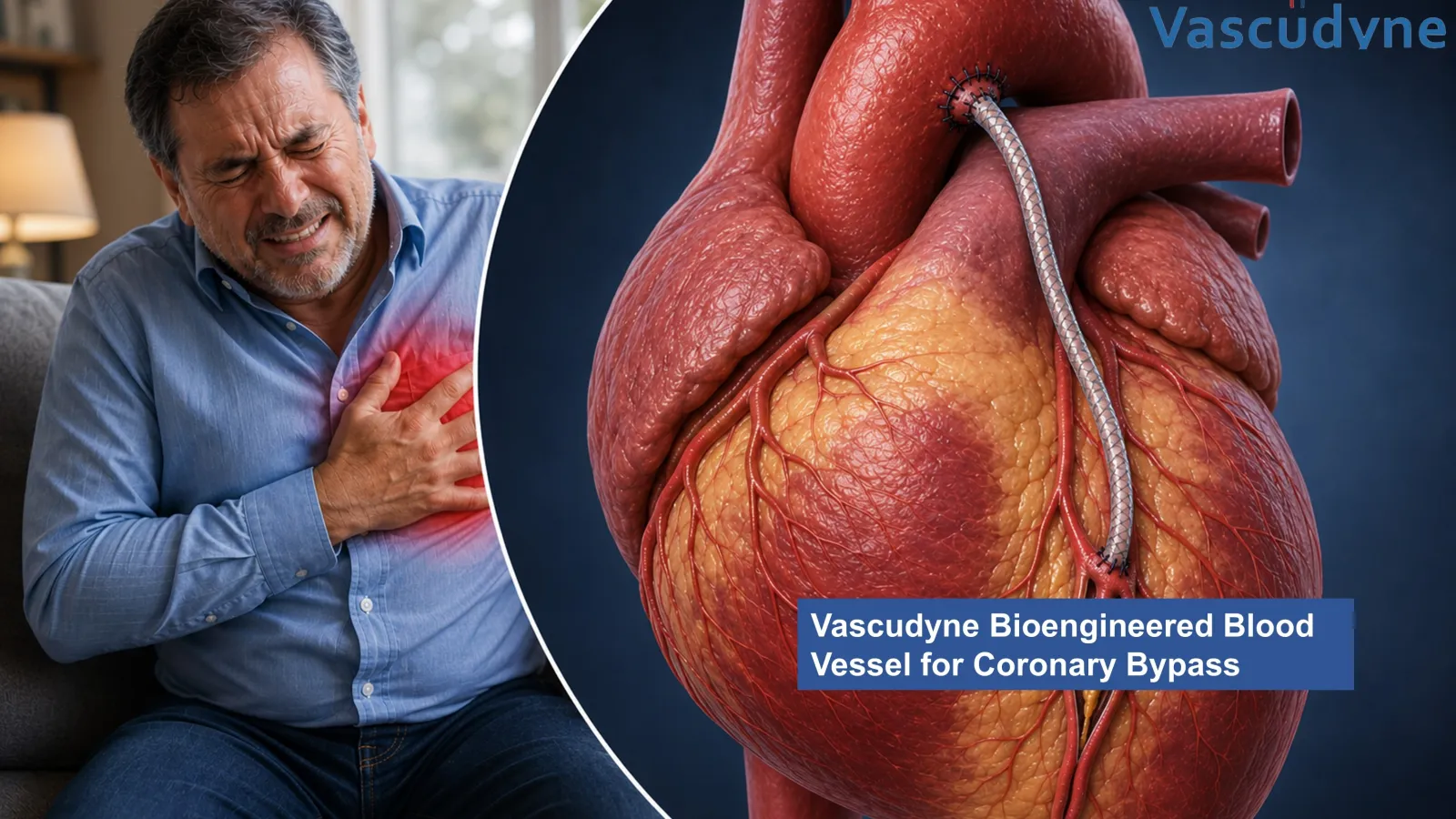
Vascudyne has published large-animal data in Nature Communications showing its 4 mm acellular tissue-engineered vessel achieved 100% patency at six months and remained open at 550 days in a coronary artery bypass grafting (CABG) model. Critically, all anticoagulation was discontinued at day 180 and never resumed. The conduits, when examined at explant, had been remodelled into living tissue: endothelium-lined, repopulated with smooth muscle, free of thrombus, and mechanically stronger than native saphenous vein.
The company says no off-the-shelf coronary graft has previously been shown to maintain patency without anticoagulation. The vessel is stabilised by a laser-cut nitinol external support and is grown from human cells before decellularisation, making it non-immunogenic and storable on the shelf for immediate use.
Clinical context
CABG remains the standard of care for complex multivessel coronary disease and is performed on hundreds of thousands of patients in the United States each year. The procedure's long-term outcomes depend heavily on graft quality, and saphenous vein grafts carry well-documented rates of early occlusion. A substantial and growing subset of patients, including elderly individuals, those with peripheral vascular disease, and those who have already undergone vein harvesting, lack suitable autologous conduits entirely.
Matthew Soule, Associate Professor of Cardiothoracic Surgery at the University of Minnesota and a Vascudyne medical advisor who co-authored the study, described the unmet need directly. "Someone comes in with diabetes, peripheral vascular disease, veins that were harvested fifteen years ago, and that means bypass with an unhealthy vessel, or an incomplete revascularisation, or we do not offer the operation at all," he said. "An off-the-shelf conduit could potentially change what I can offer that patient."
The authors acknowledge that the study used a healthy ovine model, which does not replicate the haemodynamic and biological complexity of human coronary artery disease. That caveat matters for translational confidence, and readers should weigh the 18-month result accordingly. Vascudyne notes that the device has progressed to first-in-human trials, with 12-month feasibility and safety data published in JACC Case Reports earlier in 2026.
Market landscape and competitive positioning
The cardiovascular device sector has a long history of failed attempts to develop synthetic small-bore grafts at coronary diameters; expanded polytetrafluoroethylene and Dacron grafts have not performed adequately in that position. Biological approaches, by contrast, have attracted renewed interest. A small number of companies, including those working on decellularised xenograft conduits and electrospun scaffolds designed to recruit host cells, are pursuing similar off-the-shelf strategies, though none has reached commercial approval for coronary use.
If Vascudyne's human clinical programme, which is still at an early feasibility stage, can replicate the animal patency data and demonstrate freedom from anticoagulation over comparable time horizons, it would represent a genuinely differentiated product in a market that has seen little structural innovation in open cardiac surgery for more than a decade. The regulatory path through the FDA will require a pivotal trial with hard clinical endpoints; the agency has historically required robust evidence of non-inferiority to autologous graft in this setting.
Zeeshan Syedain, chief executive of Vascudyne, positioned the opportunity in terms that will resonate with both clinical and commercial audiences: fewer harvest-site complications, shorter operating times, and access to a patient cohort currently ineligible for the procedure. The device remains investigational and is not approved for commercial sale in the United States or the European Union.