
Eos Energy posts 351% revenue jump but narrows 2026 guidance

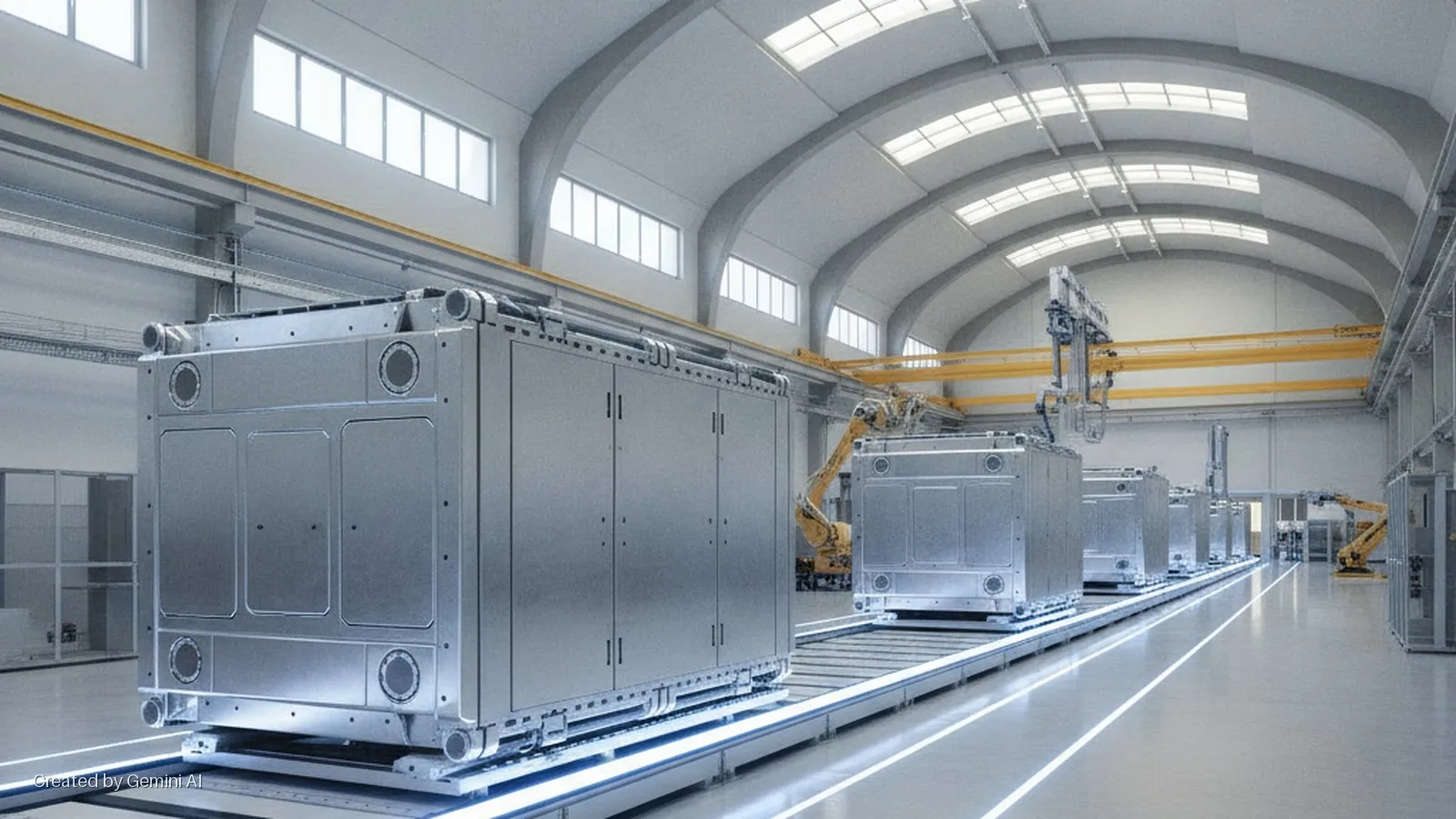
Eos Energy Enterprises has reported second-quarter 2026 revenue of $68.8 million, a 351% increase year on year driven by a 207% rise in cube deliveries. The Pittsburgh-based maker of zinc-based long-duration energy storage systems said combined revenue across the first half of 2026 already exceeded its total for the full year 2025, a milestone chief executive Joe Mastrangelo characterised as evidence of genuine commercial inflection.
The headline growth figure, however, sits alongside a gross loss of $48.8 million, equivalent to a negative gross margin of 71%. While that figure represents a 132-percentage-point improvement year on year, the company is still spending considerably more to make its batteries than it receives for them. Management attributed part of that drag to temporary underutilisation as production ramped simultaneously across two facilities, and to higher service costs linked to a growing installed base.
Guidance and manufacturing strategy
Eos tightened its full-year 2026 revenue guidance from a prior range of $300 million to $400 million, to a narrower $300 million to $350 million. The company said the revision reflects uncertainty around the timing of consolidating all production lines into its Thorn Hill facility in West Virginia. Line 2 at Thorn Hill launched commercial production in mid-June, showing initial cycle-time improvements of approximately 10% over Line 1. Management expects full capacity at the site by the fourth quarter, at which point the consolidation is intended to reduce unit costs, improve margin, and simplify the operating footprint.
The company's backlog reached a record $807 million as of 30 June, up 25% sequentially and representing 3.4 GWh of contracted storage. Orders came from four new customers and two repeat buyers. Post-quarter, Eos received a $100 million purchase order from its Frontier Power USA joint venture for Phase I of the Blanquilla project, and announced a strategic partnership with the US Department of War to supply its Eos Z3 zinc-based systems under the Golden Dome for America defence initiative.
Market context and competitive positioning
Long-duration energy storage is one of the more contested subsectors in cleantech. Lithium-iron-phosphate systems from established Asian manufacturers dominate utility-scale deployments globally, but US policy, particularly the Inflation Reduction Act's domestic content provisions and the broader push for energy security, has created a structural opening for American-made alternatives. Eos is positioning its non-flammable, zinc-based chemistry as a differentiated and safer option for applications requiring four to sixteen or more hours of discharge, a window that sits beyond the economic optimum for most lithium systems.
The Golden Dome defence contract and the DACH-region distribution agreement with CAPAC Energy, which carries an initial 750 MWh commitment and an option to scale to 2 GWh by 2031, suggest the company is pursuing a dual-track commercial strategy: domestic critical-infrastructure and defence on one side, and European grid-scale on the other. Both channels are meaningful given that Eos still needs to demonstrate a credible path to positive gross margin, something investors and analysts will be watching closely as Thorn Hill approaches full utilisation.
Financial position
Net loss attributable to shareholders for the quarter was $275.7 million, though the company noted this was dominated by mark-to-market fair-value adjustments on certain liabilities tied to movements in its share price rather than underlying cash outflows. Adjusted EBITDA loss was $71.4 million. Total cash, including restricted cash, stood at $364.1 million as of 30 June. The Frontier Power USA joint venture had by that date raised approximately $263 million in gross proceeds from Eos, Cerberus Capital Management, and Hudson Bay Capital Management, exceeding its initial $250 million equity target.
Mastrangelo said the company's priority is "converting demand into profitable growth." With a $24.6 billion commercial opportunity pipeline and a defence-sector endorsement now in hand, the near-term test will be whether Thorn Hill consolidation can bring unit economics into positive territory before the current cash position requires a further capital event.