
Alpha Tau treats first immunocompromised cSCC patient in ADMIRE trial

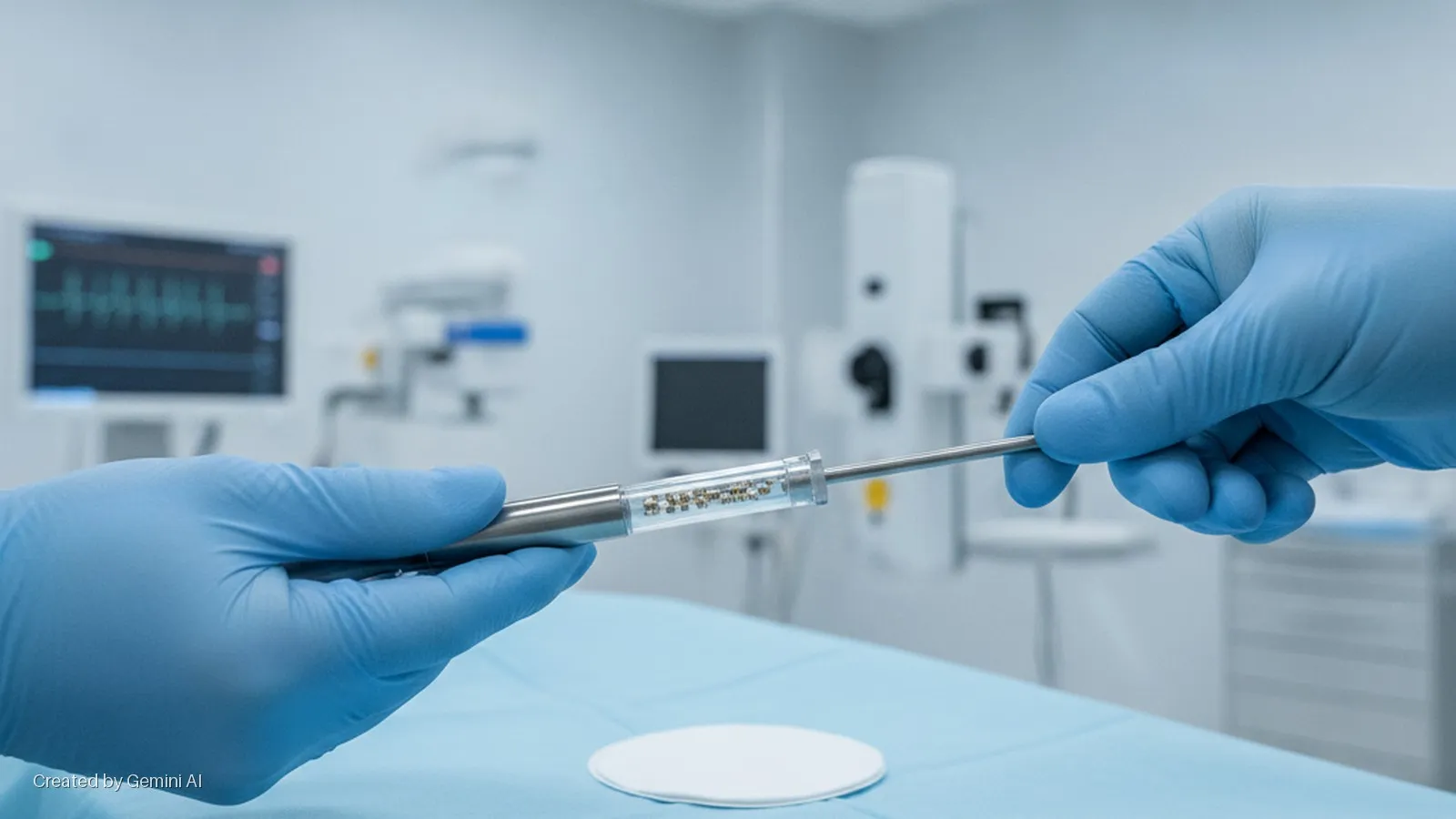
Alpha Tau Medical has treated the first patient in its ADMIRE study, a prospective, single-arm trial evaluating intratumoral Alpha DaRT for immunocompromised patients with recurrent cutaneous squamous cell carcinoma (cSCC). The procedure was carried out at Banner MD Anderson Cancer Center in Gilbert, Arizona, by Michael Samuels, Chief of Multidisciplinary Programs, and Thomas Shellenberger, a head and neck surgical oncologist.
The ADMIRE study (Protocol CTP-SCC-04) is designed to enrol up to 28 patients across as many as eight US sites. Eligible participants must have histologically confirmed, recurrent cSCC with a single lesion of up to 7 cm and must be immunocompromised through solid organ transplantation, haematologic malignancy such as chronic lymphocytic leukaemia, or chronic immunosuppressive therapy for autoimmune disease. The primary endpoint is objective response rate assessed by RECIST v1.1, with secondary endpoints including progression-free survival, overall survival, and local control, each evaluated over twelve months.
Why this population presents a distinct clinical challenge
Immunosuppression is among the strongest known risk factors for cSCC, the second most common skin cancer in the United States. Organ transplant recipients face an estimated 65- to 100-fold higher incidence of cSCC than the general population, and an estimated 17 million US adults are living with some form of immunosuppression. The problem is compounded by a shortage of treatment options: checkpoint inhibitor immunotherapy, the standard approach for recurrent or advanced cSCC in the general population, carries a documented risk of triggering graft rejection in transplant patients and is typically avoided in this group. Repeated surgical excision accumulates morbidity over time, and cumulative dose limits often preclude re-irradiating the same anatomical field.
Alpha DaRT addresses this gap through a localised, intratumoral mechanism. Radium-224 impregnated seeds are implanted directly into the tumour; as the radium decays, short-lived alpha-emitting daughter atoms disperse within the lesion, targeting tumour tissue while aiming to spare surrounding healthy structures. Because the approach is confined to the tumour, it does not rely on systemic immune activation and carries no theoretical mechanism for triggering organ rejection, which is the central rationale for studying it in this population.
Uzi Sofer, chief executive of Alpha Tau, said: "There are many different reasons someone can become immunocompromised, but across nearly all of them, the same pattern holds: their cSCC comes back more often, and leaves them with far fewer treatment options than for others."
Market context and competitive landscape
ADMIRE runs alongside Alpha Tau's ReSTART pivotal trial for recurrent cSCC in immunocompetent patients, which the company said has recently completed enrolment. Alpha DaRT is a medical device technology rather than a pharmaceutical, placing it in a relatively uncrowded niche within the cSCC treatment landscape. The broader recurrent cSCC space is, however, competitive: cemiplimab (Regeneron/Sanofi) and pembrolizumab (Merck) both carry approvals in advanced cSCC, though neither is routinely used in transplant patients for the reasons outlined above. No other alpha-particle intratumoral device has yet reached a comparable stage of development in cSCC, though several groups are investigating brachytherapy and other focal radiation approaches in skin malignancies.
For Alpha Tau, ADMIRE represents a programmatic expansion into a patient subset that ReSTART excluded by design. If ADMIRE produces positive objective response data, the company would likely pursue a separate regulatory submission for the immunocompromised indication, given the distinct clinical population and the absence of approved alternatives. The twelve-month follow-up window means meaningful efficacy signals are unlikely to emerge before mid-2027 at the earliest.