
Kura and Kyowa Kirin report 94% 12-month survival in AML combo trial

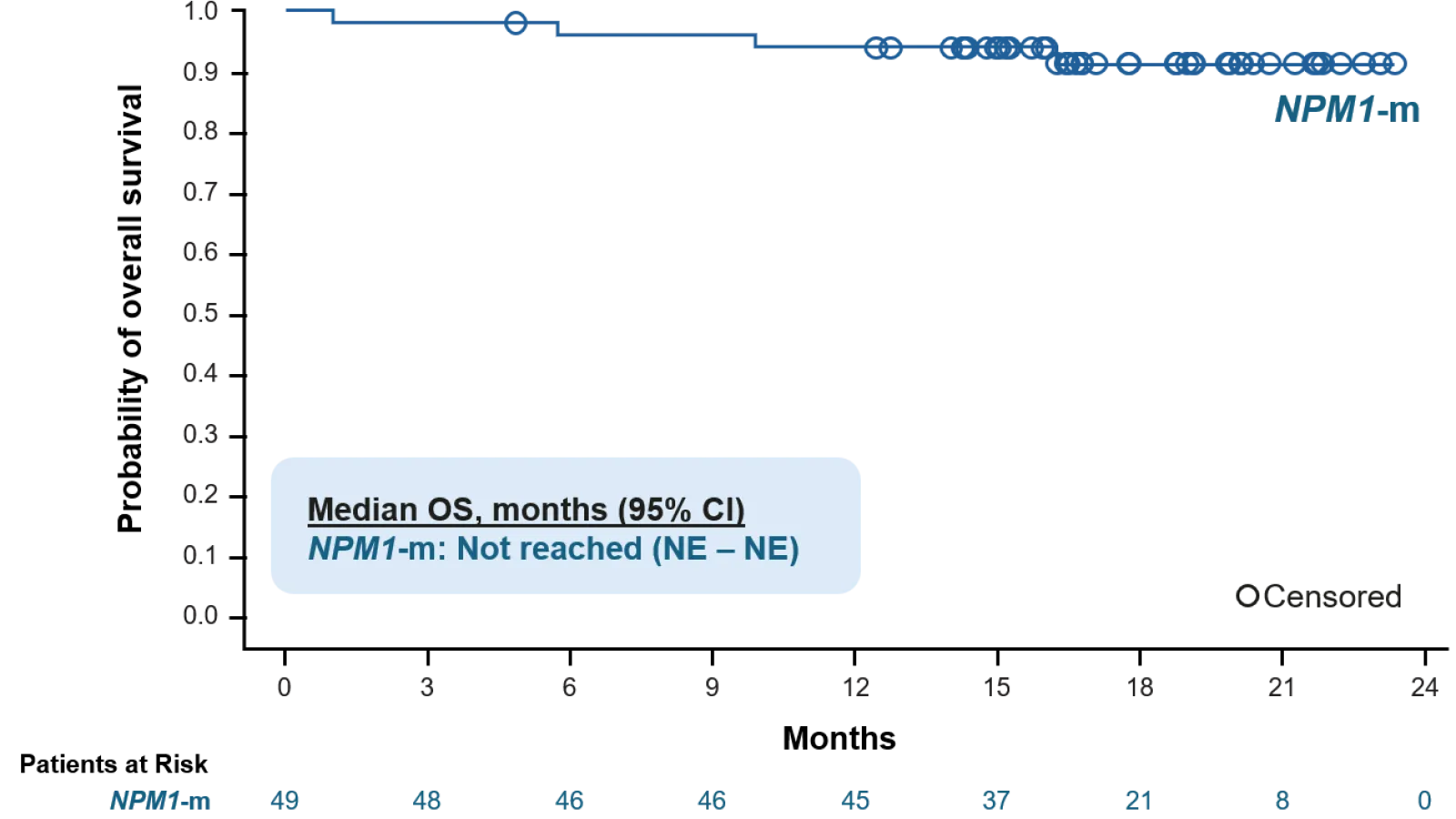
Kura Oncology and its Japanese partner Kyowa Kirin have released updated long-term results from the Phase 1/2 KOMET-007 trial of ziftomenib combined with standard 7+3 induction chemotherapy in newly diagnosed acute myeloid leukaemia, reporting a 12-month overall survival rate of 94% in NPM1-mutant patients and 71% in KMT2A-rearranged patients. Median overall survival was not reached in either subgroup at the time of data cut-off in April 2026, with median follow-up of 17.6 months and 11.0 months respectively.
The results were presented at the European Hematology Association 2026 Congress and benchmark favourably against historical 7+3 data, where 12-month survival in younger fit NPM1-mutant patients has typically ranged from approximately 70% to 80%, and from around 45% to 55% in those over 65 years old.
Response depth and safety profile
Composite complete remission rates reached 96% in the NPM1-mutant cohort and 90% in KMT2A-rearranged patients, and measurable residual disease negativity rates were similarly high. In NPM1-mutant responders assessed by central next-generation sequencing, 79% achieved MRD negativity at the 0.1% threshold and 56% at the more stringent 0.01% threshold, with all central MRD-negative responses occurring by the end of Cycle 2.
The safety data were notable for a low rate of treatment-related complications. Only 4% of patients experienced Grade 3 differentiation syndrome, and no Grade 4 differentiation syndrome or QTc prolongation events were reported. The 60-day mortality rate in NPM1-mutant patients was 2%. Ziftomenib did not appear to delay haematological recovery, an important practical consideration when adding any agent to intensive induction.
Amer Zeidan, Chief of Hematologic Malignancies at Yale Cancer Center and lead investigator for the registrational KOMET-017 programme, said the results suggested the regimen "could represent a transformative therapeutic approach and may allow some patients to avoid allogeneic haematopoietic cell transplantation, a procedure that carries a significant risk of mortality and morbidity."
Market context and competitive landscape
The menin inhibitor class has attracted considerable attention following early clinical validation in NPM1-mutant and KMT2A-rearranged AML, two molecularly defined subgroups that together account for a substantial proportion of newly diagnosed cases. Ziftomenib already holds FDA approval as a monotherapy for relapsed or refractory NPM1-mutant AML; these KOMET-007 data are intended to support a move into the frontline setting.
Kura is not alone in pursuing menin inhibition in AML. Syndax Pharmaceuticals' revumenib has also received FDA accelerated approval in relapsed or refractory KMT2A-rearranged or NPM1-mutant AML, and both companies are now running or planning Phase 3 registrational studies in frontline populations. The competitive question is whether depth of MRD negativity and durability of remission translate into a meaningful overall survival benefit at the scale required for regulatory approval, data that KOMET-017 is designed to provide.
The Phase 3 KOMET-017 study is ongoing, and the companies said they expect to publish the KOMET-007 data in a peer-reviewed journal in the second half of 2026. Kura hosted a virtual investor event on 12 June 2026 to discuss the results with management and the lead investigator.
Ziftomenib's FDA-approved label is currently limited to monotherapy in the relapsed or refractory setting; its use in combination with 7+3 chemotherapy remains investigational and has not been approved by any regulatory authority.