
Magnendo wins up to $32m ARPA-H grant for autonomous stroke robot

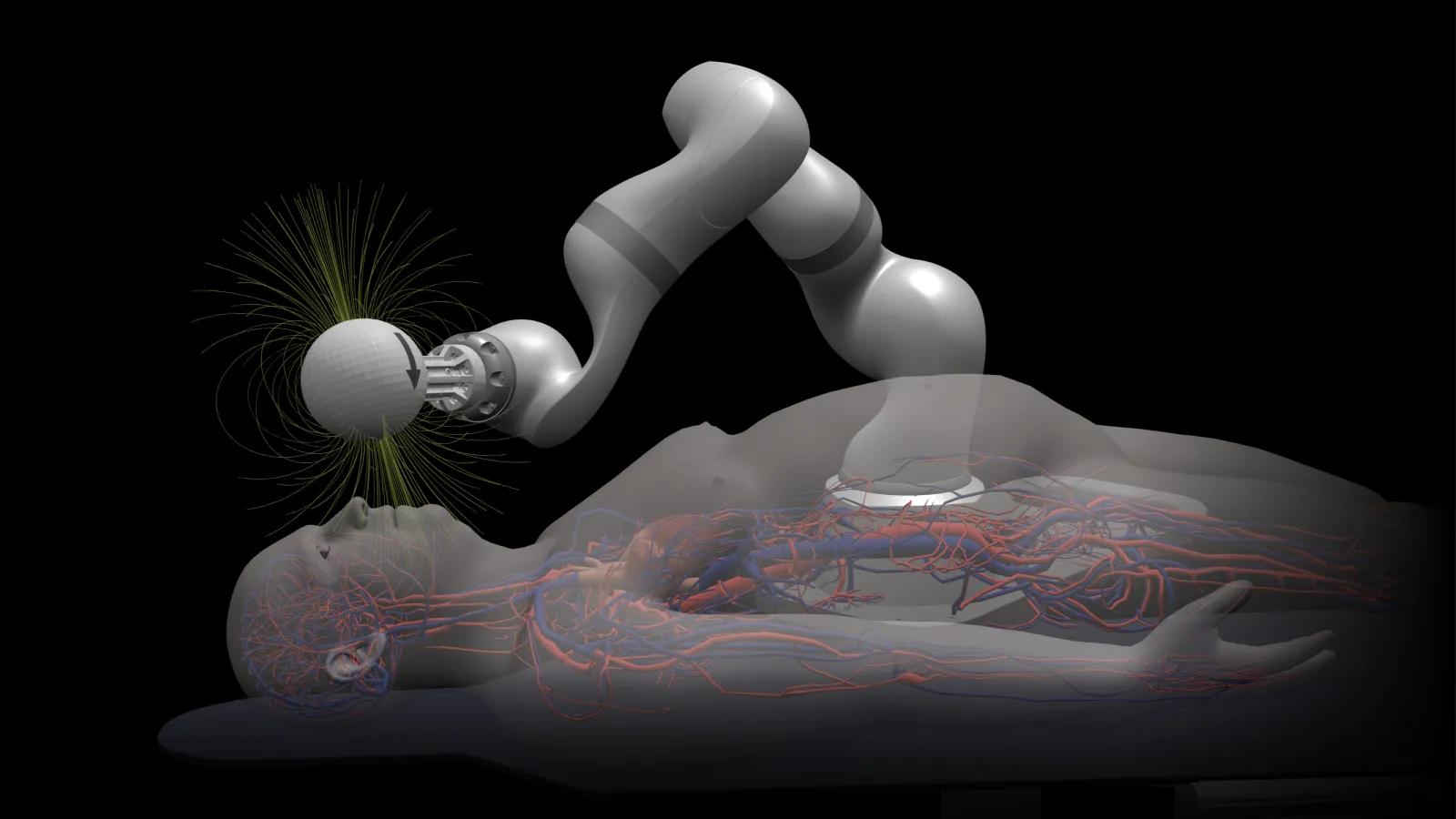
Magnendo Corp., an MIT spinout based in Newton, Massachusetts, has been awarded up to $32 million by the Advanced Research Projects Agency for Health to develop an autonomous robotic system for endovascular stroke intervention. The funding comes through ARPA-H's Autonomous Interventions and Robotics programme and will run over five years, supporting the next generation of Magnendo's magnetically steerable guidewire and catheter navigation platform.
The clinical problem the company is addressing is well-documented. Mechanical thrombectomy is the standard of care for ischaemic strokes caused by large vessel occlusions, yet the procedure is performed at only a fraction of hospitals because it demands specialist neurointerventionalists and complex, real-time vascular navigation. The consequence is that a substantial proportion of eligible patients never receive the treatment, either because they live too far from a capable centre or because the anatomy of their vessels prolongs access beyond clinically acceptable timeframes.
The technology
Magnendo's approach centres on magnetically steerable guidewires coupled with robotics, medical imaging, and artificial intelligence-driven navigation software. The company says preclinical results have shown improvements in navigation speed and procedural consistency across operators with differing experience levels, though it has not yet published peer-reviewed data or released specific performance metrics. The programme will integrate these component technologies into a unified autonomous platform, with academic, clinical, and industry collaborators yet to be named.
Founder and chief executive Yoonho Kim said autonomy in endovascular intervention cannot be achieved simply by automating existing manual techniques. "It requires a fundamentally different approach to navigating complex vascular anatomy, and we believe our magnetic robotic navigation is a critical enabling technology for autonomous endovascular intervention," he said. Chief Development Officer Miki Rosenberg added that the programme's value lies in bringing together technologies that have historically developed in isolation.
Market and competitive context
The broader field of robotic-assisted endovascular intervention has attracted growing investment from both established medical-device companies and well-funded start-ups over the past several years. Stereotaxis has offered magnetically guided robotic navigation in cardiac electrophysiology for over two decades, and its technology has informed thinking about magnetic steering in neurovascular applications. In the autonomous and semi-autonomous segment, a number of university-spinout and venture-backed companies are pursuing catheter robotics for stroke, though none has yet reached commercial approval for a fully autonomous thrombectomy system.
ARPA-H's AIR programme represents one of the more ambitious government bets on the category. Programme Manager Ileana Hancu framed the agency's ambition in terms of systemic impact: reaching the large population of stroke patients who currently cannot access thrombectomy and reducing the associated burden of long-term disability on both patients and healthcare systems. Federal backing of this scale lends the programme credibility and provides a buffer against the high capital requirements of developing and clinically validating autonomous surgical systems.
Regulatory clearance for an autonomous endovascular device will itself be a significant undertaking. The US Food and Drug Administration has been developing frameworks for AI-enabled and autonomous medical devices, but the pathway for a system that operates with progressively reduced direct human input remains novel territory. Magnendo and its collaborators will need to demonstrate not only technical performance but also the safety case for reduced physician oversight, a question that will shape the clinical trial design in later phases of the programme.
The five-year timeline and milestone-based structure of ARPA-H awards mean that the full $32 million is contingent on performance. Near-term indicators to watch include the naming of clinical and academic partners, the publication of preclinical data, and any regulatory pre-submission meetings with the FDA.