
AiM Medical Robotics wins $2m NCI grant for MRI brain robot

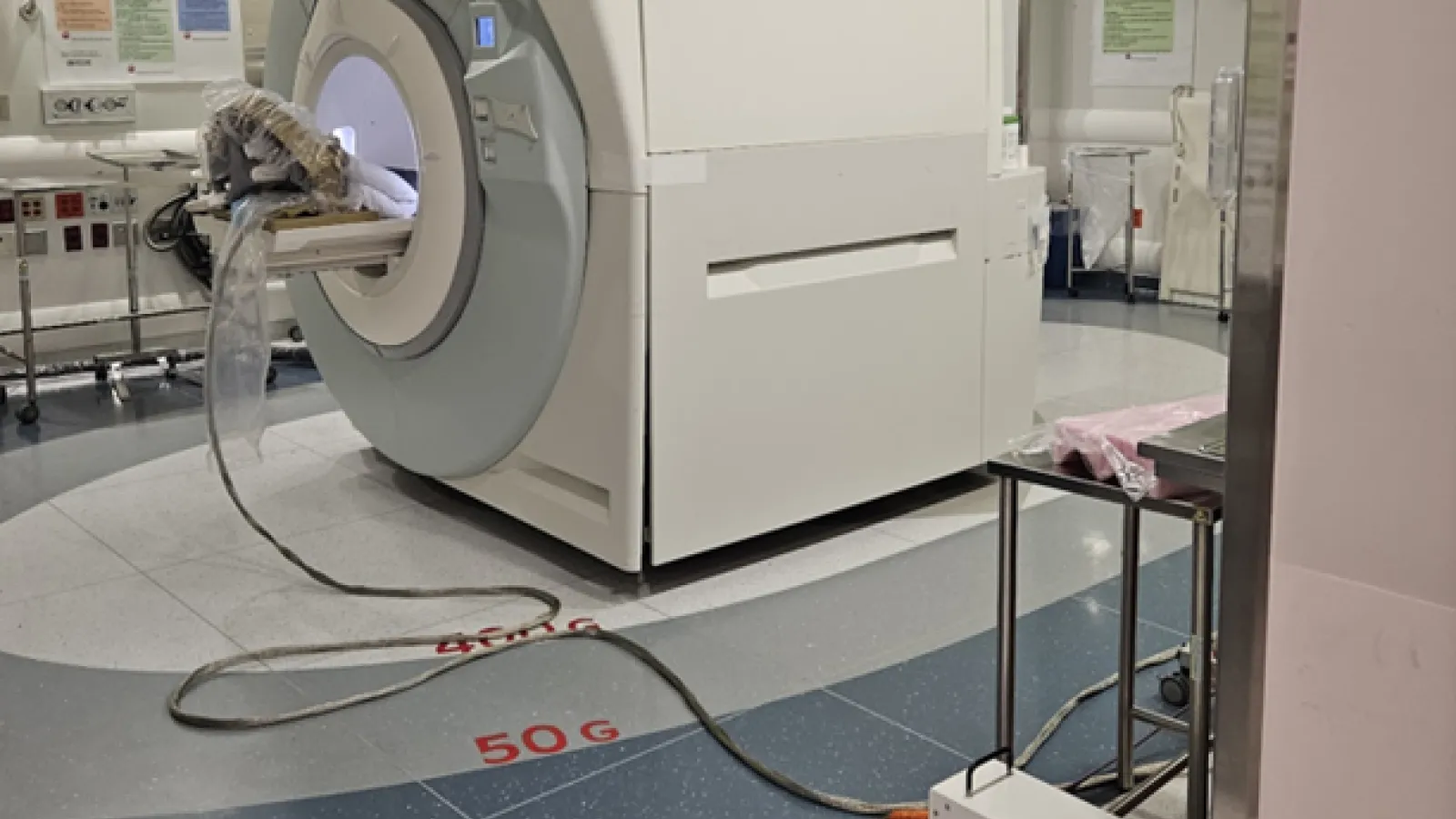
AiM Medical Robotics has been awarded a $2.02 million Phase II Small Business Innovation Research (SBIR) grant from the National Cancer Institute (NCI), part of the National Institutes of Health, to advance its MRI-compatible neurosurgical robotic platform for the ablative treatment of brain cancer. The two-year award runs from September 2026 through August 2028 and will support a first-in-human feasibility study conducted within the Advanced Multimodality Image-Guided Operating (AMIGO) suite at Brigham and Women's Hospital (BWH) in Boston.
The grant, funded under NIH award number R44CA314728, focuses specifically on laser interstitial thermal therapy (LITT), a minimally invasive approach to tumour ablation that has gained clinical traction but remains constrained by limitations in probe placement accuracy and intraoperative visualisation. AiM's system is designed to address those constraints by coupling robotic instrument control directly with real-time MRI-based thermometry, enabling physicians to monitor thermal dose delivery and adjust in real time rather than relying solely on pre-operative imaging.
The technology
Unlike conventional neurosurgical workflows, in which patients may be moved between imaging and treatment environments during a procedure, AiM's platform is engineered to allow robotic intervention inside the MRI suite itself. Brain anatomy can shift during surgery, meaning that a trajectory planned before incision may no longer be accurate by the time instruments are placed. Continuous intraoperative MRI addresses this problem by providing updated anatomical information throughout the procedure.
The project is led by AiM founder and chief executive Gregory Fischer, PhD, as principal investigator, in collaboration with Nobuhiko Hata, PhD, and neurosurgeon G. Rees Cosgrove, MD, at the National Center for Image-Guided Therapy (NCIGT) at BWH. Dr Hata said the AMIGO operating rooms provide "the unique translational environment needed to evaluate these advances directly within real MRI-guided neurosurgical workflows." Co-founder Julie Pilitsis, MD, PhD, chair of neurosurgery at the University of Arizona College of Medicine, described the core challenge as one of engineering rather than imaging: "Historically the engineering challenge has been bringing sophisticated robotic intervention into that environment."
Market context
AiM operates in a competitive and fast-growing surgical robotics segment that has seen significant capital inflows over the past three years. While established players such as Medtronic and Zimmer Biomet have focused primarily on orthopaedic and spinal applications, the neuro-robotics subsector remains comparatively underpopulated, with a handful of venture-backed start-ups and academic spin-outs competing for early clinical validation. MRI-guided LITT itself is offered commercially by Medtronic's Visualase system and Monteris Medical's NeuroBlate platform; AiM's differentiation lies in the real-time closed-loop coupling of robotic control and thermometry, which is not a feature of current commercial systems.
The NCI SBIR award is non-dilutive funding, which Fischer noted in the release is strategically significant for a privately held company at the clinical development stage. AiM has indicated that the same robotic platform could ultimately support functional neurosurgery, biopsy, and targeted therapeutic delivery beyond the ablation indication explored in this programme. Investors and potential partners will look to interim feasibility data from the BWH AMIGO study, expected before the project's August 2028 completion date, as the next meaningful readout for the platform.