
Biomimetic Innovations' OsStic bone filler used in first human case

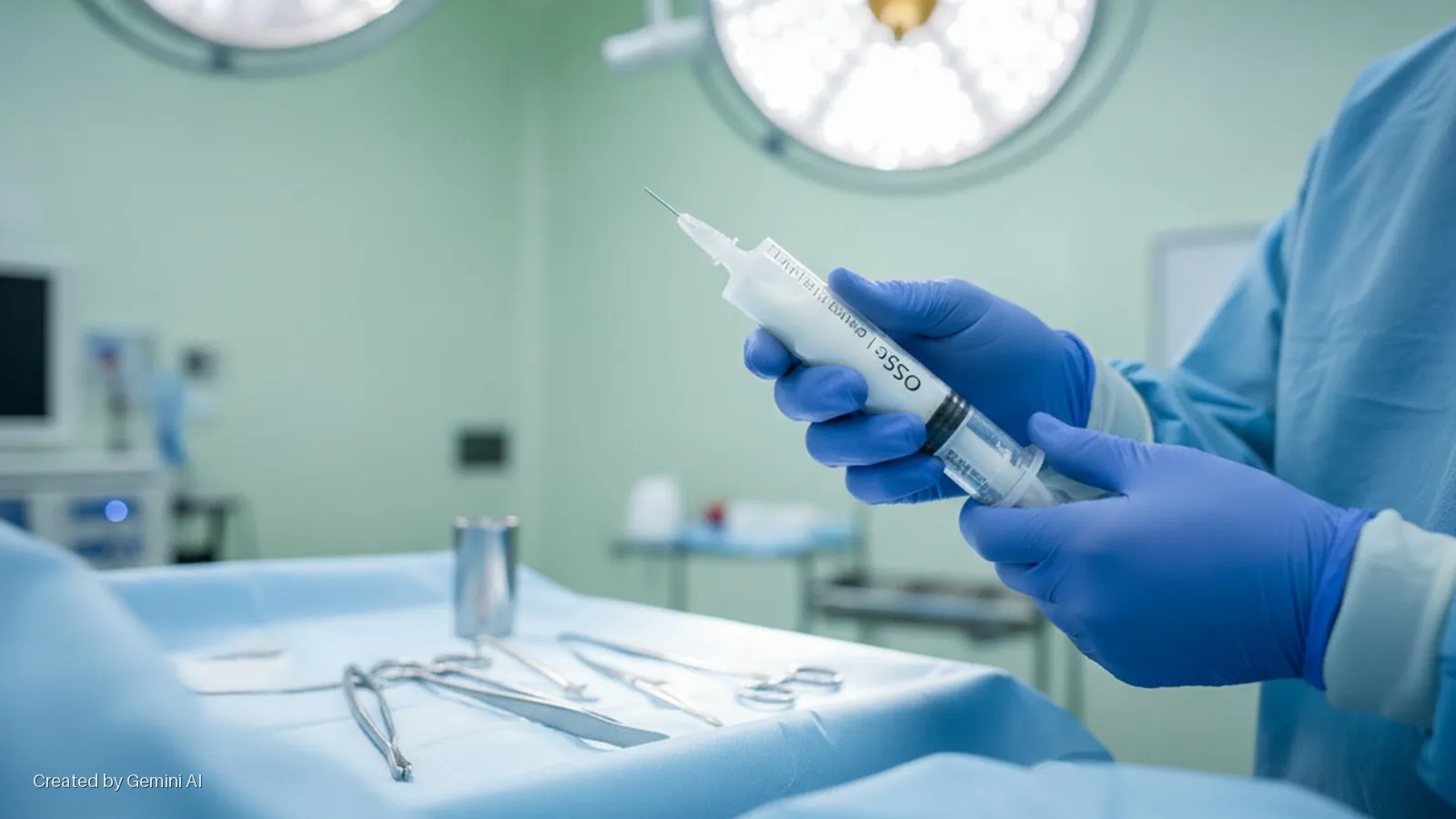
Biomimetic Innovations Ltd has completed the first-in-human application of its OsStic injectable synthetic bone void filler, with the procedure carried out on 7 August at the University of Leeds Teaching Hospital. The patient, treated for a lateral tibial plateau fracture (a split depression injury), was discharged two days after surgery.
The case marks enrolment of the first participant in a company-sponsored clinical trial designed to evaluate OsStic's safety, performance, and clinical outcomes in patients with periarticular fractures. Biomimetic Innovations said the study is fully funded by the company and is intended to build a formal evidence base for the product.
Professor Peter Giannoudis, the study's principal investigator and the surgeon who performed the procedure, said OsStic had "the potential to transform the way we approach fracture fixation, particularly in complex cases where conventional methods may have limitations."
The technology
OsStic is described by the company as a rapidly hardening material that conforms to irregular defect geometries and provides immediate mechanical support to subchondral bone, while also promoting bone ingrowth and remodelling over time. These properties are positioned by Biomimetic Innovations as advantages over conventional bone void fillers in demanding periarticular trauma cases, where precise defect-filling and early load-bearing capacity are clinically important.
Biomimetic Innovations is an affiliate of Shannon-based PBC Biomed, an ISO 13485-certified medical device group with operations in Ireland, the United States, France, the United Kingdom, and Australia. PBC Biomed has prior commercialisation experience in the bone fixation space: its affiliate CelgenTek Innovations brought the N-Force Fixation and iN3 Cement system to market before being acquired by Zimmer Biomet in 2016. The group has more recently partnered with Mochida Pharmaceuticals in Japan to commercialise ReFeel, a nerve regeneration solution.
Market context
The bone void filler market is well established, with products from large orthopaedic groups including Stryker, Zimmer Biomet, and DePuy Synthes competing across calcium phosphate, calcium sulphate, and demineralised bone matrix platforms. The competitive challenge for a smaller, innovation-stage company such as Biomimetic Innovations lies in demonstrating a meaningful clinical differentiation over these incumbent materials, particularly in a sector where surgeons are cautious adopters and reimbursement pathways can be lengthy.
Synthetic, fully characterised materials have attracted growing interest in this space as an alternative to allograft-based products, partly because of supply and regulatory consistency advantages. If the OsStic trial generates robust safety and performance data in the periarticular fracture setting, the company will need to define a regulatory strategy across multiple jurisdictions. In the UK, post-Brexit device regulation sits with the Medicines and Healthcare products Regulatory Agency under the UK Conformity Assessed (UKCA) marking framework, which has seen a series of transition-period extensions in recent years. CE marking under the EU Medical Device Regulation remains the primary route for EU market access and continues to present capacity challenges for smaller device developers.
The trial outcome and any subsequent regulatory submissions will be the key milestones for investors and partners watching this programme.