
Envetec wins California approval for GENERATIONS medical waste system

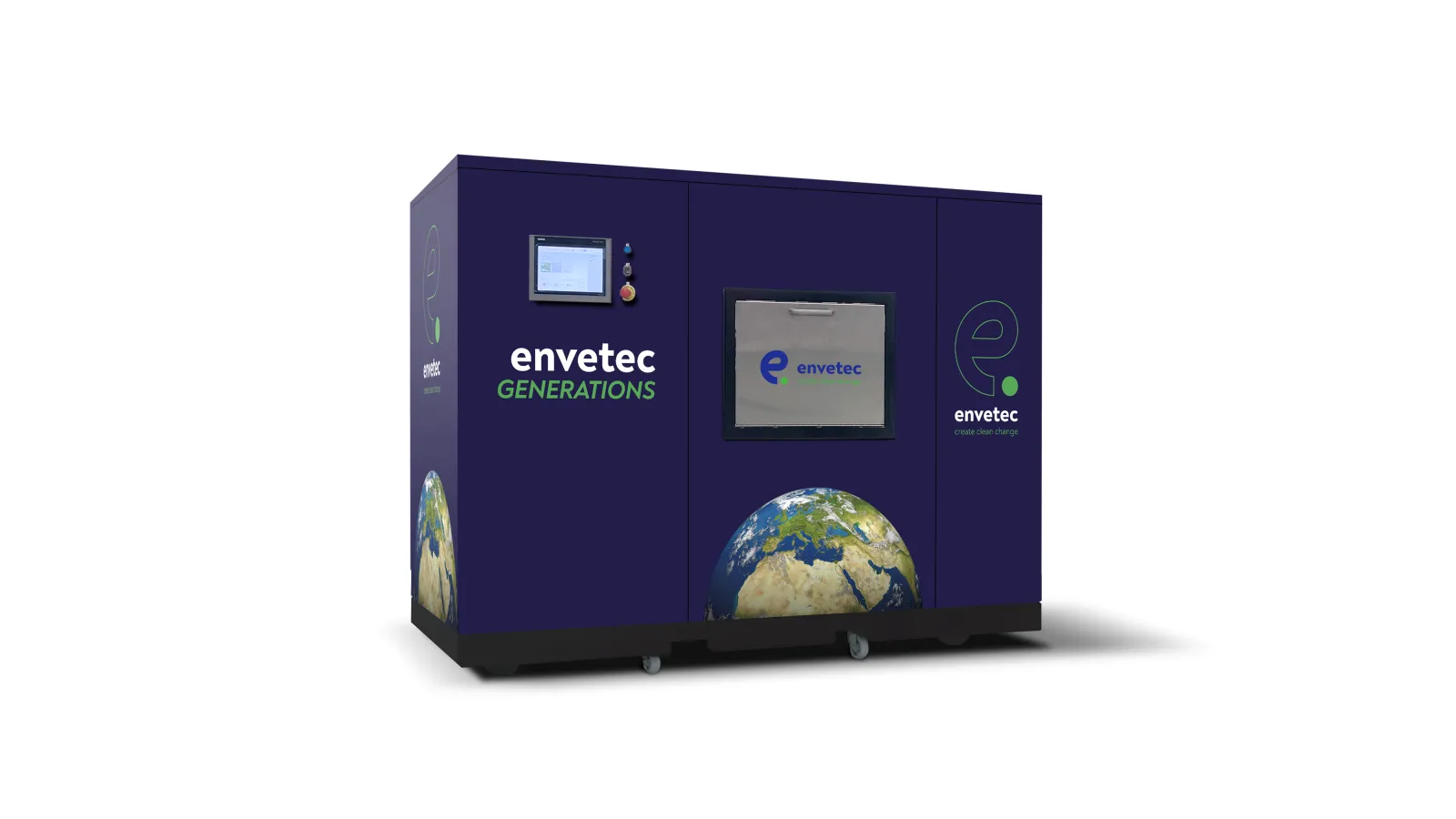
Envetec Sustainable Technologies has received approval from the California Department of Public Health for its GENERATIONS technology to treat biohazardous and sharps waste in the state. The decision extends the Ireland-headquartered cleantech company's US regulatory footprint to four states, having previously secured approvals in New York, Texas, and Massachusetts.
The patented GENERATIONS process works by simultaneously shredding and disinfecting regulated medical waste through a non-thermal mechanism. Treated output is rendered unidentifiable, and compatible polymer streams are converted into microbiologically safe recyclable flake suitable for onward processing in manufacturing supply chains.
Regulatory detail
California's review was more exacting than some prior state submissions. The California Department of Public Health requested supplementary validation of disinfection performance inside needle lumens, the narrow internal channels present in sharps waste that present particular microbial-inactivation challenges. Envetec completed and submitted that additional work, satisfying regulators that the process performs consistently even within complex waste geometries.
The core microbial efficacy benchmark met was a 6 log10 reduction in bacterial spores, in line with the STAATT IV standard, which is the reference tier applied to alternative treatment technologies by many US state health authorities when assessing equivalence to thermal methods such as autoclaving and incineration.
Environmental performance data included in the California submission compared GENERATIONS with conventional thermal treatment across a biopharmaceutical use case. The company's analysis reported a 93% reduction in waste-processing emissions and an 80.6% reduction in water consumption per 100 metric tons of waste. The submission also referenced a recycling pilot conducted with Becton, Dickinson and Company, which found that recovered polymers including polystyrene, PET, polypropylene, and polyethylene could be reintroduced into manufacturing supply chains after treatment.
Chief executive Malcolm Bell said the approval provides healthcare and life sciences organisations with "a clearer path to adopt a consistent, scientifically validated alternative to traditional thermal treatment" and highlighted California's significance as one of the country's largest healthcare markets.
Market context
California's endorsement carries commercial weight beyond its borders. The state is home to a dense concentration of hospital networks, academic medical centres, and biopharmaceutical manufacturers, many of which operate facilities across multiple states. Approval in California makes it considerably easier for those organisations to deploy a single, uniform waste-treatment approach across their entire US estate, which is precisely the multi-state consistency argument Envetec is making to prospective clients.
The regulated medical waste treatment sector is under increasing pressure from hospital sustainability programmes and evolving state-level emissions reporting requirements. Traditional thermal methods, particularly incineration, face growing scrutiny on air-quality grounds in several jurisdictions. A number of alternative treatment technology providers, including microwave-based and chemical-disinfection systems, have been active in the US market for some years, though non-thermal approaches with documented resource-recovery outputs remain a comparatively small segment. Envetec's ability to demonstrate both regulatory compliance and a polymer recycling pathway, substantiated by a named partner in BD, gives it a differentiated commercial narrative as healthcare organisations look to reduce Scope 3 emissions in their supply chains.
Next milestones to watch include further US state approvals, expansion of the BD recycling pilot into commercial volumes, and whether Envetec pursues any capital raise to support the accelerated US market push the California clearance enables.