
Philips launches FDA-cleared eV14-2v single-transducer for OB/GYN

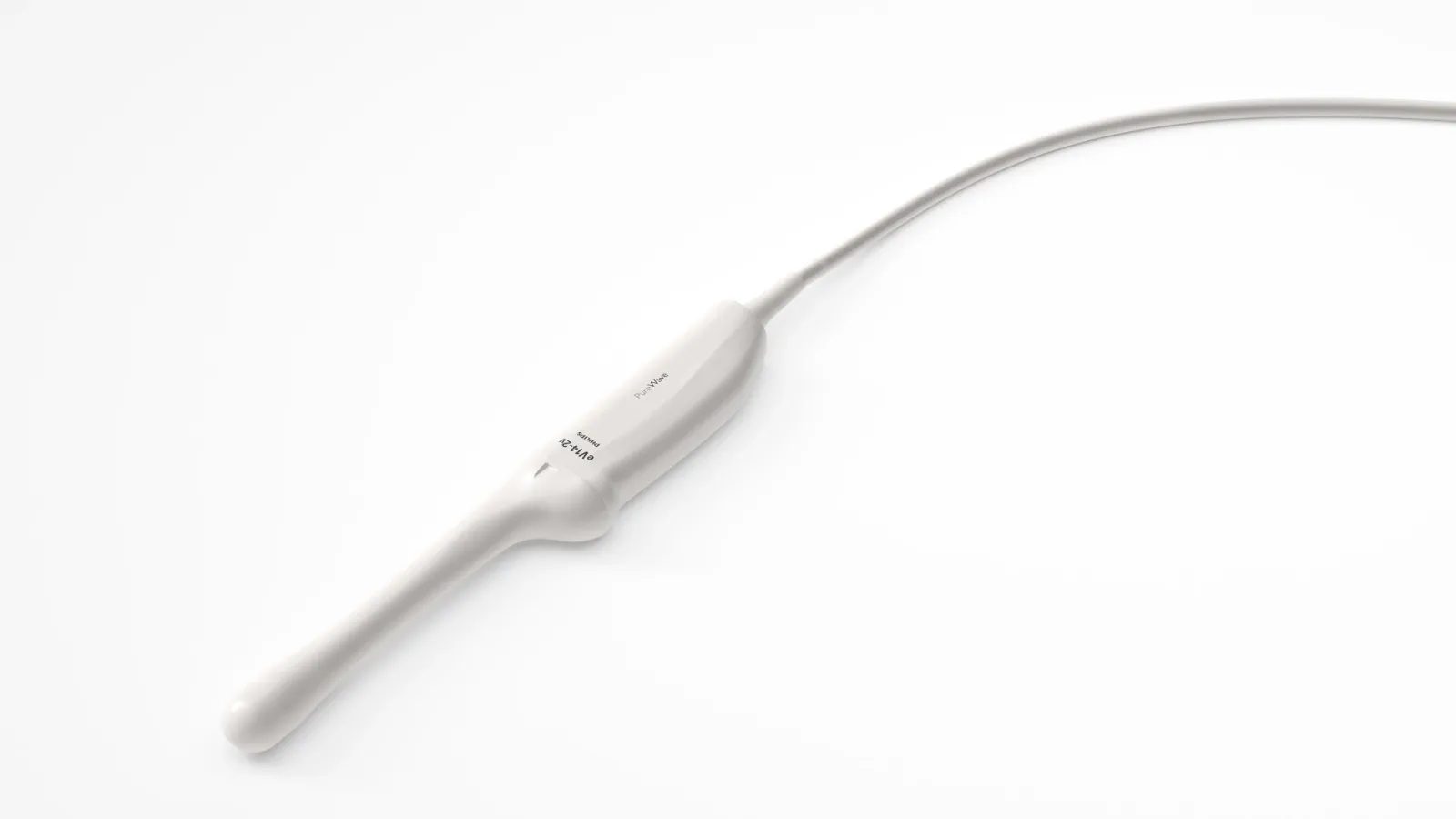
Royal Philips has launched the eV14-2v transvaginal transducer, a single-device solution designed to cover the breadth of obstetrics and gynaecology ultrasound examinations without the workflow interruption of switching between probes. The device received both FDA 510(k) clearance and CE marking prior to its public debut at the 36th ISUOG World Congress in September 2026.
Philips positions the eV14-2v as a response to a well-recognised clinical friction point: the need to swap transducers when moving between routine gynaecological assessments and more complex early-obstetrics imaging, where optimal penetration depth and resolution requirements can diverge. The company says the new transducer addresses this by delivering a 41.7% improvement in penetration, a 10% gain in 2D resolution, a 15.8% wider field of view, and a body that is 22% lighter than the preceding 3D9-3v model.
Clinical capabilities
The eV14-2v uses Philips' PureWave crystal technology, which the company says it pioneered, to support detailed anatomical visualisation relevant to conditions including endometriosis, fibroids, and infertility assessment. Philips also states that the transducer's 2D and colour resolution can delineate fetal cardiac chambers as early as 13 weeks of gestation.
Dr Michael S. Ruma, a perinatologist at Perinatal Associates of New Mexico, said: "With the eV14-2v, we're able to complete more exams with a single transducer while maintaining excellent image quality, which helps streamline our workflow and improve patient comfort." The device is also compatible with Philips' Collaboration Live platform, enabling remote expert consultation during live ultrasound sessions, a feature the company says can extend specialist access to underserved communities.
Ajay Gannerkote, Ultrasound Business Leader at Philips, described the launch as consistent with the company's focus on combining high-quality imaging with intelligent workflows, though the language in the release is broadly promotional in register.
Market context
The OB/GYN ultrasound market is well-established and competitive, with Philips facing sustained pressure from GE HealthCare, Canon Medical, Samsung Medison, and Mindray, all of which have invested heavily in transvaginal and volumetric ultrasound platforms in recent years. The sector is also being reshaped by a broader shift toward point-of-care and portable ultrasound, driven partly by connected systems that allow hub-and-spoke care models, making the Collaboration Live integration a strategically relevant differentiator rather than a peripheral feature.
Women's health imaging has attracted growing clinical and regulatory attention, partly as a consequence of increased awareness of diagnostic delays in endometriosis, which affects roughly one in ten women of reproductive age and has historically faced average diagnostic lead times of several years. Transducers offering both higher resolution and ergonomic improvements could shorten exam times and support earlier detection, though Philips has not published peer-reviewed clinical data alongside this launch.
The eV14-2v was also showcased alongside Philips' recently announced Alturion ultrasound system and the EPIQ Elite and Lumify platforms at ISUOG 2026, suggesting the company intends the transducer to serve as a portfolio-wide accessory rather than a standalone product line. Analysts tracking Philips' ultrasound division will look for guidance on pricing, availability by market, and whether the combined hardware-software offering can sustain share against lower-cost competitors from Asia-Pacific who have closed the image-quality gap materially over the past five years.