
Wandercraft signs 12 customers for Calvin-40 industrial humanoid

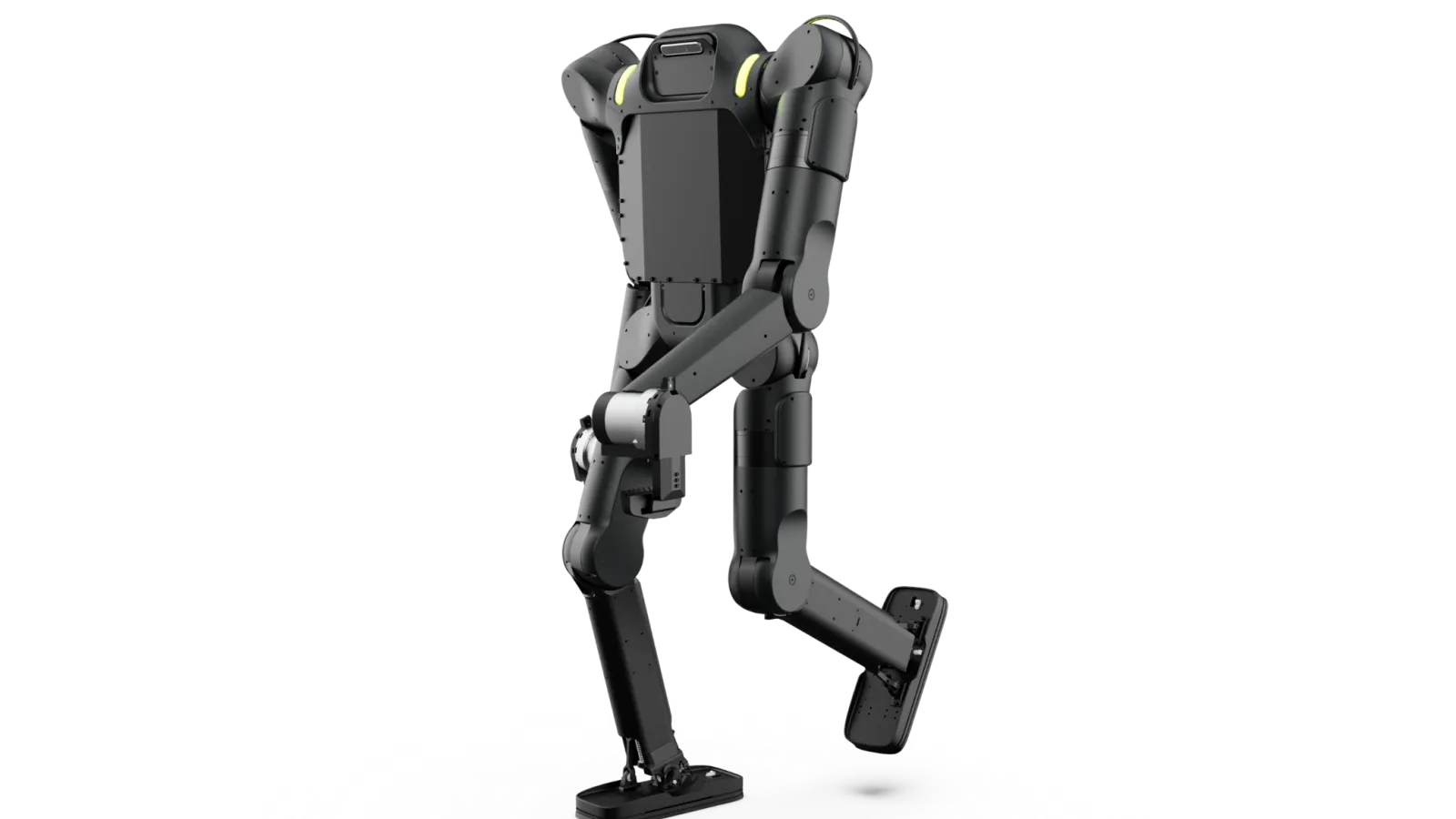
Wandercraft has signed 12 customers for its Calvin-40 industrial humanoid robot, naming large organisations in automotive, logistics, retail, healthcare and defence as early adopters. The company said it is now scaling production and expanding the robot's capabilities, with picking and sorting slated as the next additions to a platform that currently handles boxes, tyres, panels and carts.
The announcement positions Calvin-40 as a commercially proven system rather than a research demonstrator, a distinction Wandercraft is leaning into heavily as competition in the humanoid robotics sector intensifies. Co-founder and chief executive Matthieu Masselin said the company's decade-long background in medical exoskeletons, where robots physically support people with severe mobility impairments, shaped an engineering culture oriented around safety and uptime. "Reliability, balance, safety, and uptime cannot be added as afterthoughts," he said. "They must be part of the architecture from the start."
The Renault partnership and the path to scale
The most concrete scaling commitment in the release comes from Renault Group, which has announced plans to deploy 350 Calvin-40 units within the next 18 months. Renault's Chief Industry and Quality Officer, Thierry Charvet, described the relationship as combining Wandercraft's robotics expertise with Renault's manufacturing scale and design-to-cost capabilities. The partnership, announced in 2025 alongside the launch of Calvin-40, gives Wandercraft an important reference customer and, arguably more valuably, direct exposure to high-volume industrial production processes.
Wandercraft's stated development model is to build reliability within defined task clusters first, then use data generated from live deployments to expand capability over time. The company describes this as a proprietary data flywheel that it owns independently of any single technology supplier. Masselin framed the philosophy in deliberately contrarian terms relative to the broader humanoid robotics field: "Humanoid robots will not scale because they are general. They will become general as they scale."
Market context and competitive landscape
The industrial humanoid segment has attracted significant capital and attention over the past two years. Firms including Figure AI, Agility Robotics (acquired by Amazon) and 1X Technologies are all pursuing variations of the general-purpose humanoid thesis, while Boston Dynamics continues to develop its Atlas platform for industrial deployment. Tesla's Optimus programme adds further competitive pressure. Most of these programmes are still in limited pilot or demonstration phases, which means Wandercraft's claim of 12 paying customers, if substantiated by the underlying contracts, would represent a meaningful commercial lead over several well-funded rivals.
Wandercraft's medical robotics heritage is a genuine differentiator in the safety and reliability narrative, even if it does not automatically translate to industrial throughput requirements. Its Atalante X rehabilitation exoskeleton is deployed in more than 150 inpatient and outpatient rehabilitation centres worldwide, providing a track record of regulated, real-world robotic operation that few pure-play industrial robotics startups can match.
The company holds more than 30 patents and is headquartered across New York and Paris. No funding round, valuation or production volume targets beyond the Renault deployment figure were disclosed in the release. Investors and prospective customers will be watching for named customer announcements, uptime and reliability data from early deployments, and the timeline for picking and sorting capabilities to move from testing into commercial operation.