
Seer hits 100 peer-reviewed publications for Proteograph platform

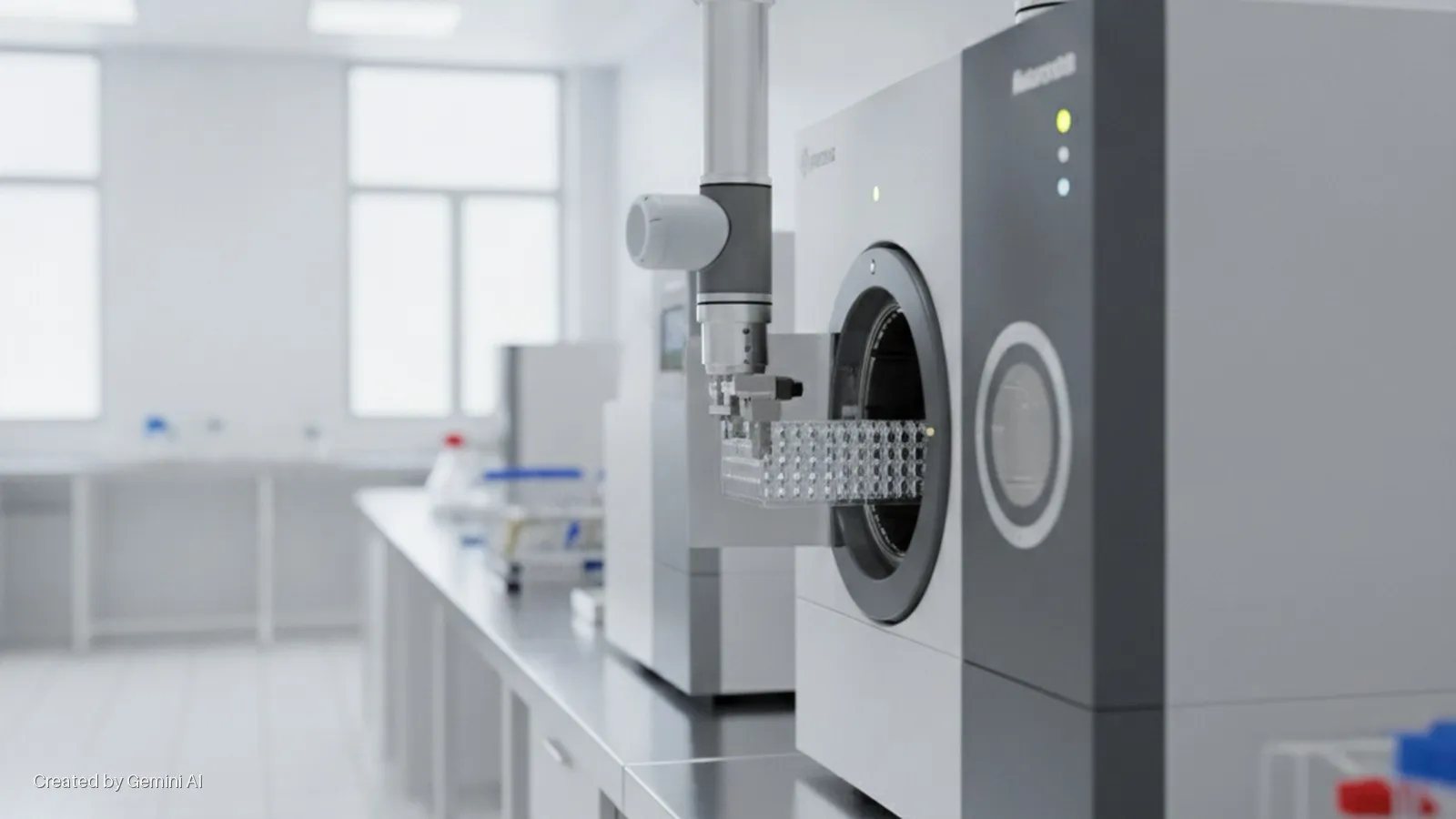
Seer, Inc. has announced that its Proteograph Product Suite has been cited in more than 100 peer-reviewed publications since the platform's foundational paper appeared in Nature Communications in 2020. Academic, government and industry researchers across three continents have applied the technology to studies spanning genetics, ageing, disease biology and population health, with results published in Nature, Nature Medicine, Nature Genetics and Nature Aging, among others.
The Redwood City-based company positions the milestone as evidence that deep, unbiased proteomics at population scale has shifted from a technical aspiration to a working research paradigm. The Proteograph system combines proprietary engineered nanoparticles with mass spectrometry to allow broad, unbiased interrogation of the plasma proteome across large sample sets, without requiring researchers to specify in advance which proteins to measure.
What the published studies show
Three examples from the published body of work illustrate the range of applications the company highlights. Researchers at Queen Mary University of London and the Berlin Institute of Health at Charité used the platform to profile more than 1,400 British South Asian participants, identifying over 3,400 proteins not captured by two leading affinity-based platforms and more than 1,200 genetic associations with plasma proteins, the majority of which had not previously been reported. A separate Nature Genetics study, drawing on roughly 1,600 samples with collaborators from Harvard Medical School and TruDiagnostic, used peptide-level mass spectrometry to distinguish genuine protein-level changes from artefacts introduced by affinity-binder recognition errors, a distinction relevant to drug target and biomarker validation. A third study, published in Nature Aging, linked proteomic signatures from senescent human monocytes to circulating proteins in more than 1,000 participants in the Baltimore Longitudinal Study of Aging, connecting cellular ageing biology to measurable clinical phenotypes.
Chief executive Omid Farokhzad said the platform's ability to extract "far more information from some of the world's most valuable cohorts" would become increasingly important as AI-driven biological modelling demands large volumes of deep, reproducible human data. "Seer is building the proteomic foundation to generate those datasets at a scale that was simply not possible before," he said.
Market context and competitive landscape
Proteomics has attracted growing attention from both the research community and investors over the past several years, driven partly by the success of large-scale genomics initiatives and a recognition that proteins are more proximal to disease and drug action than DNA sequence alone. The field is, however, competitive. Affinity-based platforms from companies including Olink (now part of Thermo Fisher Scientific) and SomaLogic (merged with Standard BioTools) dominate high-throughput plasma proteomics in large cohort studies and have their own growing publication records. Seer's differentiation claim rests on the depth and breadth of unbiased coverage achievable through nanoparticle-based sample preparation rather than the curated panels used by affinity platforms, a distinction the Queen Mary and Harvard studies are designed to illustrate.
The company noted that additional Proteograph-enabled research will be presented at the Human Proteome Organization World Congress in Singapore from 27 September to 1 October 2026. Whether publication volume translates into accelerated commercial adoption and revenue growth remains the core question for investors. Seer is at research-use-only stage; the press release makes clear the platform is not cleared for diagnostic procedures. A path toward clinical or companion-diagnostic applications would represent the next significant commercial inflection point, though no regulatory timeline was disclosed.