
NurExone advances ExoPTEN optic nerve programme to rabbit study

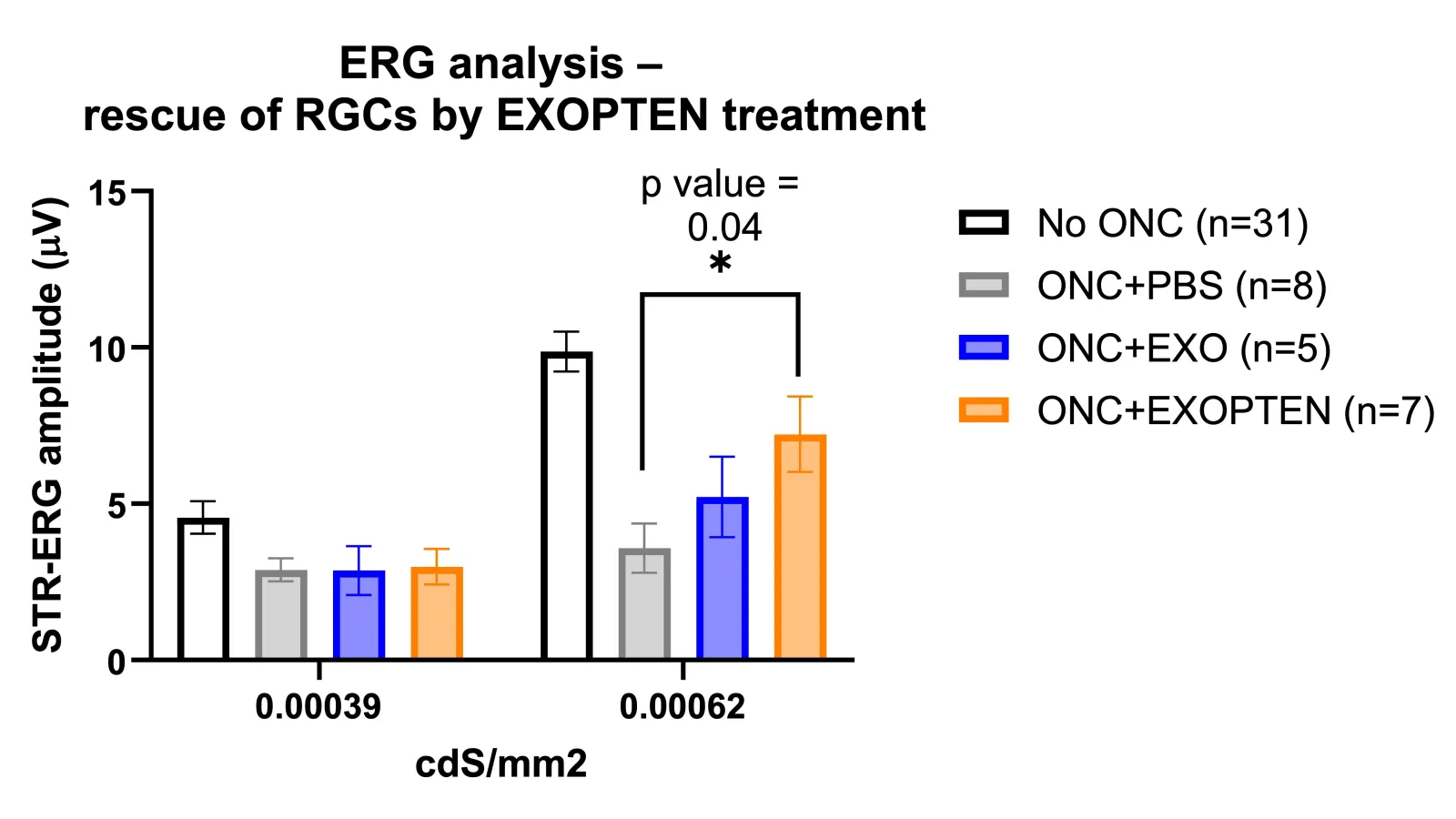
NurExone Biologic has reported preclinical data supporting the advancement of its optic nerve injury programme into larger-animal testing, with its lead candidate ExoPTEN and a naïve exosome formulation both producing measurable retinal electrical activity in a rat crush model.
The studies, conducted in collaboration with Prof. Ygal Rotenstreich's team at the Goldschleger Eye Institute at Sheba Medical Center in Israel, used electroretinography to measure the retina's electrical response to light following deliberate optic nerve injury. At the higher of two tested light intensities, ExoPTEN-treated eyes showed a statistically significant improvement in retinal response compared with the phosphate-buffered saline control group (p = 0.04, one-way ANOVA with Dunnett's correction). Naïve exosome-treated eyes produced an intermediate response that crossed the study's 5-microvolt threshold for measurable retinal activity, while the PBS control group did not.
Study detail and next steps
The optic nerve crush model used in this study is a standard research tool for evaluating neuroprotective and regenerative interventions, though the company acknowledges it does not reproduce all features of human glaucoma. The TSXV-listed company said it plans to advance the programme into a rabbit model, which will be used to evaluate delivery, dosing, tolerability and safety in a larger eye anatomy. The design and initiation of that study remain conditional on final protocol development, funding and regulatory approvals.
"Optic nerve damage often leads to permanent vision loss because the connection between the eye and the brain has a very limited ability to repair itself," said Prof. Rotenstreich. "These preclinical findings support the continued development of a potential new treatment approach for serious vision-threatening conditions."
The optic nerve programme runs alongside NurExone's lead spinal cord injury indication, where ExoPTEN has also generated preclinical data. The company holds Orphan Drug Designation from US regulators for its spinal cord indication, which it says forms part of its clinical development roadmap in North America and Europe.
Market and competitive context
The exosome therapeutics field is attracting growing interest from academic spinouts and emerging biotechs seeking alternatives to cell-based delivery systems, with potential applications across central nervous system injury, ophthalmology and oncology. The optic nerve space specifically has seen limited therapeutic progress: no disease-modifying agents are currently approved for traumatic optic neuropathy, and neuroprotective strategies for glaucoma-related optic nerve loss remain an active area of unmet need.
NurExone is a small-cap company at an early stage of development, and the data disclosed remain confined to rodent models. Translational challenges in CNS regeneration are well established: many candidates that demonstrate functional recovery in small-animal models have not reproduced those results in larger animals or in humans. The progression to a rabbit model is a meaningful internal milestone, but investor and clinical interest will ultimately turn on whether the programme can generate safety and dosing data sufficient to support a first-in-human application.
NurExone said it intends to offer commercial exosome products and targeted delivery services through its US subsidiary, Exo-Top Inc., which it positions as a near-term revenue pathway alongside its clinical pipeline. The company has not disclosed funding secured for the planned rabbit study.