
TISSIUM raises €60m to back COAPTIUM launch and pipeline growth

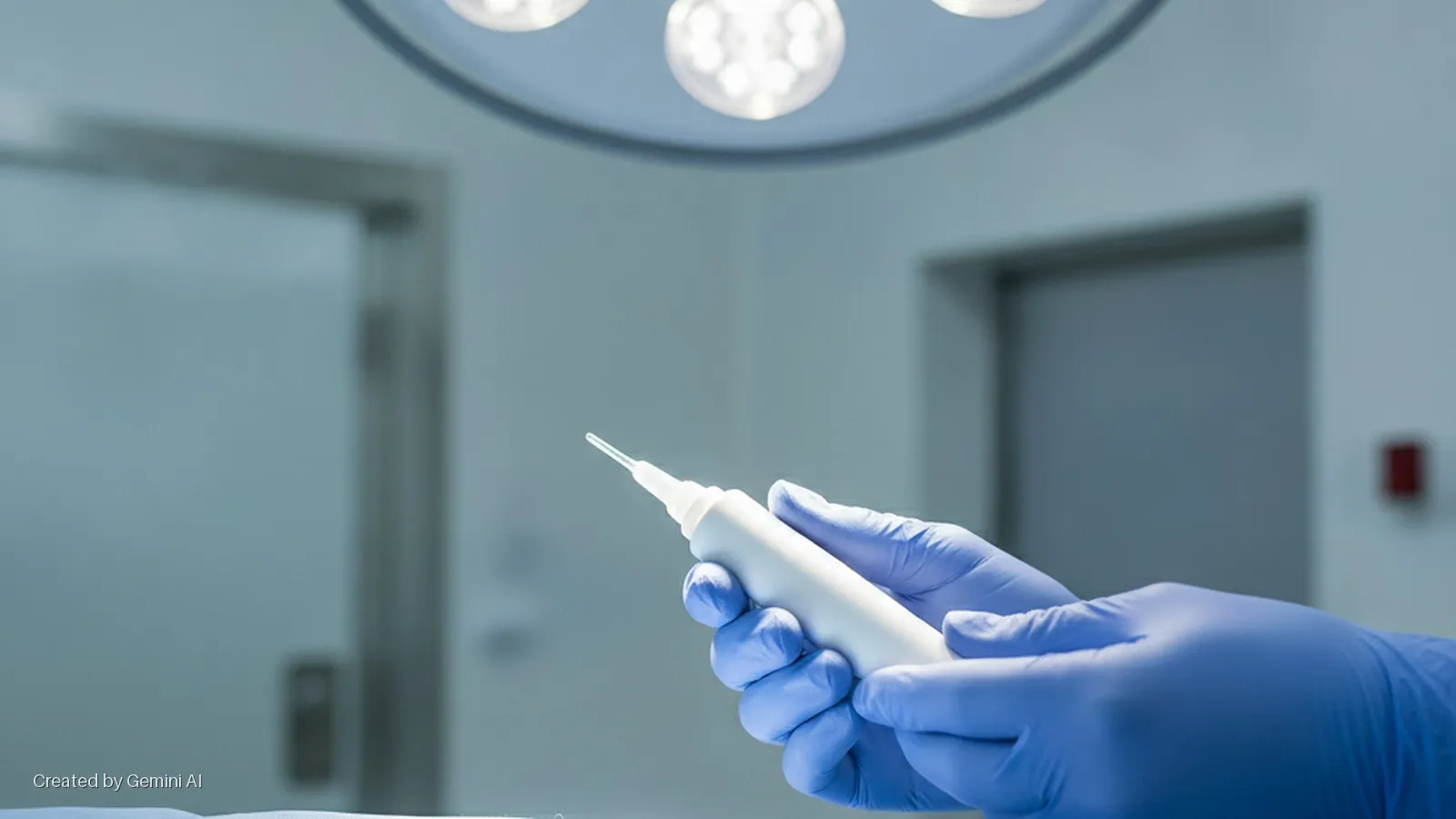
TISSIUM has secured a €60 million financing package to accelerate the US commercial rollout of its first cleared product and extend its biomorphic polymer platform into additional surgical indications. The deal combines a €30 million Series D2 equity round, completed at the end of 2025, with a €30 million debt facility from the European Investment Bank, the company announced on 24 June 2026.
The Series D2 attracted a broad syndicate of new and existing international investors, including participants based in the United States, though TISSIUM did not name specific backers. The EIB facility is structured in three €10 million tranches tied to commercial, clinical and financing milestones, mixing dilutive and venture debt components. The company said it expects to draw the first tranche before the close of June 2026.
Commercial milestone and pipeline
The financing follows a pivotal period for TISSIUM. The company received FDA marketing authorisation for COAPTIUM CONNECT, its first commercial product, and has begun its US market entry. COAPTIUM CONNECT is designed for sutureless nerve repair using the company's proprietary biosynthetic elastomeric polymer technology, which is engineered to match the mechanical properties of biological tissue.
Beyond nerve repair, TISSIUM's pipeline spans atraumatic hernia repair and cardiovascular sealant applications, with six products in development across those three verticals. Chief executive and co-founder Christophe Bancel described the financing as providing "the capital and strategic flexibility required to accelerate commercial execution while continuing to invest in the future growth of our platform."
The company traces its intellectual origins to research from Professor Robert Langer at MIT and Professor Jeffrey M. Karp at Brigham and Women's Hospital, and operates manufacturing in Roncq, northern France.
Market context and competitive landscape
The tissue repair and surgical sealant market is well-served by established players, including large medtech groups with adhesive and haemostatic product lines, as well as a number of university-spinout companies pursuing biomimetic and synthetic polymer approaches. TISSIUM's positioning centres on the programmable, elastomeric properties of its platform: the ability to tune stiffness, degradation rate and adhesion strength for different tissue types is the core differentiator the company claims.
Sutureless peripheral nerve repair is a comparatively narrow but clinically meaningful segment. Current standard-of-care approaches, including conduit wrapping and autograft, carry well-documented limitations in gap-bridging and functional recovery outcomes. Regulatory clearance in the US is a significant commercial gate, and TISSIUM's FDA authorisation for COAPTIUM CONNECT removes the primary barrier for hospital adoption, at least in the nerve repair vertical.
The EIB backing is notable as a signal of institutional confidence in European deep-tech healthcare. The InvestEU mandate under which the facility was granted is intended to support transformative healthcare innovation across the continent, and TISSIUM is one of comparatively few commercial-stage MedTech companies to secure such a facility in the current funding environment.
Near-term milestones will include early US sales data for COAPTIUM CONNECT, clinical progress readouts across the hernia and cardiovascular programmes, and the drawdown schedule for the remaining two EIB tranches. Investors will be watching whether a product cleared in one surgical vertical can validate the polymer platform's broader applicability before the current funding runway is exhausted.