
Philips wins $33.7m ARPA-H award for AI robotic stroke care

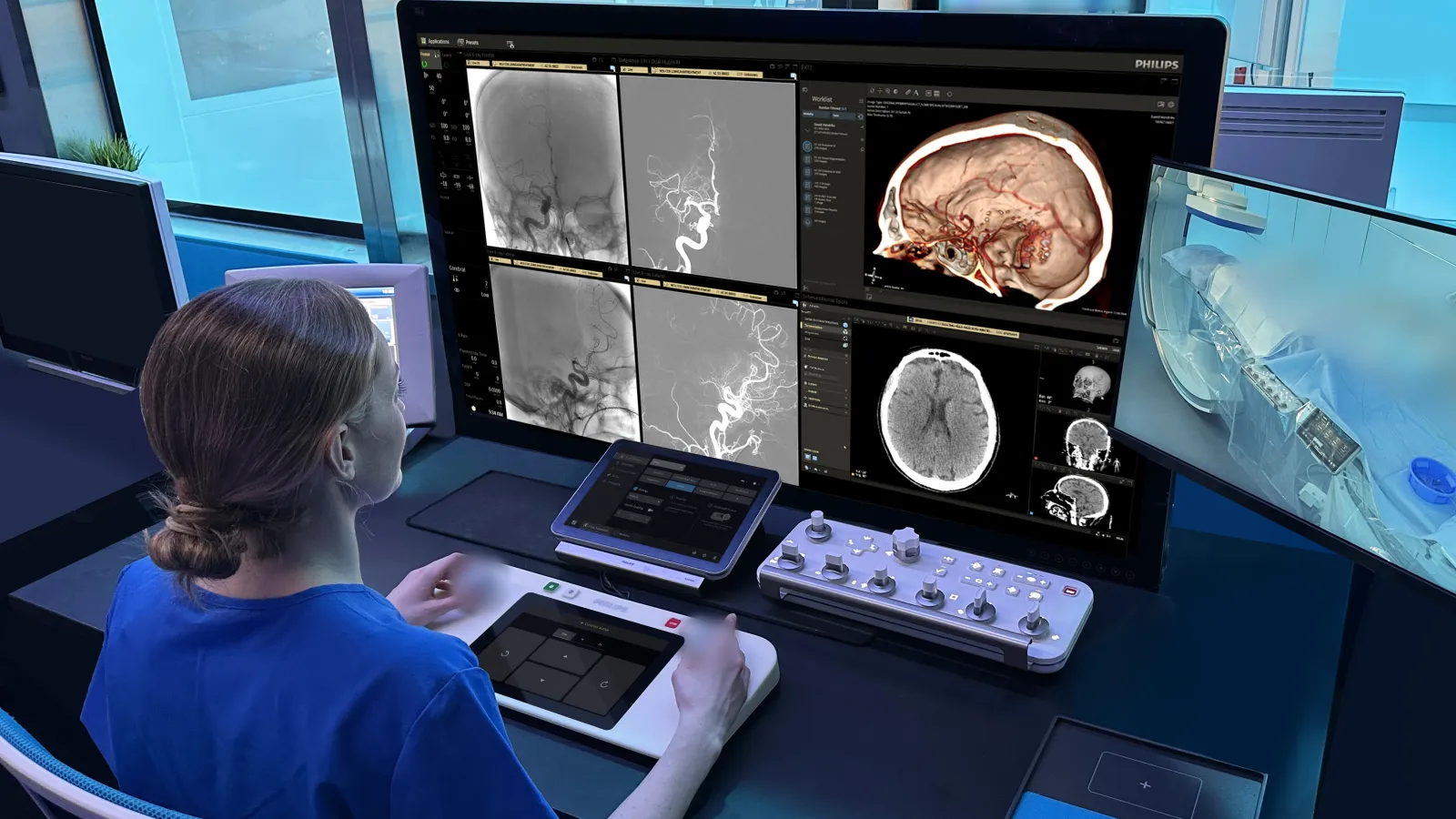
Royal Philips has received an award of up to US$33.7 million from the Advanced Research Projects Agency for Health (ARPA-H) to develop AI-enabled robotic automation for endovascular stroke procedures. The funding comes through ARPA-H's Autonomous Interventions and Robotics (AIR) programme and will support a multi-institutional collaboration involving Johns Hopkins University, Boston University, and clinical collaborator Dr J Mocco of Weill Cornell Medicine.
The project targets one of the most persistent gaps in stroke care. In the United States, roughly 335,000 patients annually are eligible for mechanical thrombectomy, a minimally invasive clot-removal procedure that can reverse stroke damage if performed quickly enough. Yet only around 12% of eligible patients currently receive the treatment, and more than half of Americans live further than an hour from a centre capable of performing it. Globally, the picture is starker still: fewer than 3% of eligible large-vessel occlusion patients receive thrombectomy, according to figures cited by ARPA-H and published stroke research.
The technology programme
Philips will build on its existing Azurion image-guided therapy platform, which the company says is installed in more than 20,000 systems across 80 countries. The programme will develop technologies spanning endovascular navigation, robotic device control, image-based procedural guidance, workflow automation, and remote intervention. The stated goal is to enable increasing levels of supervised autonomy, with expert clinicians retaining oversight rather than being removed from the loop.
Johns Hopkins, led by Associate Professor Axel Krieger, will concentrate on autonomous device navigation. Boston University, co-led by Associate Professors Tommaso Ranzani and Sheila Russo, will focus on steerable catheter development. Philips' own contribution centres on integrating these components into a unified clinical workflow.
Bert van Meurs, Chief Business Leader for Image-Guided Therapy at Philips, framed the award as a step toward making specialist expertise "scalable and accessible" rather than a move to replace clinicians. Dr Mocco, who chairs neurological surgery at Weill Cornell Medicine, said the programme aims to "translate this potential into clinically meaningful innovation, developing technologies that support clinicians and are designed to improve patient outcomes."
Market context and competitive landscape
The ARPA-H award places Philips in a growing field of medtech and robotics companies pursuing automation for minimally invasive vascular procedures. Siemens Healthineers and GE HealthCare both have established image-guided therapy portfolios, while a number of venture-backed start-ups, including Robocath and Stereotaxis, are pursuing catheter robotics specifically for vascular indications. Philips' edge in this programme lies in its combination of imaging infrastructure, an installed clinical base, and the academic depth brought by its partners.
The programme also fits a broader US federal push to reduce geographic inequality in specialist care. ARPA-H, established in 2022 and modelled on DARPA's high-risk, high-reward model, has been directing funding toward interventions that could structurally change care delivery rather than incremental clinical improvements.
Philips noted that all technologies described remain under development and that any future clinical use will be subject to applicable regulatory requirements. The company did not provide a timeline for regulatory submissions or anticipated trial activity, leaving the near-term milestones somewhat opaque. Investors and clinicians will be watching for IND or IDE filings and early feasibility data as the collaboration progresses.