
MannKind presents Furoscix ReadyFlow PK/PD data at HFSA 2026

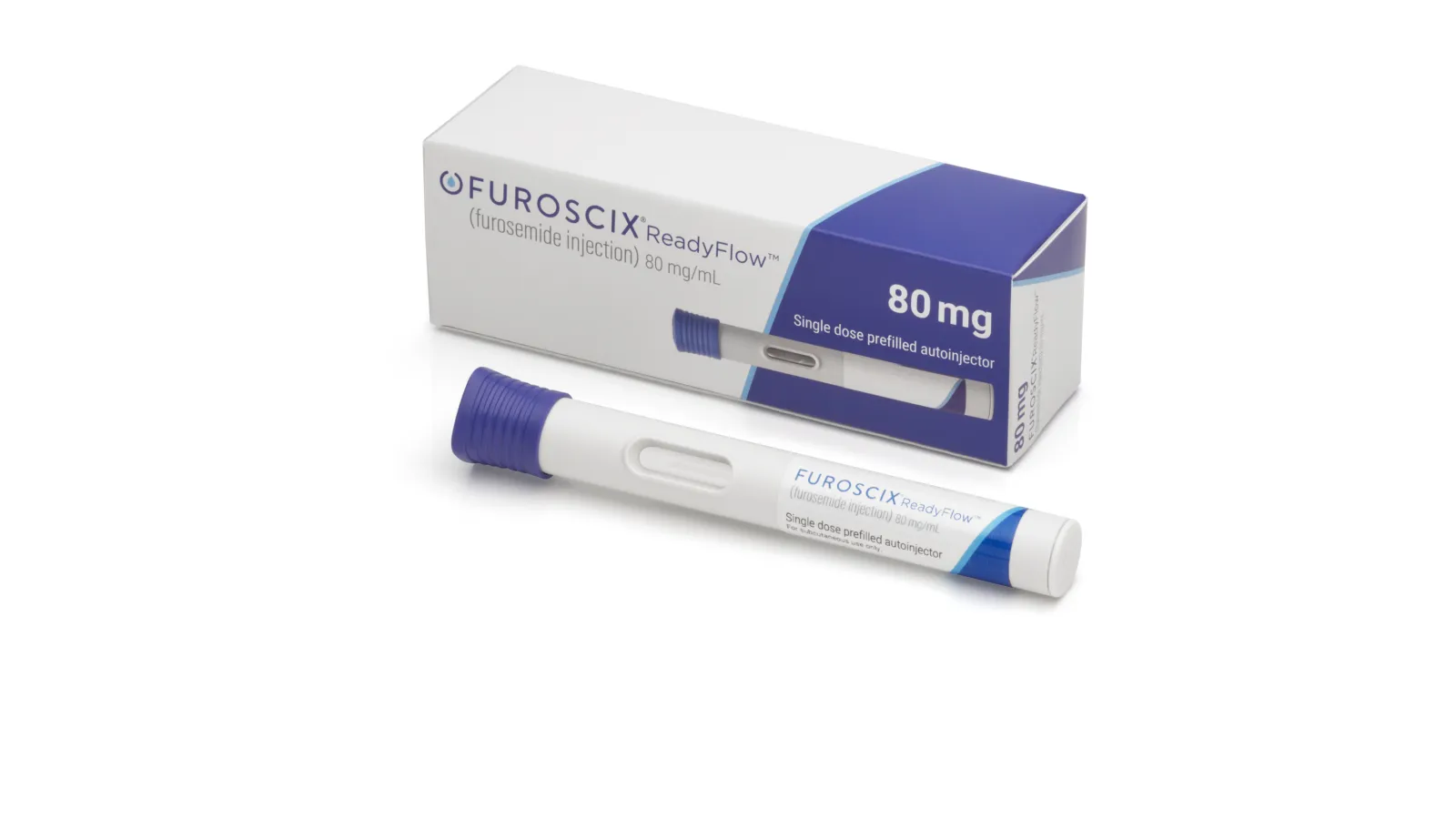
MannKind Corporation has presented new pharmacokinetic and pharmacodynamic data for Furoscix ReadyFlow at the Heart Failure Society of America Annual Scientific Meeting in Phoenix, reinforcing the case for its autoinjector-delivered subcutaneous furosemide as an outpatient alternative to intravenous diuretic therapy.
The presentations, timed to coincide with the product's commercial momentum following its July 2026 FDA clearance, characterise bioavailability, urine output, and urinary sodium excretion across two studies. The findings are positioned by the company as further evidence that the device can slot into outpatient, post-discharge, and home-based care pathways for patients with heart failure or chronic kidney disease.
What the data show
Two analyses were presented. The first, a post-hoc cross-study comparison, set PK and PD characteristics of Furoscix ReadyFlow alongside those of the earlier Furoscix On-body Infusor, MannKind's wearable patch device. Both subcutaneous formulations met bioequivalence criteria relative to IV furosemide and produced comparable diuretic and natriuretic responses. MannKind acknowledges that the two underlying studies were conducted in separate patient populations, and that cross-study comparisons should be interpreted with caution.
The second presentation reported results from a randomised crossover study evaluating the autoinjector at two injection sites: the thigh and the upper arm. Furoscix ReadyFlow met pre-specified bioequivalence criteria for area-under-the-curve versus IV furosemide at both sites, with relative bioavailability of 91.3% from the thigh and 92.7% from the upper arm. Urine output and urinary sodium excretion were broadly similar across all three treatment conditions, and the therapy was described as generally well tolerated.
"As healthcare providers seek ways to manage worsening congestion earlier and outside the hospital setting, these data add to the growing body of evidence supporting Furoscix ReadyFlow as an important treatment option," said Ajay Ahuja, chief medical officer at MannKind.
Market and competitive context
The outpatient management of acute decompensated heart failure represents a long-standing clinical challenge. Hospitalisation driven by fluid overload is a significant cost driver in heart failure care, and payers and health systems have sought alternatives to emergency department diuresis for years. Furoscix ReadyFlow is positioned by MannKind as the first autoinjector delivering subcutaneous furosemide with IV-equivalent exposure, a claim that, if borne out in real-world practice, could be relevant to discharge planning protocols and remote patient monitoring programmes.
The broader subcutaneous drug-device combination space is competitive, with a number of companies exploring self-injection platforms for therapies traditionally administered intravenously. MannKind itself already holds a foothold in drug-device combinations through its inhaled insulin product Afrezza. The ReadyFlow launch adds a cardiometabolic dimension to that capability base, though commercial uptake data have not yet been disclosed.
For investors, the near-term question is prescriber adoption and formulary coverage rather than regulatory risk, which has been resolved. Heart failure specialists and nephrologists represent a relatively concentrated prescriber base, which may support targeted commercial outreach, though reimbursement dynamics in home-infusion and outpatient cardiology settings will be a key variable to watch as MannKind reports future quarterly results.