
Iovance wins TGA approval for lifileucel in advanced melanoma

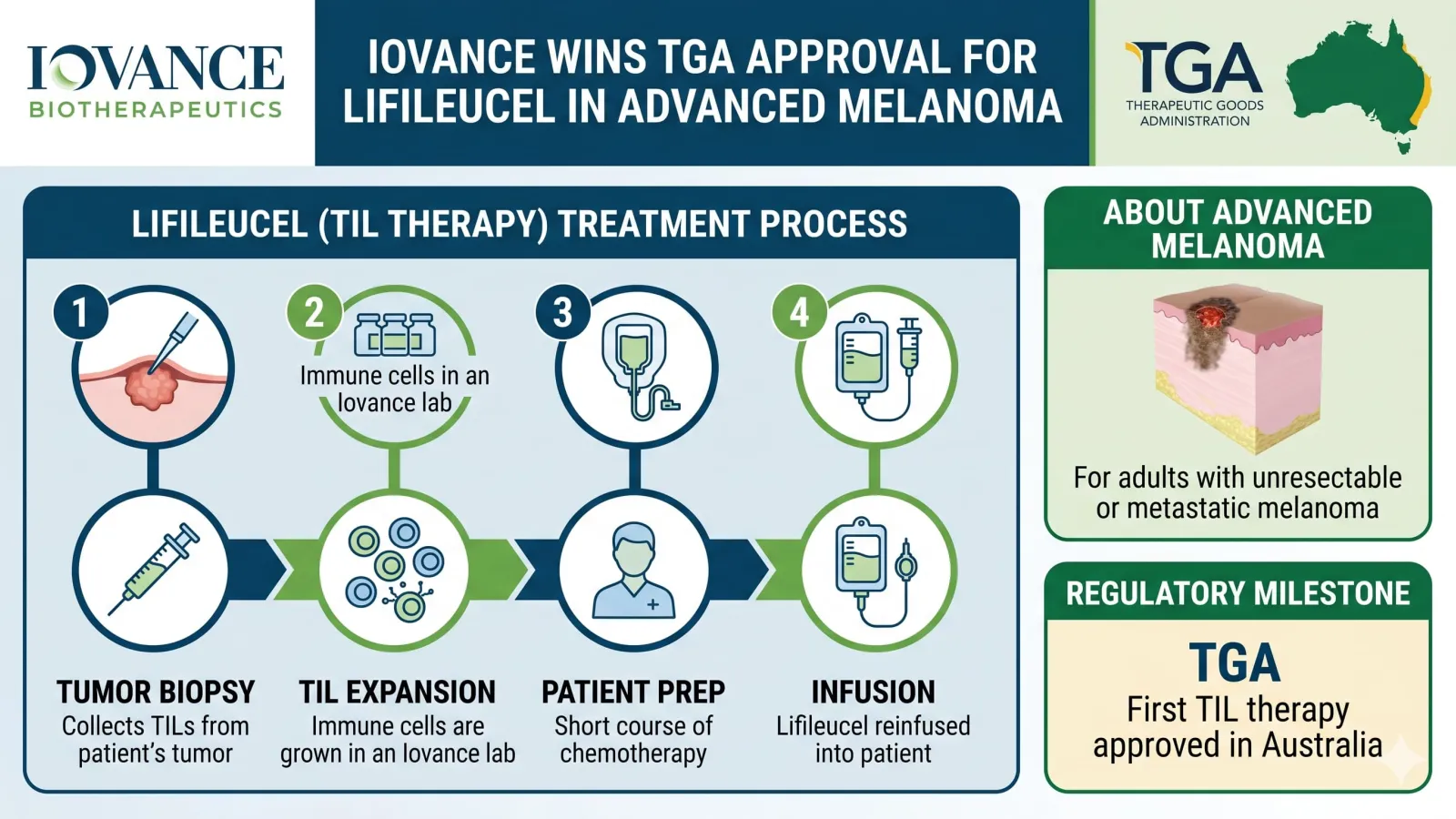
Iovance Biotherapeutics has secured Australian Therapeutic Goods Administration (TGA) approval for Amtagvi (lifileucel), making it the first T cell therapy to receive a marketing authorisation for a solid tumour in the country. The approval, which comes with conditions, covers adult patients with unresectable or metastatic melanoma previously treated with an anti-PD-1 agent, and — where applicable — a BRAF inhibitor with or without a MEK inhibitor.
The TGA decision is Iovance's third marketing authorisation for lifileucel globally, following the US FDA approval granted in February 2024 and a subsequent approval in a second jurisdiction. Australia is a strategically meaningful market: the country records an estimated 17,000 new melanoma diagnoses and more than 1,500 deaths annually, representing the highest per-capita melanoma burden worldwide.
Clinical basis and pipeline
The approval was grounded in data from C-144-01, a global, multicentre Phase 2 study evaluating lifileucel monotherapy in patients with metastatic melanoma who had progressed on at least one systemic therapy. Efficacy endpoints were objective response rate and duration of response, assessed by independent review committee using RECIST v1.1. Detailed results were published in the Journal for ImmunoTherapy of Cancer in 2022, and a five-year analysis appeared in the Journal of Clinical Oncology in 2025 — an unusually mature durability dataset for a cell therapy in solid tumours.
Iovance is currently evaluating lifileucel in the frontline setting via TILVANCE-301, a Phase 3 trial (NCT05727904), and is exploring additional solid tumour indications. The company said it is in the process of authorising its first Australian treatment centre.
Frederick Vogt, interim chief executive and president of Iovance, said the Australian approval "marks a significant step forward for Iovance in the country with the highest rate of melanoma globally."
Market context and competitive landscape
Tumour-infiltrating lymphocyte therapy occupies a distinct niche within the broader cell and gene therapy field. Unlike CAR-T products — which have achieved multiple approvals in haematological malignancies — TIL therapy targets solid tumours, where the manufacturing complexity and patient-selection requirements have historically constrained uptake. Iovance remains the only company with a commercially approved TIL product for a solid tumour indication.
The advanced melanoma market has been reshaped over the past decade by PD-1 checkpoint inhibitors and BRAF-targeted combinations, yet a meaningful subset of patients progresses through both lines of therapy with limited subsequent options. Lifileucel is positioned precisely in this refractory population, and the TGA approval explicitly reflects that sequencing. Competing approaches in the space include other adoptive cell therapy programmes in clinical development, though none has yet reached regulatory approval in melanoma.
For Iovance, the key commercial variables in Australia will be reimbursement pathway and the pace of treatment centre authorisations — factors that have also shaped uptake in the US market since the FDA approval. Investors will watch the TILVANCE-301 data as the catalyst most likely to expand the addressable population substantially.