
Fieldstone Bio joins Rio Tinto mining accelerator

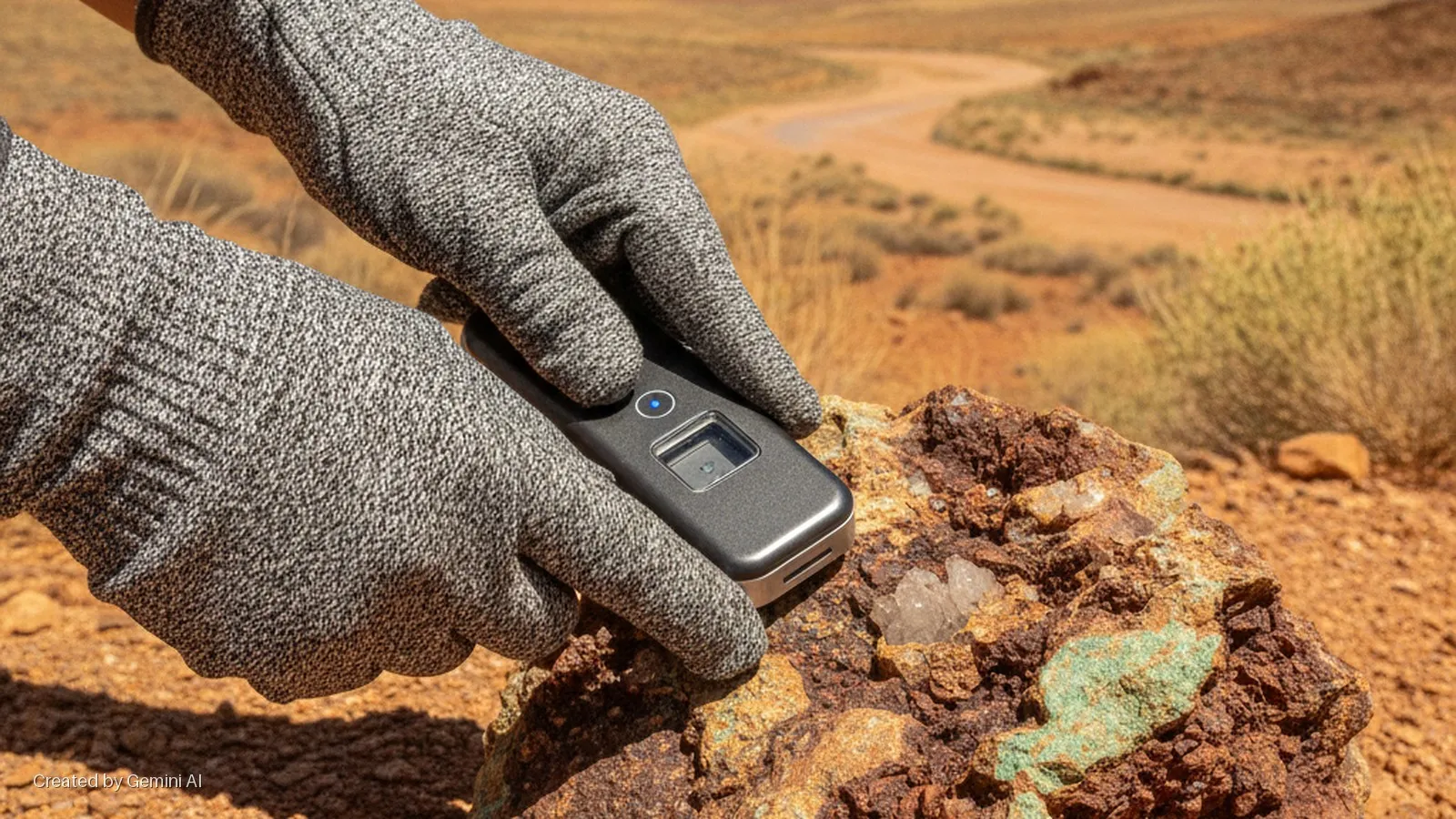
Fieldstone Bio, a Woburn, Massachusetts-based synthetic biology company, has been selected for the Mining Tech Accelerator run by Founders Factory in partnership with Rio Tinto. The four-month programme, which accepted five companies from a pool reported to exceed 500 applicants, provides seed investment and direct access to Rio Tinto's technical teams and advanced facilities in Western Australia.
The selection follows a US$2 million award made in June through the US Department of Energy's ARPA-E ROCKS programme, which paired Fieldstone's microbial sensors with hyperspectral imaging technology from drill-core scanning specialist TerraCore and field validation samples from exploration company Scout Discoveries. The two milestones together mark a significant step in the company's progression from laboratory demonstration to operational product.
The problem Fieldstone is targeting
Ore body knowledge sits at the heart of every major capital decision in mining, yet the data underpinning those decisions is typically sparse and slow. In exploration, assay results from drill cores sent to off-site laboratories can take one to two months to return, meaning teams commit millions of dollars in drilling against an incomplete geological picture. In operating mines, on-site labs reduce turnaround times but often produce only a single sample result per blast hole, leaving grade-control decisions under-informed.
Fieldstone's platform combines synthetic biology-derived biosensors, hyperspectral imaging, and data analysis to generate high spatial resolution elemental measurements at the point of decision. The company says the system can detect target elements, including copper, lithium, and gold, in geological samples and return results while a drill programme is still under way, enabling teams to redirect activity in days rather than weeks.
Patrick Stone, chief executive and co-founder, said that every drilling decision amounts to "a bet on an incomplete map" and that the platform produces the kind of elemental data that improves that map in real time. Tamryn Barker, Founders Factory's Sector Director for Mining and Nature Tech, said the cohort was selected for technologies that can change "how the industry finds and characterises the materials the world needs, faster and more accurately."
Market context and competitive landscape
Demand for critical minerals has drawn sustained attention from both governments and investors, with the energy transition placing copper, lithium, and rare earth elements under structural supply pressure. That pressure has accelerated interest in technologies that can shorten the decade-plus timeline typically required to move a deposit from discovery to production.
Fieldstone enters a space where established geophysical and geochemical sensing companies operate alongside a growing cohort of venture-backed start-ups applying machine learning, remote sensing, and novel chemistry to the same problem. The Rio Tinto accelerator portfolio itself includes Endolith, Durin, and Terra AI, signalling the miner's broad appetite for exploration-stage technology partnerships. What distinguishes Fieldstone's approach is the use of engineered biological systems as detection agents, an application of synthetic biology that remains relatively rare in the minerals sector and that carries both significant upside and regulatory uncertainty as it moves toward field deployment at scale.
Founded in 2023 as a spin-out from MIT, Fieldstone is still at an early commercial stage. The accelerator programme and the ARPA-E award together provide the company with the field access and institutional validation it will need to convert laboratory biosensor performance into mining-grade reliability. Investors and prospective customers will look for data on detection accuracy, throughput, and robustness in varied geological conditions as the next critical milestones.