
Syncromune presents SYNC-T Phase 1 prostate data at CIRSE 2026

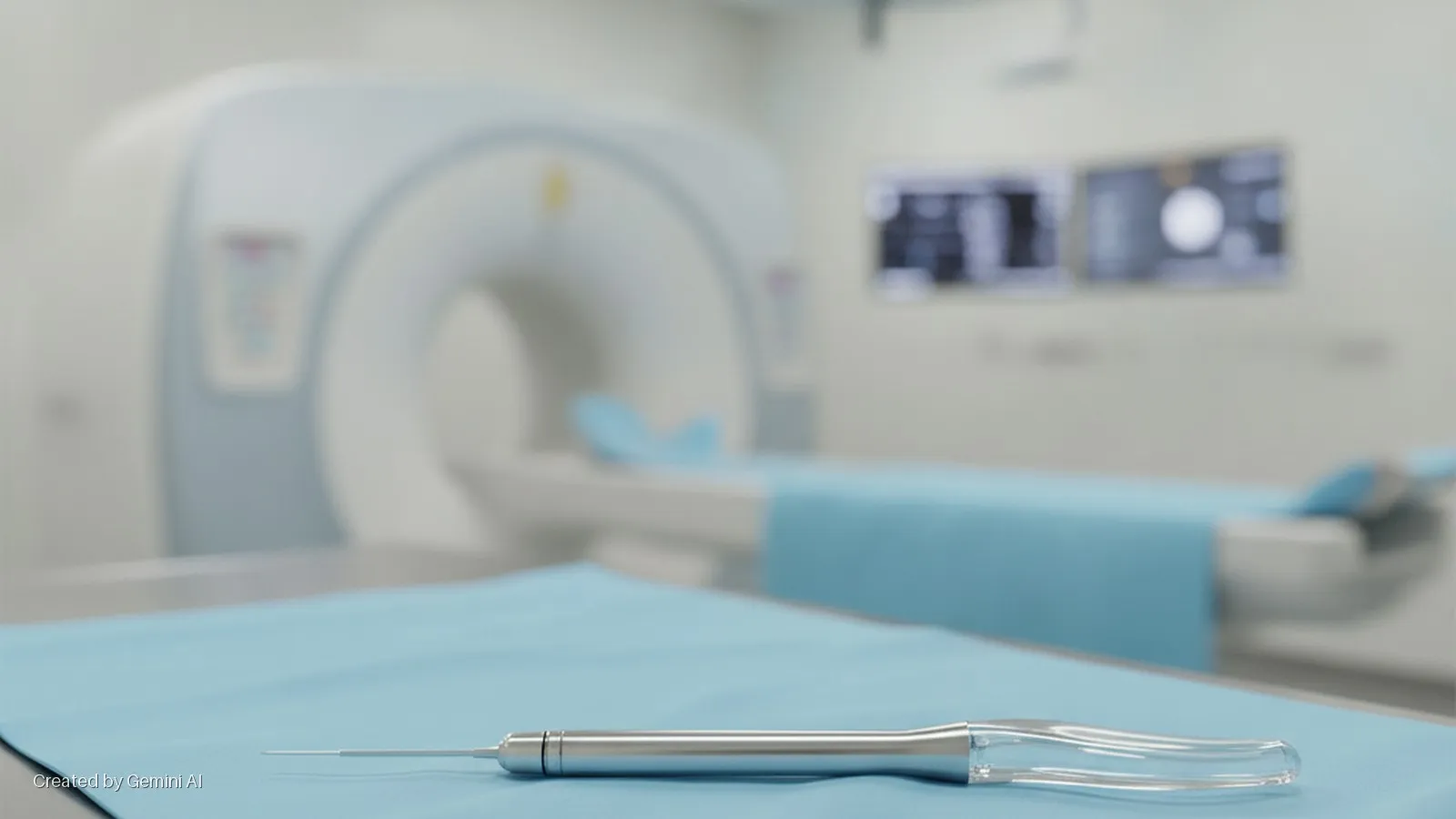
Syncromune has used the CIRSE 2026 interventional radiology congress in Copenhagen to present updated data from its Phase 1 study of SYNC-T Therapy SV-102, an investigational platform combining image-guided partial tumour cryolysis with direct intratumoral immunotherapy delivery in patients with metastatic prostate cancer.
The presentation was delivered by Stephen Kee, EVP for Clinical Medical and Business Operations in EMEA, and reviewed both the procedural rationale for the approach and previously reported clinical findings from a 15-patient early-stage cohort.
Phase 1 findings
In the 15-patient Phase 1 study, investigators reported a 100% disease control rate and an investigator-assessed overall response rate of 87%, which included complete responses in 53% of patients. Independent radiological review confirmed an 87% overall response rate, comprising 40% complete responses and 47% partial responses. In patients who had bone metastases at baseline, imaging showed complete resolution in seven of 13 (54%). On safety, 95% of treatment-emergent adverse events were Grade 1 or 2, with no Grade 4 or 5 events reported.
These results carry the caveats typical of early-stage, single-arm studies. The sample size is small, there is no control arm, and the company has itself noted that findings from 15 patients may not be predictive of outcomes in larger or later-stage trials. Readers should regard them as hypothesis-generating rather than confirmatory.
Platform design and competitive context
SYNC-T is engineered around the concept of synchronising three components of T cell activation within the tumour microenvironment. A proprietary needle-based device partially lyses a target tumour via a freeze-thaw cycle to release patient-specific antigens. The multi-target drug SV-102, which combines four immunomodulatory agents, is then infused through the same device path into the treated area. The design is intended to co-localise antigens, drug and immune cells in tumour-draining lymph nodes, with the goal of generating a systemic anti-tumour response while limiting systemic drug exposure.
Intratumoral immunotherapy is an active development area that has attracted a number of both large pharma and specialist biotech entrants over the past decade, with approaches spanning TLR agonists, oncolytic viruses, STING agonists and combination regimens. What distinguishes the SYNC-T approach is its tight integration of an image-guided ablation step with drug delivery, positioning interventional radiologists as a key procedural partner. Engagement with the CIRSE audience is therefore strategically coherent: converting that community into adoption advocates could shorten the procedural learning curve if the therapy reaches commercialisation.
The broader metastatic castration-resistant prostate cancer (mCRPC) landscape remains highly competitive. Approved agents include androgen receptor pathway inhibitors, PARP inhibitors, lutetium-177 PSMA-617 and sipuleucel-T. Finding a clinical niche will require SYNC-T to demonstrate durable systemic responses in a population that has typically been resistant to conventional checkpoint inhibition.
Syncromune is now running LEGION-100 (NCT06533644), a multicenter Phase 2 trial in mCRPC patients who have progressed on standard-of-care treatment. Part 1 dose escalation has been completed and Part 2 dose optimisation is underway in the US. Executive Chairman Charles Link said the company is also preparing to expand LEGION-100 into regions outside the United States, though no specific timelines or geographies were disclosed.
The Phase 2 readout will be the next material inflection point for the programme. Full efficacy and safety data across a larger, more diverse patient population will be needed before investors or clinical partners can assess SYNC-T's competitive viability in an indication where several late-stage assets are already vying for market share.