
CBAK Energy completes Nanjing Phase II ramp-up amid $96m India order

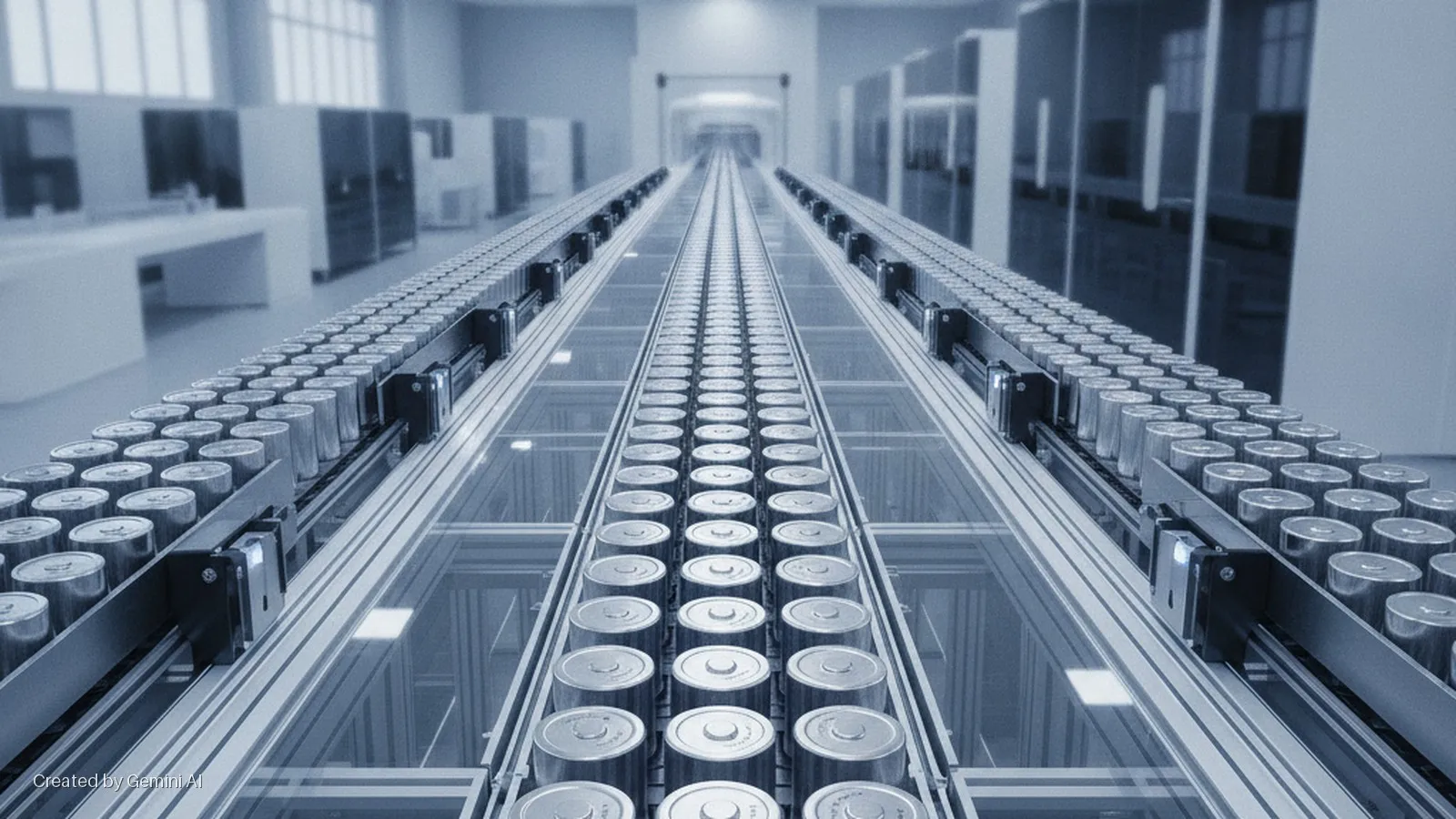
CBAK Energy Technology has completed the ramp-up of its Nanjing Phase II manufacturing facility and confirmed a US$96 million order from an unnamed Indian two- and three-wheeler manufacturer, in a post-conference business update issued following the company's appearance at the Clean Energy Metals Virtual Investor Conference on 27 August 2026.
The NASDAQ-listed Chinese battery maker said shipments of its Model 32140 lithium iron phosphate cells reached approximately 32.55 million units in the first seven months of 2026, a 101.5% year-on-year increase. Daily production capacity at Nanjing Phase II reached around 177,800 cells in July 2026, up 174% from January of the same year.
Manufacturing economics and the India opportunity
Chief financial officer Jiewei Li said that unit production costs, which were elevated during the Phase II commissioning period, have since declined as lines have reached designed capacity. The company expects further improvements in manufacturing efficiency and unit economics as output stabilises, and anticipates the Nanjing facility will reach profitability. Domestic orders are now dispatched within three days of entry; export orders within approximately nine days, accounting for dangerous goods packaging certification.
On the demand side, CBAK is positioning India as its fastest-growing overseas market. The US$96 million order, announced on 25 August 2026, is expected to be fulfilled through 2027 and is said to bring the designated facility to full capacity utilisation. The company also disclosed it is in advanced discussions with a second Indian manufacturer ranked among the country's five largest two- and three-wheeler producers, though it cautioned that no definitive order has been placed and terms remain uncertain.
Beyond India, the company reported growing demand from Vietnam and Africa. Vietnamese orders are primarily for cells integrated directly into electric two-wheelers, while African demand is centred on battery-swapping applications for the same vehicle category.
Competitive context and market landscape
The LFP cell segment has become intensely competitive, with Chinese manufacturers including CATL and BYD's battery division commanding the largest volumes globally. CBAK is a significantly smaller player by output, but the company's focus on the light electric vehicle segment, rather than passenger electric vehicles, gives it a degree of differentiation. LEV battery requirements, including cell geometry and discharge profiles, differ from automotive packs, and CBAK's Model 32140 cylindrical format is designed for this application.
The broader shift from nickel-manganese-cobalt to LFP chemistry, driven by LFP's superior thermal stability and longer cycle life, is expanding the addressable market for LFP cell producers across Asia and Africa. Indian government incentives for domestic EV adoption continue to accelerate two- and three-wheeler electrification, which could sustain demand for qualified foreign cell suppliers in the near term, though New Delhi has also signalled longer-term interest in developing domestic battery manufacturing capacity.
CBAK additionally updated progress on its 26650-format full-tab LFP cells for AI data centre backup power applications, saying multiple prospective customers have advanced to module-level validation. CFO Li described progress as satisfactory but confirmed no commercial orders have been placed. The company disclosed internal test results showing internal resistance below 3 mΩ and maximum discharge power of approximately 260 W and 310 W for the two cell variants, respectively.
The company also clarified that its recently filed Form F-3 registration statement carries forward an existing US$500 million shelf capacity from a prior Form S-3, and does not represent new dilutive capacity. Management said it does not intend to pursue equity issuance at current trading prices, which it described as materially undervalued, and that it is currently financing operations primarily through Chinese bank borrowings at annual interest rates of 2% to 3%.