
GenSight optogenetic therapy safe and restores object detection

GenSight Biologics and an international consortium led by researchers at the University of Pittsburgh and the Institute of Molecular and Clinical Ophthalmology Basel (IOB) have published first-cohort clinical results for an optogenetic therapy targeting advanced retinitis pigmentosa. The findings, reported in the New England Journal of Medicine, mark the first time the approach has been demonstrated across a group of patients rather than a single proof-of-concept case.
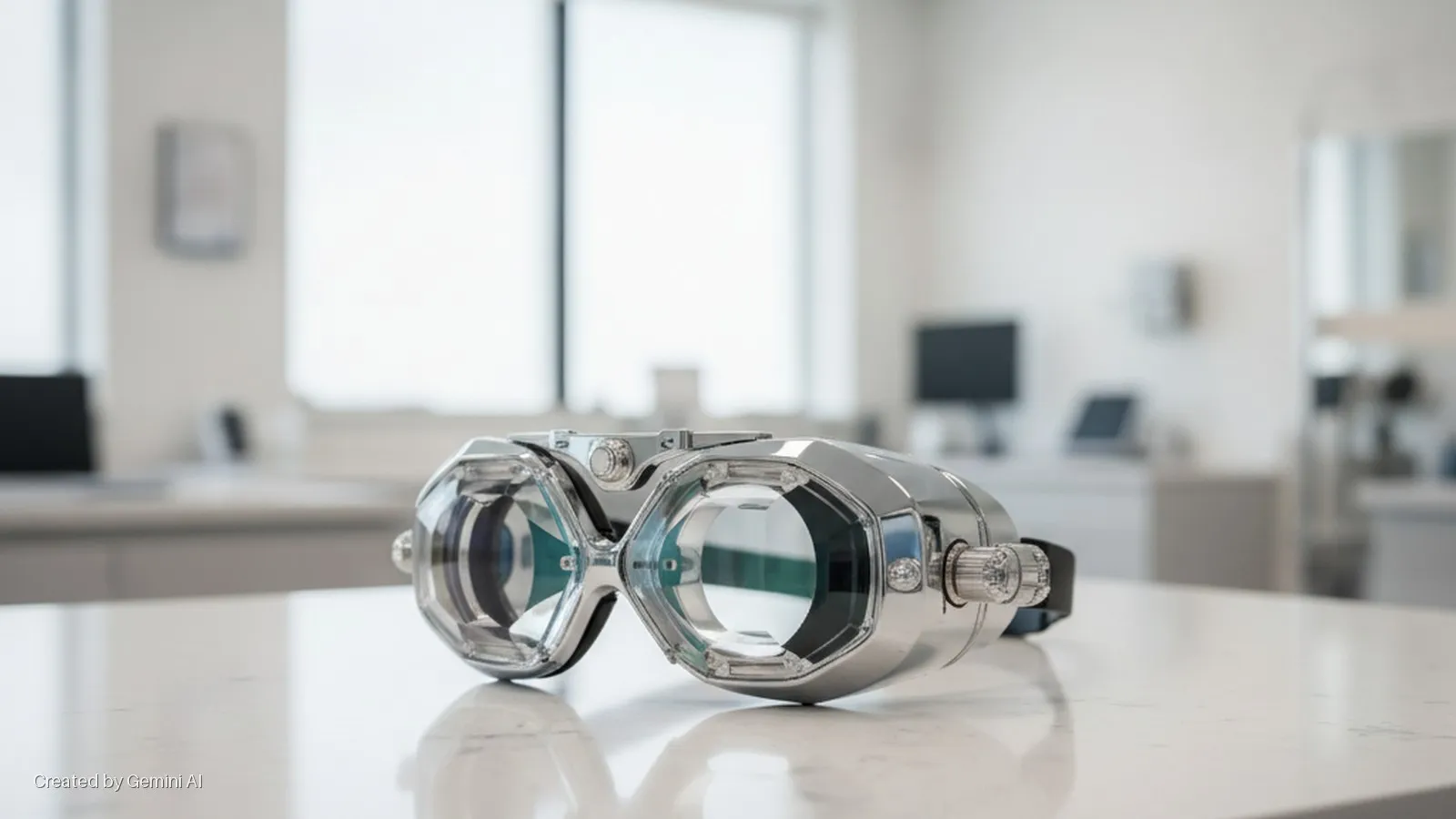
The therapy combines a gene-therapy injection delivering ChrimsonR, a light-sensitive protein derived from algae that responds to amber light, with specialised goggles fitted with a camera. The goggles convert changes in the visual scene into amber-light pulses that activate the ChrimsonR-expressing retinal ganglion cells. The mechanism bypasses the photoreceptors that retinitis pigmentosa progressively destroys, instead repurposing surviving downstream cells to carry visual signals to the brain.
Trial findings
Safety was the primary endpoint, and within the limits of the study the treatment was considered safe. Most eye-related adverse events were mild or moderate; one severe event occurred immediately after injection but resolved within minutes. Seven of ten participants became more sensitive to light overall, and six reached the predefined threshold for a clinically meaningful improvement. Four of the eight patients who completed visual behavioural testing improved on tasks involving detecting or locating objects, with even broader gains reported in doorway-finding and line-following tasks performed while wearing the goggles. Measurements of brain activity showed signals consistent with visual information reaching cortical visual areas.
Training proved relevant: patients who logged more time practising with the goggles tended to perform better on object-detection tasks, a finding that points to rehabilitation as a potential component of any future treatment protocol. The researchers were careful to note that the treatment did not restore functional sight in a conventional sense; participants could not read text or recognise faces.
Stefan Futterknecht, second author of the study, said: "This study represents an important milestone for optogenetic vision restoration. It demonstrates that the effects first observed in a single patient can be reproduced across several patients and provides a foundation for developing more sensitive and effective future therapies."
Market context and competitive landscape
Retinitis pigmentosa affects an estimated one to two million people globally and has historically had few therapeutic options outside of the approved RPE65 gene therapy, Luxturna, which is restricted to patients carrying that specific mutation. Optogenetic approaches are mutation-agnostic by design, addressing a much broader patient population regardless of the underlying genetic variant among the more than 100 implicated genes.
GenSight, listed on Euronext under the ticker SIGHT, has been one of a small number of companies pursuing light-activatable protein strategies for retinal degeneration. The broader field also includes companies and academic groups exploring high-acuity photoreceptor replacement and electronic retinal prostheses, though prosthetic approaches face different safety and image-resolution challenges. The NEJM publication carries significant weight with regulators and payers; a full dataset in a prestigious peer-reviewed journal typically accelerates dialogue with the FDA and EMA on trial design for a pivotal study. Near-term milestones will likely include disclosure of whether the consortium plans a larger, randomised controlled trial and further characterisation of the training protocols that appear to influence outcomes.