
TISSIUM begins US enrolment in UNITE hernia fixation trial

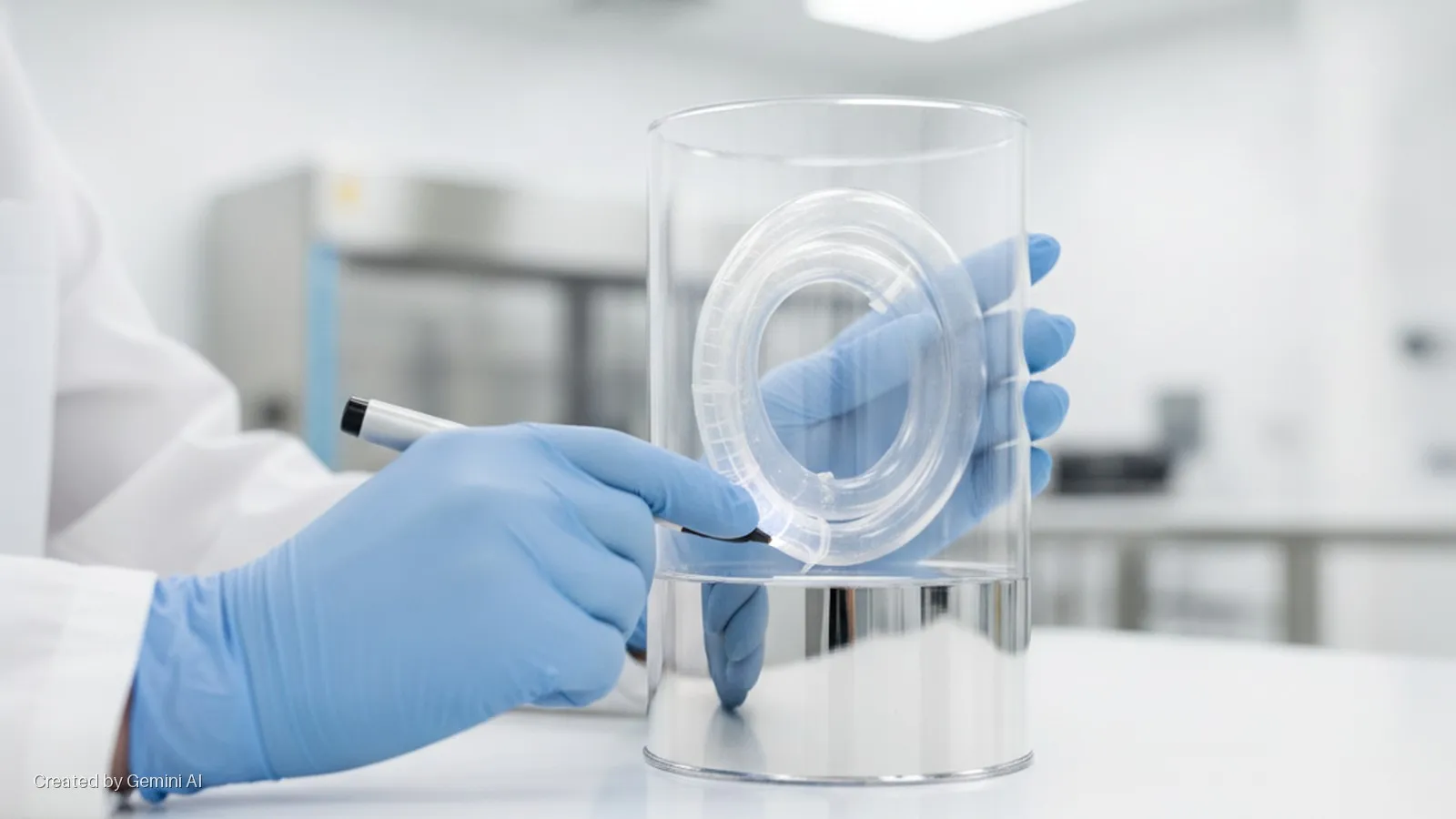
TISSIUM has enrolled its first US patients in the UNITE clinical trial, marking a transatlantic expansion of the Paris and Cambridge-based MedTech company's programme for the ECLIPSIUM System, a light-activated, non-penetrating mesh fixation device designed for minimally invasive hernia repair.
UNITE is a prospective, multicentre, randomised controlled trial running under an Investigational Device Exemption granted by the US Food and Drug Administration. The study aims to enrol around 240 patients across multiple US clinical sites, with the primary objective of evaluating ECLIPSIUM's safety and effectiveness against resorbable tacks in laparoscopic ventral hernia repair.
How the technology works
The ECLIPSIUM System combines TISSIUM's proprietary bioabsorbable, light-activated polymer with a dedicated delivery and activation device. Rather than using tissue-penetrating hardware such as tacks or sutures, the system adheres surgical mesh to soft tissue through light-activated fixation, which TISSIUM describes as giving surgeons on-demand control over mesh positioning while avoiding the tissue trauma associated with conventional methods.
Dr William W. Hope, General Surgeon at Novant Health New Hanover Regional Medical Center in Wilmington and co-principal investigator of UNITE, said: "The ECLIPSIUM System represents a fundamentally different, non-penetrating approach that has the potential to simplify mesh fixation, reduce tissue trauma and improve patient outcomes."
Dr Michael Rosen, Chief of Gastrointestinal Surgery at Northwestern University and co-principal investigator, noted that fixation-related pain remains a persistent challenge in minimally invasive hernia repair and that further clinical evidence is needed to assess whether emerging approaches can support better recovery.
UNITE follows TISSIUM's European ALPHA study of ECLIPSIUM in laparoscopic ventral hernia repair. Preliminary results from ALPHA were presented at the European Hernia Society meeting ahead of the US trial initiation, though detailed efficacy and safety data from that study have not yet been published in full.
Market and competitive context
Hernia repair is a high-volume surgical category. Globally, several million ventral and inguinal hernia procedures are performed each year, and mesh fixation has remained a recognised source of post-operative morbidity, particularly chronic pain linked to tack penetration of the peritoneum and abdominal wall. Despite this, the fixation hardware segment has seen relatively limited technological evolution compared with mesh materials themselves, where a range of biosynthetic and resorbable options have entered the market.
TISSIUM positions ECLIPSIUM in a small but growing group of fixation alternatives that seek to move away from mechanical penetration entirely. Adhesive and light-activated fixation approaches have attracted interest from several device developers, though none has yet achieved broad commercial adoption in the US market. A successful IDE trial readout for ECLIPSIUM could put TISSIUM in a strong position for a de novo or 510(k) regulatory submission, depending on the predicate device landscape the FDA accepts.
The company's broader pipeline spans sutureless nerve repair and cardiovascular sealants, all built on its biosynthetic elastomeric polymer platform, which was originally developed from research conducted in the laboratories of Professor Robert Langer at MIT and Professor Jeffrey Karp at Brigham and Women's Hospital. TISSIUM describes itself as both clinical and commercial stage, indicating at least one product is already generating revenue, though financial details were not disclosed in the announcement.
Investors and clinicians will be watching for the primary completion date of UNITE and any interim safety data as key near-term milestones for the programme.