
Knowtex named prime awardee on VA's $775m ambient scribe contract

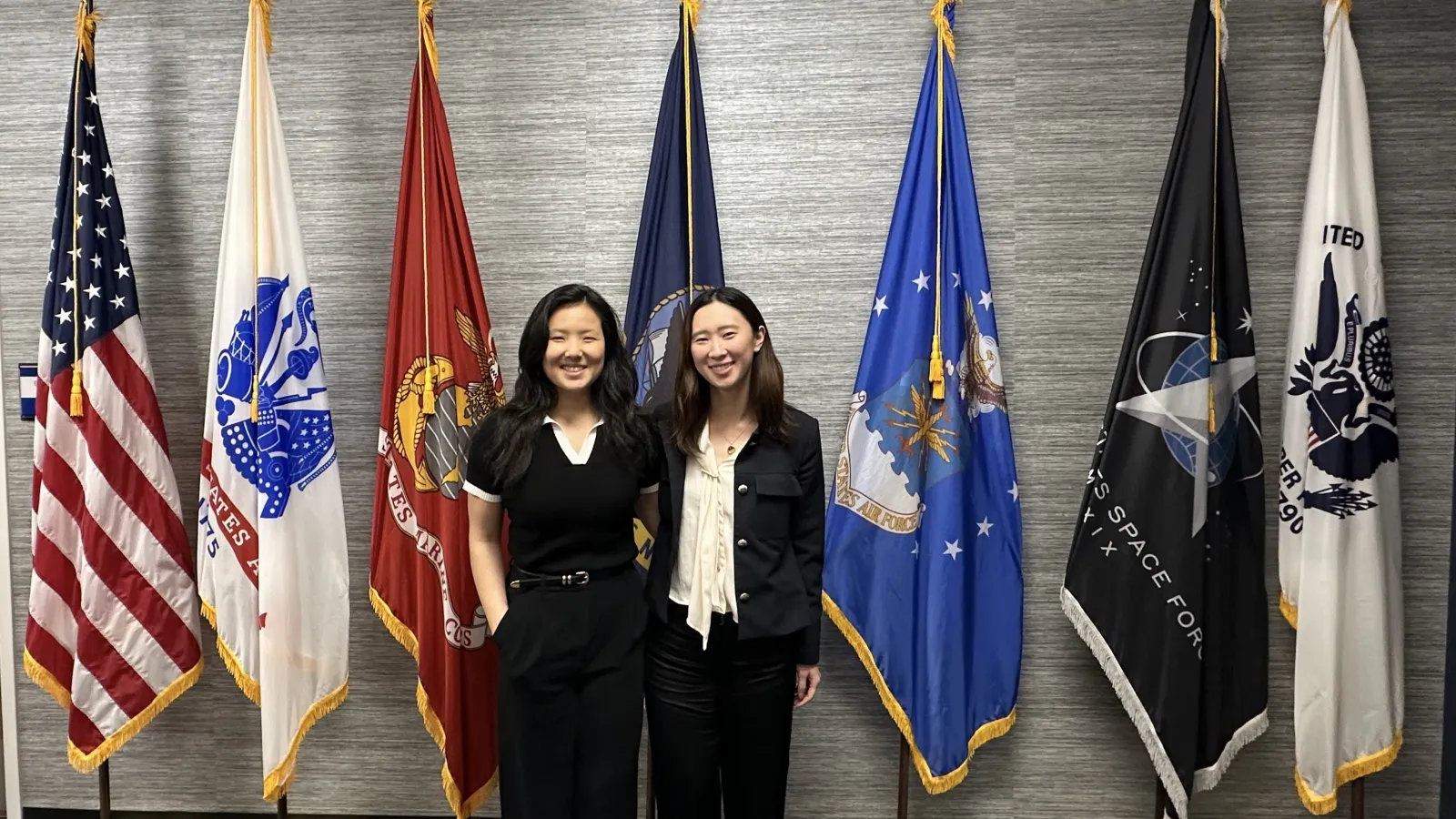
Knowtex, a San Francisco-based clinical AI company founded by Stanford researchers, has been named one of two prime awardees on the US Department of Veterans Affairs' Ambient Scribe Enterprise IDIQ contract. The award, issued by the VA Technology Acquisition Center on 18 September 2026, carries a shared maximum ceiling of $775.72 million across all prime awardees and runs for five years. The company describes the contract as the largest public enterprise commitment to ambient AI in American healthcare.
Under the agreement, Knowtex will supply cloud-based ambient scribe solutions that capture clinical encounters, generate draft clinical notes, and deliver additional capabilities including procedure coding, order entry and real-time clinical intelligence, integrated directly into VA's existing electronic health record infrastructure.
A relationship two years in the making
The contract is the product of a relationship that began at VA's AI Tech Sprint in 2024, when Knowtex was selected from more than 150 competing solutions. In October 2025, VA awarded the company a $15 million contract for deployment of its ambient documentation platform, and by February 2026 had cleared it for nationwide rollout across primary care. The platform is currently active in 79 VA medical centres and more than 310 facilities spanning ten Veterans Integrated Service Networks.
Usage metrics released alongside the announcement are striking. More than 7,000 VA clinicians have adopted the platform, with an 88% sustained adoption rate and an average satisfaction score of 4.5 out of 5 across more than 5,100 clinician ratings. The company says clinicians have collectively reclaimed more than 450,000 hours previously spent on documentation. A pilot at Kansas City VA recorded a three-percentage-point rise in Veteran trust and patient satisfaction scores.
Chief executive Caroline Zhang, co-founder of Knowtex alongside CTO Jocelyn Kang, said the company had earned VA's trust "one clinic, one clinician, and one Veteran visit at a time," and described the enterprise contract as both an honour and a responsibility.
Market context and competitive positioning
The ambient clinical documentation market has grown rapidly since 2023, driven by clinician burnout and the widespread adoption of large language models suited to real-time speech-to-text and note synthesis. Microsoft-backed Nuance DAX and Suki AI are among the better-capitalised competitors active in both federal and community health settings. The VA contract's dual-award structure is notable: it limits the field to two vendors at the enterprise level, giving both significant incumbency advantage for the contract's five-year term.
Knowtex's differentiation rests partly on its claimed integration with CPRS, VA's legacy electronic health record system, at federal-grade security standards, which presents a meaningful barrier to entry for newer entrants. On 15 September 2026, the company launched what it describes as a frontier AI lab for healthcare, publishing a benchmark called KnowBench on arXiv. The benchmark measures what the company terms Effort Reduction, defined as the share of AI-generated clinical content accepted without amendment by the responsible clinician. Knowtex reports its platform currently scores 97.99% on that measure, though KnowBench is the company's own evaluation framework rather than an independent standard. CTO Jocelyn Kang noted that performance in "the real exam room, on real systems" was the design constraint.
Beyond VA, Knowtex says it serves more than 300 organisations nationally and supports over 200 clinical specialties. The company is backed by Y Combinator, HF0 and Stanford StartX Med, among others. The next commercial milestone to watch is whether the enterprise award accelerates expansion into non-federal health systems, where the ambient scribe category remains highly contested.